Consumer prices accelerate in Slovenia
In April, consumer prices in Slovenia increased by 3.1% over the previous year.
In the same month last year, annual inflation stood at 2.3%, while in March 2026 it was 2.5%, CE Report informs via the country's Statistical Office.
In one year, service prices grew on average by 3.6% and goods prices by 2.9%. Non-durable goods prices went up by 4.9%, while semi-durable and durable goods prices went down by 2.2% and 0.4%, respectively.
The biggest impact on inflation (1.2 percentage points) came from 9.7% higher prices in the group housing, water, electricity, gas and other fuels. Higher prices in the group transport (by 4.6%) and health (by 5.3%) contributed 0.7 p.p. and 0.3 p.p., respectively. An additional 0.2 p.p. each was added by price increases in the groups alcoholic beverages and tobacco (by 4.3%), restaurants and accommodation services (by 2.6%), and food and non-alcoholic beverages (by 1.0%).
On the other hand, clothing and footwear were 2.9% cheaper than a year earlier, which eased inflation by 0.2 p.p.
Compared to the previous month, consumer prices rose by 1.9%.
High monthly inflation is mostly the result of rising prices of fuels and lubricants for personal transport equipment (by 18.6%) and holiday packages (by 15.7%), which increased inflation by 0.8 p.p. and 0.5 p.p., respectively. A further 0.2 p.p. each were contributed by higher prices of liquid fuels (by 32.1%), shoes and other footwear (by 13.8%), and actual rental payments made by tenants for main residence (by 10.0%). Higher prices of maintenance and repair of personal transport equipment (by 3.7%) as well as of accommodation services (by 4.5%) each added 0.1 p.p. The remaining monthly price increases contributed an additional 0.2 p.p.
On the other hand, inflation was reduced by 0.2 p.p. due to lower prices of insurance connected with transport (by 14.2%). Lower prices in the group parts and accessories for personal transport equipment (by 8.4%) and the group sugar, confectionery and desserts (by 4.2%) each eased monthly inflation by 0.1 of a percentage point.
Measured with the harmonised index of consumer prices, this April the annual growth of consumer prices was 3.4% (a year ago 2.3%). The monthly price growth stood at 1.8%.
In one year, service prices increased on average by 3.8% and goods prices by 3.2%. Non-durable goods prices went up by 5.5%, while semi-durable and durable goods prices went down by 1.9% and 0.5%, respectively.
Annual inflation rates in March 2026 for all EU-27 Member States are available here. Measured with the harmonised index of consumer prices, in March the annual inflation rate in the EMU countries was 2.6% (a month before 1.9%).
In the EU-27 Member States, it was 2.8% (a month before 2.1%). The lowest annual inflation rate was recorded in Denmark (1.0%) and the highest in Romania (9.0%); in Slovenia it stood at 2.4%.
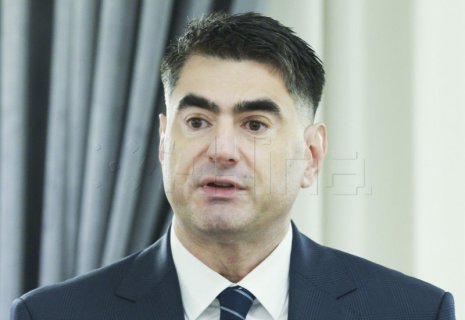
Photo: Statistical Office of Slovenia