Slovenian professor calls for new economic models to value nature
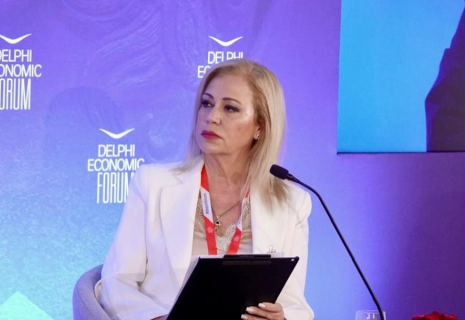
Sandra Damijan, a professor at the Ljubljana School of Economics and Business, underlines in an op-ed for The Slovenia Times that the question is not whether Slovenia's natural capital exists, but whether we have economic models to value it and treat it as a strategic issue, CE Report informs.
In a world where countries increasingly compete for water, land, and air, Slovenia's real wealth lies closer to home in its forests and rivers, fertile soils, wetlands, and the glass of water we draw effortlessly from the tap. Yet this natural capital remains largely invisible in how we measure prosperity. Treated as a free and inexhaustible input, nature's degradation later returns as higher public spending, disrupted tourism, volatile food and insurance prices, and rising fiscal pressure. In economic terms, we are running down productive assets without recording their depreciation.
These natural endowments are no longer just environmental foundations; they are becoming a new currency of development in the most literal and fiscal sense. The debate has therefore shifted beyond protection toward understanding nature as economic and strategic capital with measurable value, real costs when it is lost, and tangible savings when it is managed well. Ignoring this reality weakens our response to climate change. Climate policy has focused largely on reducing emissions by managing the flow of carbon. Climate resilience, however, depends just as much on the stock of living nature that absorbs carbon, regulates water, cools cities, and buffers extreme events. If that stock continues to erode, emissions reductions alone will not deliver stability.
Nature, in other words, is not a backdrop to the economy. It is living infrastructure. Like roads or energy networks, ecosystems deliver essential services every day. When we invest in them, they regenerate and strengthen over time. When we neglect them, economic systems become more fragile and climate risks more costly. This shift explains why the conversation is moving from protecting nature to investing in natural capital. Excluding assets that stabilise coastlines, regulate water systems, support tourism and agriculture, and reduce disaster risks from balance sheets and investment decisions systematically favours short-term fixes over resilience. The result is predictable: higher long-term costs and sharper shocks. Treated as an investment rather than a cost, natural capital becomes a source of savings, stability, and long-term competitiveness.
A crucial but often overlooked insight is that revenues linked to healthy ecosystems tend to be among the most stable an economy can have. Unlike exports or financial flows, they are less tied to economic cycles. When governed well, they reduce volatility rather than amplify it. Investing in nature is therefore not only about sustainability, but also about risk management. Thus, markets alone cannot solve the problem. They are effective at pricing use, the flow of resources, but much weaker at protecting the asset itself. Nature is a public good. Without clear rules and institutions, it will be overused and undermaintained. Governance therefore matters as much as capital.
The same lesson applies to climate finance. Carbon markets 1.0 are effectively over. Their credibility suffered not because pricing nature was wrong, but because governance was weak. The response has not been to abandon markets, but to redesign them. We are now entering carbon markets 2.0, alongside a broader class of nature credits. Without strong governance, credits fail. With it, they can mobilise private capital toward real restoration and long-term value creation. For governments and investors alike, one principle is decisive: reciprocity. Recognising natural capital is not enough. Revenues linked to nature must be reinvested into maintaining and restoring ecosystems and the communities that manage them. Without this feedback loop, valuation becomes an accounting exercise rather than an economic transformation.
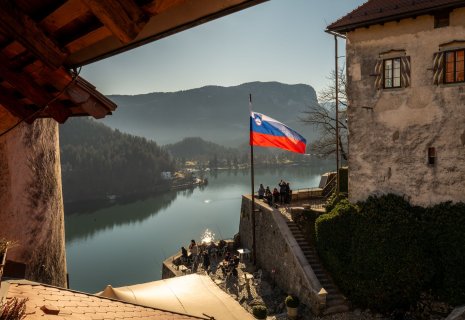
Slovenia starts from a position of strength. More than 60 per cent of its territory is covered by forests, drinking water resources are above the European average in quality and availability, and ecosystems provide natural protection against droughts, floods, and heatwaves. The real question is not whether this capital exists, but whether we are prepared to treat it as capital.
Natural capital is becoming a strategic issue for the future: a factor of geopolitical resilience, a foundation of stable public services, and a source of long-term competitiveness. When natural capital enters economic language, it enters economic priorities. And when it enters priorities, it becomes easier to protect. Not because nature is reduced to a price, but because it becomes visible in the decision systems that shape investment, risk, and climate resilience.
This column is written alongside a forthcoming workshop with leading global marine biologist Prof. Carlos Duarte (KAUST) at the University of Ljubljana, School of Economics and Business, where experts will explore how natural capital, including marine ecosystems such as Posidonia meadows, can be valued and integrated into credible investment and policy frameworks.
Photo: personal archive