Slovenia bans display of Palestinian, LGBTQ+ flags on public institutions
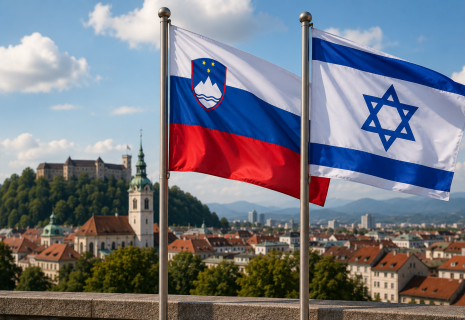
Slovenia's parliament has banned public institutions from displaying flags and other symbols without a legal basis, a move that means public authorities will no longer be allowed to fly flags expressing solidarity with Palestine, the LGBTQ+ community and other causes.
The amendments, sponsored by the far-right Truth party and passed with the support of the right-wing coalition, prohibit such symbols both on the facades and inside public institutions, CE Report quotes The Slovenia Times.
Slovenia's government says the changes reinforce political neutrality, ensure that state institutions represent all citizens and strengthen public confidence in their impartiality and lawful conduct.
The legislation covers not only flags but also coats of arms, inscriptions, banners, slogans and other visible symbols. It is intended to prevent public buildings from being used to express ideological, activist or geopolitical positions, the government said.
The controversy has centred particularly on the Palestinian and rainbow flags, both of which have been displayed on public buildings in Slovenia in recent years.
The Palestinian flag was removed from the Government Palace on 4 June, shortly after the new government took office, having flown there since May 2024, when Slovenia recognised Palestinian statehood.
It was briefly displayed on the presidential palace the following day, with President Nataša Pirc Musar describing the gesture as a call to respect human dignity.
Flags expressing solidarity with the LGBTQ+ community have often been flown on buildings such as Ljubljana's City Hall and the Presidential Palace.
The left-wing opposition, in power when Slovenia recognised Palestine, accused the ruling parties of pursuing a culture war and political revanchism instead of addressing the country's pressing problems. They argued that the legislation could suppress expressions of solidarity and undermine the autonomy of public institutions.
The Social Democrats, for example, said the amendments went beyond their stated goal of ensuring political neutrality and interfered unduly with institutional autonomy.
Supporters, including the ruling Democratic Party (SDS) and the Slovenian Christian Democrats (NSi), argued that public institutions should display symbols representing the country and its citizens as a whole, rather than political or ideological positions.
They said the law does not restrict freedom of expression by individuals, political parties, associations, religious communities or other organisations, but regulates only the use of buildings belonging to public authorities.
Photo: Pexels (Free Stock Photos)