Serbian Justice Minister links protest claims to possible terrorism charges
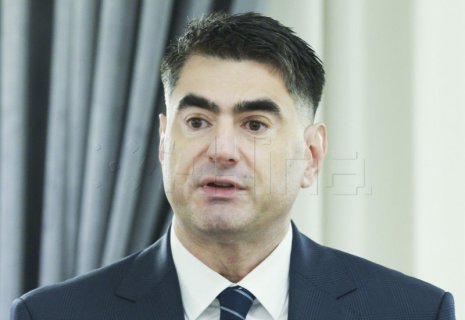
Serbian Justice Minister Nenad Vujić stated that, if the prosecution concludes that students at the mass protest on March 15, 2025, simulated the use of a sonic weapon, “there are elements of the criminal offence of terrorism.”
His statement continues what critics describe as a broader government campaign against the student movement, which escalated after senior Serbian officials on Friday accused students of lying about the alleged use of a sonic weapon during the large anti-government protest on March 15, as well as of attempting to provoke street clashes and promoting an “idea of killing Serbian President Aleksandar Vučić and triggering a civil war.”
The allegations came on the same day that the Higher Public Prosecutor’s Office (VJT) said in a statement that its investigation into the recent unexplained death of a Philosophy Faculty student in Belgrade found that students occupying faculties had discussed “simulating the use of a sonic weapon” during the March 15 protest, CE Report quotes HINA.
Following media reports, Vujić told TV Informer that the prosecution had treated the case of the student plenary’s notes and the alleged sonic weapon use seriously, and that based on evidence it could qualify as a serious criminal offence with “elements of terrorism,” citing public disturbance and loss of trust in institutions.
He also said the prosecution was “very professional” and always presented clear evidence.
On March 15, 2025, one of the largest gatherings in Serbia’s history took place in Belgrade, called by students as part of ongoing anti-government protests following the death of 16 people in the collapse of a railway station canopy in Novi Sad on November 1, 2024.
During a minute of silence for the victims, a sound was heard in the 11th minute that caused panic, and later claims emerged that police had used a so-called sonic weapon.
However, the VJT claims that students, by dispersing, simulated the use of such a device in order to accuse state authorities domestically and internationally of deploying sonic weapons, allegedly aiming to create panic, unrest, and conditions for a violent change of constitutional order.
Students in blockade rejected the accusations, saying the prosecution was trying to divert attention from the main issues surrounding the March 15 events.
This was followed by strong statements from Serbian Parliament Speaker Ana Brnabić and Interior Minister Ivica Dačić, who accused students of a “monstrous plan” to overthrow the constitutional order and claimed there was an idea to kill President Vučić and his family and start a civil war in Serbia.
Raša Nedeljkov, program director of the NGO CRTA, said in an interview with N1 that there is an “orchestrated campaign in pro-government media,” describing the involvement of the prosecution as “alarming.”
He added that such political instrumentalization of the prosecution could signal increased repression and retaliation against those who spoke about the sonic weapon incident or presented facts about it.
Nedeljkov concluded that the theory of simulating the use of a sonic weapon on March 15 could only be believed by “minds washed by toxic propaganda.”
Photo Wikipedia