South Caucasus in Changing Global Order - OPINION
By Aytan Aliyeva
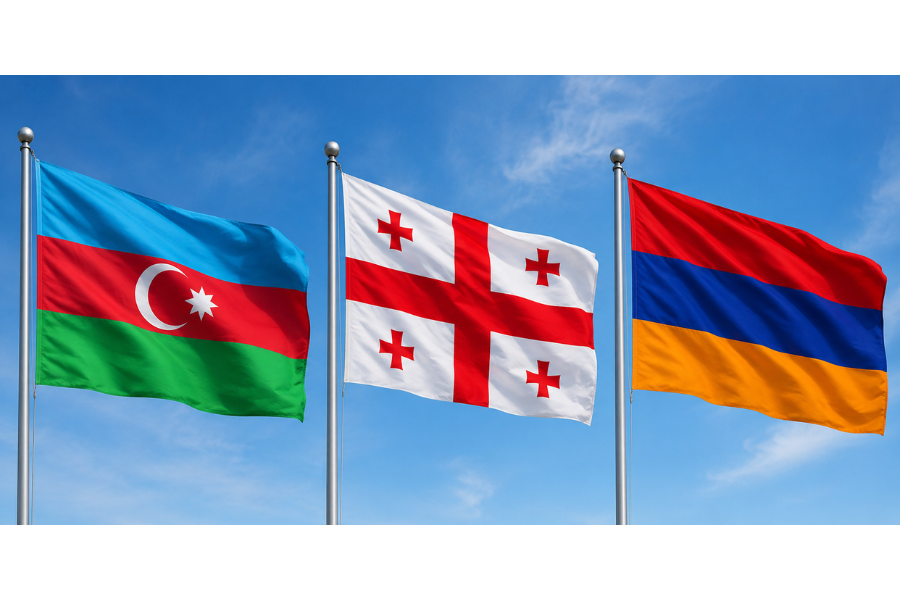
The South Caucasus (comprising Armenia, Azerbaijan, and Georgia) occupies a strategically significant position at the crossroads of Europe, Asia, and the Middle East. Historically influenced by regional empires and later by the Soviet Union, the region has emerged as a critical geopolitical arena where global and regional powers compete for influence. The growing rivalry among the United States, Russia, China, and the European Union has transformed the South Caucasus into an important geopolitical corridor connecting East and West.
Recent developments, including Russia's reduced regional influence following the war in Ukraine, China's expansion through the Belt and Road Initiative, the European Union's increasing engagement in energy and connectivity projects, and the evolving peace process between Armenia and Azerbaijan, have created a new strategic environment. Within this context, the foreign policies of the South Caucasian states reflect efforts to balance national interests, security concerns, economic development, and geopolitical pressures.
Foreign: policy orientations of the South Caucasus states
Azerbaijan: strategic multi-vector diplomacy
Azerbaijan has pursued a pragmatic and balanced foreign policy since gaining independence. Baku seeks to maintain constructive relations with all major powers while preserving strategic autonomy. The country's vast energy resources and its role as a transit hub have strengthened its geopolitical importance. Relations with Russia remain significant due to historical ties and regional security considerations. At the same time, Azerbaijan has expanded strategic cooperation with the European Union through energy exports, particularly following Europe's efforts to diversify away from Russian gas supplies. Azerbaijan has also strengthened its partnership with Türkiye, which remains its closest strategic ally. Relations with the United States focus on energy security, regional stability, and counterterrorism cooperation. Meanwhile, Azerbaijan has welcomed Chinese investments in transportation infrastructure and logistics, particularly within the framework of the Middle Corridor connecting China with Europe. Baku's foreign policy can therefore be characterized as a successful example of balancing among competing global powers while prioritizing national sovereignty and economic interests.
Armenia: from russian dependence to strategic diversification
For decades, Armenia relied heavily on Russia for security guarantees, particularly because of the unresolved Nagorno-Karabakh conflict and its closed borders with Türkiye and Azerbaijan. However, recent geopolitical developments have altered Armenia's strategic calculations. The inability of Russian-led security structures to meet Armenian expectations during recent regional crises has encouraged Yerevan to diversify its foreign relations. Under the leadership of Nikol Pashinyan, Armenia has intensified cooperation with the European Union, France, and the United States. The EU has expanded political dialogue and economic cooperation with Armenia, while Washington has increased diplomatic engagement. Despite these shifts, Armenia remains economically connected to Russia and continues to face limitations in completely transforming its foreign policy orientation. Armenia's current strategy reflects a delicate balancing act between maintaining necessary ties with Russia and pursuing deeper integration with Western institutions.
Georgia: Euro-Atlantic aspirations and regional balancing
Georgia remains the most pro-Western country in the South Caucasus. Since the early 2000s, Tbilisi has consistently pursued integration with Euro-Atlantic institutions, including NATO and the European Union. The country's foreign policy priorities include strengthening democratic governance, enhancing economic integration with Europe, and reducing vulnerability to Russian influence. Relations with Russia remain complicated due to unresolved territorial disputes involving Abkhazia and South Ossetia. At the same time, Georgia seeks to preserve economic relations with neighboring states while positioning itself as a transit and logistics hub linking Europe and Asia. Its strategic location along major transportation corridors significantly enhances its geopolitical value.
The South Caucasus and Global powers
The United States views the South Caucasus through the lenses of regional stability, energy security, democratic development, and strategic competition with Russia and China. Washington supports sovereignty and territorial integrity throughout the region and has increasingly encouraged normalization between Armenia and Azerbaijan. American diplomacy has become particularly active in facilitating peace negotiations and promoting economic cooperation.
Russia traditionally regarded the South Caucasus as part of its sphere of influence. However, its regional position has weakened significantly in recent years. The war in Ukraine has redirected Russian political, military, and economic resources, creating opportunities for other actors to expand their influence. Moscow nevertheless remains an important player due to historical connections, military presence, economic ties, and cultural influence. Russia's future role will largely depend on its ability to adapt to a changing geopolitical landscape and maintain relevance amid increasing Western and regional engagement.
China's interest in the South Caucasus is primarily economic rather than military. Through the Belt and Road Initiative, Beijing seeks to enhance connectivity between Asia and Europe. The South Caucasus forms part of the strategically important Middle Corridor, which has gained significance as alternative transportation routes become increasingly attractive amid geopolitical tensions elsewhere. China's growing investments in transportation infrastructure, logistics, and trade networks have contributed to its expanding presence across the region.
The European Union has emerged as a major actor in the South Caucasus through diplomacy, economic assistance, connectivity projects, and energy cooperation. Following Europe's energy diversification efforts, Azerbaijan has become an increasingly important supplier of natural gas. Simultaneously, the EU has deepened engagement with Armenia and continued support for Georgia's European aspirations. The Union's approach emphasizes conflict resolution, regional cooperation, democratic governance, and sustainable connectivity.
The Armenia-Azerbaijan peace process after Pashinyan's electoral victory
The political victory of Prime Minister Nikol Pashinyan in Armenia has strengthened the prospects for advancing peace negotiations with Azerbaijan. Despite domestic opposition and significant political sensitivities, Pashinyan has demonstrated willingness to pursue normalization and long-term stability.
Several key factors support the peace process:
Border Delimitation and Demarcation -One of the most important components of negotiations concerns the formal delimitation and demarcation of interstate borders. Progress in this area could significantly reduce security risks and prevent future escalations.
Transportation and Communication Links - Both countries recognize the economic benefits of reopening transportation routes. Restored regional connectivity could transform the South Caucasus into an important trade and transit hub connecting Europe and Asia.
International Mediation - The European Union, the United States, and various international organizations continue to support negotiations. Their diplomatic engagement provides important mechanisms for confidence-building and dispute resolution.
Despite progress, significant challenges remain. Nationalist sentiments, historical grievances, domestic political opposition, and unresolved legal questions continue to complicate negotiations. Nevertheless, the current political environment provides a unique opportunity for achieving a comprehensive peace agreement that could fundamentally reshape regional dynamics.
Georgia occupies a unique position within the South Caucasus due to its relatively balanced relations with both Armenia and Azerbaijan. As a country that maintains productive partnerships with both neighbors, Georgia has the potential to serve as a platform for dialogue, economic cooperation, and confidence-building initiatives. Tbilisi has frequently supported regional projects that enhance connectivity, trade, and infrastructure development. The country's stable transit environment and international partnerships make it an indispensable component of regional integration efforts. Georgia's ability to facilitate cooperation without becoming directly involved in regional disputes strengthens its diplomatic value and contributes to broader regional stability.
Connectivity and the strategic importance of the South Caucasus
Connectivity has become one of the most influential geopolitical and geoeconomic concepts shaping the future of the South Caucasus. As global trade routes, supply chains, energy networks, and digital infrastructures gain increasing strategic significance, the region's geographical position at the intersection of Europe and Asia has elevated its role in international affairs. The South Caucasus serves not only as a bridge between East and West but also as a crucial transit space connecting the Caspian Basin, Central Asia, the Black Sea region, the Middle East, and European markets. In recent years, geopolitical disruptions such as the Russia–Ukraine war, instability in parts of the Middle East, growing competition between major powers, and concerns regarding supply chain resilience have increased international interest in alternative transport and communication routes, further enhancing the strategic value of the region.
One of the most important manifestations of this growing importance is the development of the Trans-Caspian International Transport Route, commonly referred to as the Middle Corridor. This route connects China and Central Asia with Europe through Kazakhstan, the Caspian Sea, Azerbaijan, Georgia, and Türkiye, offering a strategic alternative to traditional transport corridors passing through Russian territory. The corridor has gained considerable attention following the imposition of sanctions on Russia and the disruption of northern Eurasian transport routes. Governments, international organizations, and private investors increasingly view the Middle Corridor as a viable mechanism for diversifying trade and transportation networks. Azerbaijan occupies a central position within this framework through the Port of Alat and its modern logistics infrastructure, while Georgia provides critical access to Black Sea ports and European markets. The corridor has the potential to reduce transit times between East Asia and Europe, facilitate greater trade flows, and strengthen the integration of the South Caucasus into global economic networks. As a result, the Middle Corridor is increasingly perceived not only as an economic project but also as a strategic geopolitical asset that enhances the international relevance of the region.
Energy connectivity represents another crucial dimension of the South Caucasus' strategic significance. The region hosts some of the most important energy infrastructure projects linking the Caspian Basin with European consumers. The Southern Gas Corridor, consisting of the South Caucasus Pipeline, the Trans-Anatolian Natural Gas Pipeline (TANAP), and the Trans-Adriatic Pipeline (TAP), has become a cornerstone of European energy diversification efforts. Following the deterioration of relations between Russia and the European Union and the subsequent reduction of Russian gas supplies to Europe, Azerbaijan's role as a supplier of natural gas has gained unprecedented importance. Through these pipelines, Azerbaijani gas contributes to European energy security while strengthening the country's geopolitical influence. Georgia also benefits significantly from its role as a transit state, deriving economic revenues and enhancing its strategic importance in regional energy politics. Furthermore, the region is increasingly exploring opportunities for renewable energy cooperation. Investments in wind, solar, and hydropower projects, as well as plans for transmitting green electricity across the Black Sea to European markets, indicate that the South Caucasus may become an important participant in Europe's long-term energy transition.
In addition to transportation and energy networks, digital connectivity has emerged as a new pillar of regional development. The rapid digitalization of the global economy has increased the strategic value of telecommunications infrastructure, data transmission networks, and digital services. Governments throughout the South Caucasus have recognized the importance of investing in fiber-optic networks, high-speed internet infrastructure, and technological innovation. Several initiatives aim to establish new digital corridors connecting Europe and Asia through the South Caucasus, thereby reducing dependence on existing communication routes and enhancing digital resilience. Such projects are expected to facilitate the growth of e-commerce, financial technologies, digital entrepreneurship, and knowledge-based industries. Improved digital infrastructure can also contribute to educational cooperation, scientific exchange, and technological innovation, enabling the countries of the region to diversify their economies beyond traditional sectors such as energy and agriculture.
The expansion of transportation, energy, and digital networks has significant implications for economic integration and regional development. Improved connectivity reduces transportation costs, facilitates cross-border trade, and creates opportunities for investment and industrial cooperation. Enhanced infrastructure enables local producers to access larger international markets while attracting foreign direct investment seeking efficient access to Europe and Asia. Sectors such as logistics, tourism, manufacturing, and services stand to benefit substantially from improved regional connectivity. Moreover, economic interdependence generated through trade and infrastructure cooperation may contribute to greater regional stability. International experience demonstrates that states connected through mutually beneficial economic relationships often possess stronger incentives for cooperation and peaceful conflict resolution. In the context of the South Caucasus, connectivity is therefore increasingly viewed not only as an economic objective but also as a mechanism for fostering trust, stability, and long-term peace.
The success of connectivity initiatives remains closely linked to the broader political and security environment of the region. Sustainable progress in the Armenia–Azerbaijan peace process could significantly enhance the viability of regional transportation networks and create new opportunities for economic cooperation. The reopening of communication routes and borders would facilitate trade, strengthen regional integration, and increase the attractiveness of the South Caucasus as a transit corridor. Consequently, connectivity has become a central element of regional and international strategies aimed at transforming the South Caucasus from a zone historically characterized by geopolitical rivalry and conflict into a hub of cooperation, commerce, and interregional integration. In an increasingly multipolar international system, the ability of the South Caucasus states to leverage their strategic location and connectivity potential will play a decisive role in determining their future geopolitical and economic significance.
The South Caucasus is experiencing significant geopolitical transformation as competition among the United States, Russia, China, and the European Union reshapes the regional landscape. Armenia, Azerbaijan, and Georgia are pursuing distinct foreign policy strategies while adapting to shifting global and regional dynamics. In this context, the Armenia–Azerbaijan peace process remains a key factor for regional stability. A lasting peace agreement could transform the South Caucasus into an important hub for connectivity, trade, energy cooperation, and interregional integration. Ultimately, the region's future will depend not only on the interests of external powers but also on the ability of regional actors to strengthen cooperation, enhance connectivity, and promote sustainable peace in an increasingly multipolar world.