Chisinau demands halt to unlawful military registration of minors in Transnistria
A meeting of the working groups for education with the participation of experts from both banks of the Dniester River took place on December 9.
The discussions focused on the operation of Latin-script educational institutions in the Transnistrian region, the observance of pupils' rights and the resolution of current technical problems, CE Report quotes MOLDPRES.
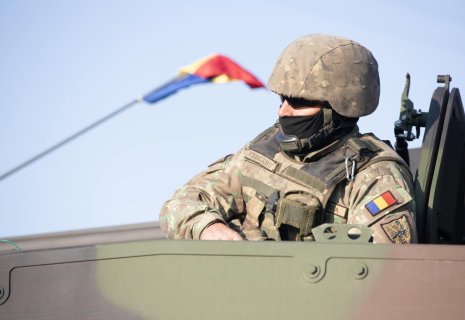
Chisinau emphasized the need of ending any form of pressure on students and teachers from the eight Latin-script schools, including stopping the illegal registration of minors in unlawful military structures.
Progress was highlighted regarding the complex of buildings of the Evrika Theoretical Lyceum from Rabnita, as well as the advancement of technical procedures for expertise and delimitation of immovable assets. Participants in the meeting reiterated the importance of finding a solution for the return of „Ștefan cel Mare și Sfânt” Lyceum to its premises in Grigoriopol, in accordance with international obligations and the best interest of the child.
Attention was also drawn to the impact of the unilateral increase in utility rates applied to the Latin-script institutions, with a request to revert to the conditions valid until the end of 2023. A solution was also requested to ensure access for students of the Lucian Blaga Theoretical Lyceum from Tiraspol to adequate spaces for physical education classes.
As for the topics raised by Tiraspol, it was noted that young people and children from the Transnistrian region benefit from all opportunities provided by the national regulatory framework: access to educational institutions on the right bank, study programmes abroad according to European standards and the Bologna system, as well as the possibility of integration into the labor market. The procedures of admission to higher education are applied uniformly throughout the territory of Moldova.
In conclusion, the experts expressed willingness to continue the technical dialogue, in order to identify practical solutions that ensure the protection of students' rights and the proper work of educational institutions.