Hiroshima Marks 80 Years Since Atomic Bombing
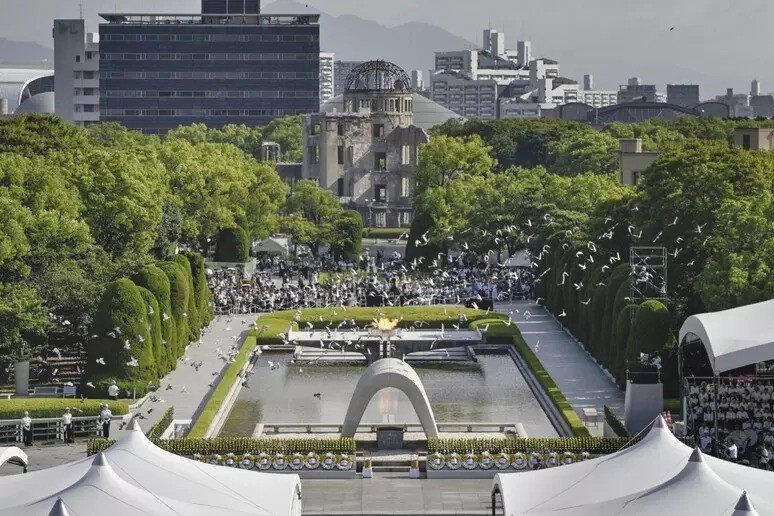
Exactly 80 years after the atomic bombing by the United States on the morning of August 6, 1945, the Japanese city of Hiroshima renewed its call for greater efforts to eliminate the threat of future nuclear catastrophes.
This appeal was also directed at younger generations, as the world faces growing geopolitical instability, CE Report quotes ANSA.
At 8:15 AM, inside the Peace Memorial Park, the tolling of the peace bell marked the beginning of a minute of silence — the exact time the American B-29 bomber Enola Gay dropped the atomic bomb, killing approximately 140,000 residents.
A second bomb was dropped on Nagasaki on August 9, causing the death of at least 74,000 people, mostly civilians, and effectively ending World War II with Japan’s unconditional surrender.
"Despite the current fragile situation, we citizens must never give up," said Hiroshima Mayor Kazumi Matsui during the Peace Declaration at the commemorative ceremony.
This comes less than a year after the Nobel Peace Prize was awarded to Nihon Hidankyo, the organization of hibakusha (atomic bomb survivors), recognizing their efforts for a world free of nuclear weapons.
“Our young people, the future leaders, must understand that misguided policies on military spending, national security, and nuclear weapons could lead to devastating and inhumane consequences,” Matsui emphasized.
He urged young people to act with this awareness and to lead civil society toward consensus. The ceremony was attended by a record 120 countries and government delegations.
The number of officially recognized survivors of the two bombings has fallen below 100,000 for the first time, with an average age of just over 86.
As expected, the mayor once again urged the Japanese government to attend as an observer the upcoming meeting of the States Parties to the Treaty on the Prohibition of Nuclear Weapons (NPT), and to officially join as a sign of respect for the lessons of history. However, Prime Minister Shigeru Ishiba did not mention the treaty in his speech — a common stance from a government under the protection of Washington, which still possesses nuclear weapons.
Although Japan is the only country to have suffered a nuclear attack, it, like Israel, has not joined the treaty banning nuclear arms — in force since March 1970 — although it continues to support the non-proliferation agreement.
In a statement, UN Secretary-General António Guterres warned that the risk of nuclear conflict is growing, and stressed that “the same weapons that caused such devastation in Hiroshima and Nagasaki are once again being treated as tools of coercion.”