Moldova secures power supply amid crisis
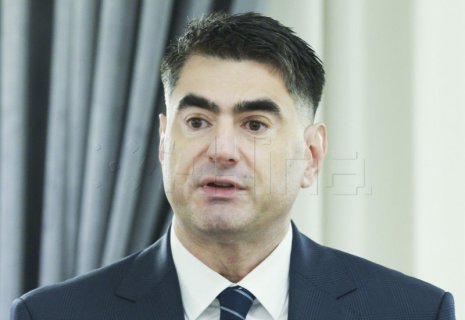
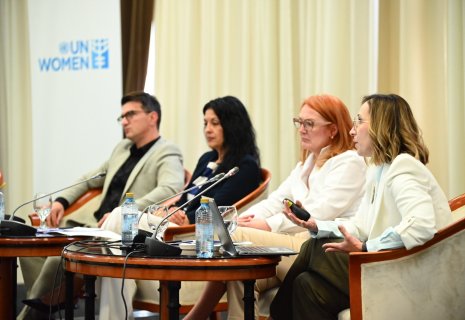
The authorities assure that they are making every effort to avoid power cuts and urge citizens to use electricity rationally. The message was delivered by the Director of the National Crisis Management Center (CNMC), Serghei Diaconu, who emphasized that for today the required amount of energy is secured, CE Report quotes MOLDPRES.
“For the moment, for today, we have practically covered 100% of the required energy. Megawatt by megawatt has been collected in order to cover that difference of 350–400 megawatts. From the latest report I have seen, theoretically, if both citizens and the private sector – and here we will make an appeal for saving – if everyone respects the request to save as much as possible, state institutions will do this mandatorily, but there are also other participants. If energy is saved, we should not have to reach disconnections today. If this does happen and the shortage is felt, the Ministry of Energy will announce it before it occurs,” stated Serghei Diaconu after today’s Government meeting, during which a set of measures was approved for managing the state of emergency in the energy sector, in order to protect citizens and the country’s energy security.
Serghei Diaconu mentioned that the authorities are holding talks both with local energy producers and external partners to be able to cover the energy demand.
“For tomorrow, it is the same: we are making efforts, negotiations are underway domestically with renewable energy producers and externally with all possible partners so that we manage to cover the demand. Clearly, we cannot make a forecast for tomorrow, but our intention is that if we reach this shortage for a certain period of time, that period should be as short as possible, and first of all we will warn the population and all structures about the potential possibility of disconnections. Secondly, if we do reach a shortage, then the interval should not be more than half an hour to an hour. Still, we are making efforts so that this does not happen,” Diaconu explained.
At the same time, Diaconu stressed that if there is an energy deficit and disconnections become necessary, the authorities will prioritize precisely those sectors of activity that are critical for citizens.
“If at certain hours we reach a deficit and it becomes necessary to implement rolling blackouts, institutions that provide services to citizens will certainly not be disconnected. We are talking about hospitals, kindergartens, schools. Secondly, we are talking about special health centers, for example dialysis centers. Those enterprises and institutions that produce essential goods for citizens, such as bread, will also be prioritized. There is a set of provisions aimed specifically at ensuring that citizens are protected in terms of having the minimum necessary water, food, access to healthcare services, social maintenance services, etc.,” said the CNMC Director.
The Government has introduced concrete measures for managing the state of emergency in the energy sector, in order to protect citizens and the country’s energy security. These measures concern the prioritization and safeguarding of energy consumption, the reduction of non-essential consumption, and the securing of fuel stocks. The decision comes after the Parliament of the Republic of Moldova declared a nationwide state of emergency for a period of 60 days, starting on 25 March 2026, given that the main power line supplying the Republic of Moldova – the Vulcănești–Isaccea line – was disconnected following Russia’s attacks on Ukraine’s civilian energy infrastructure.