Cristiano Ronaldo becomes star attraction at Greek wax museum
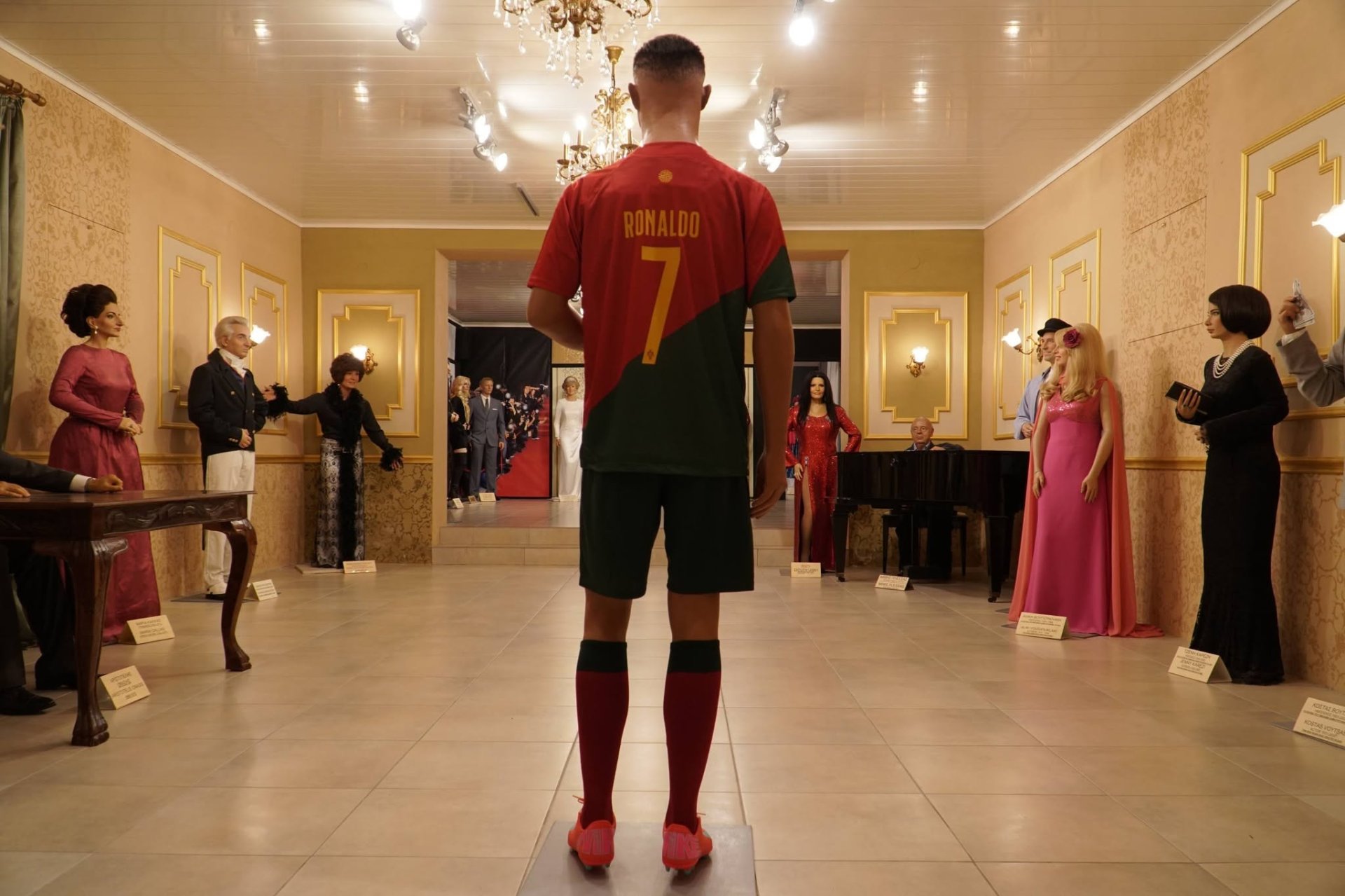
This summer, football had its own major star in Kipia, Kavala. Cristiano Ronaldo was smiling in the large hall of Theodoros Kokkinidis' Wax Museum. Suddenly, for the young visitors, the distance between a lush green village at the foot of Mount Pangaion and the world's biggest football stadiums seemed to disappear.
The children were thrilled. They stood beside the Portuguese star, took photos with him again and again, and searched for the perfect pose. Football fans were equally impressed. Ronaldo, wearing the Portugal national team shirt with the number “7” on his back, immediately became one of the museum's most eye-catching exhibits, CE Report quotes ANA-MPA.
For Theodoros Kokkinidis, however, Ronaldo is not simply the latest famous figure to join his collection. He is another chapter in a journey that began many years ago and continues with patience and persistence in a small village in Kavala.
The story of the Wax Museum is not only the story of the people it houses. Above all, it is the story of the man who dreamed of creating it.
From a small village to a cultural destination
Kipia is located a few kilometers outside Eleftheroupoli, in the shadow of Mount Pangaion. Visitors reach the village along a tree-lined road that feels more like a trip into nature than a journey to a museum. Yet at the end of the road, a completely different world awaits.
Inside, time seems to have stopped while also moving constantly. Maria Callas stands beside Aristotle Onassis. Angelina Jolie, created in connection with the film The Tourist, stands alongside Melina Mercouri and Mikis Theodorakis. Tom Cruise, Michael Jackson and Madonna meet Odysseas Elytis, Yiannis Tsarouchis, Constantine Cavafy and prominent figures from politics and history. The collection also includes personalities from Greek cinema, music and sport.
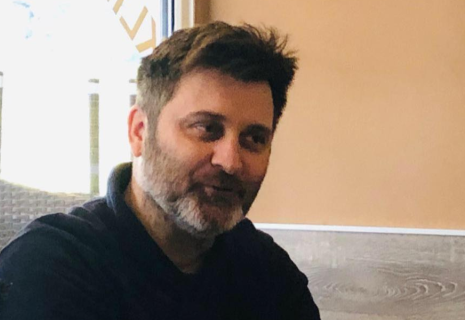
Kokkinidis guides the Athens-Macedonian News Agency (ANA-MPA) through his personal creation and speaks openly about his life story, dreams and ambitions. Above all, he talks about his greatest passion: his work.
“Creating a wax sculpture requires patience, study and observation, especially when there is no model. It is not easy work. People don't know how much work goes on behind it. They only see the image and how faithful a copy it can be of the real person. For me, however, it is the search, the expression, the desire to create.”
A wax figure is not a photograph. It is a sculpture and, like every work of art, it has its imperfections.
“The goal is not a mechanical, absolutely perfect copy of a person, but an attempt to capture the expression, character, posture, personality and that element that makes someone recognizable even when they are not speaking,” Kokkinidis explains.
The museum attracts visitors of all ages, who examine the wax figures' expressions, clothes, teeth and hair. The clothes are hand-sewn by the artist. The hair is implanted strand by strand and eventually styled by a hairdresser. The teeth are made by a dental technician according to the creator's precise instructions.
It is these small but important details that make the wax figures so captivating.
When the real stars pose beside themselves
On several occasions, Kokkinidis has had the opportunity to meet in person the people he would later recreate in wax.
Olympic champion Voula Patoulidou and former footballer Theodoros Zagorakis posed for their figures and even donated their actual sports uniforms. The same uniforms are now worn by their wax counterparts, adding an element of authenticity.
Basketball legend Panagiotis Giannakis left the museum a special personal item: a basketball he had played with and signed twice.
When he visited the museum and stood beside his wax figure, the scene was almost cinematic. Decades after his triumph in 1987, the athlete found himself face to face with the image of his younger self captured in a moment of celebration.
“It was as if time had turned back and, somehow, he had met his younger self again,” Kokkinidis recalls.
The moment Mimis Plessas sat beside himself
Something similar, but in a different way, happened with Mimis Plessas. One of the most touching moments in the museum's history came during the official presentation of his wax figure in Eleftheroupoli.
When the renowned Greek composer attended the event and sat beside his wax likeness, his surprise was obvious. He examined it closely, studied the details and openly expressed his admiration for the result.
“It was one of those moments that give a wax figure a completely different dimension. It was no longer simply an exhibit. It was Mimis Plessas himself standing opposite an artistic representation of himself,” Kokkinidis recalls.
The setting made the moment even more meaningful. Plessas is seated behind the old piano of the Olympians, an object associated with an entire era of Greek music. Kokkinidis therefore did not simply create a person — he created an entire scene.
He took a similar approach with Zozo Sapountzaki. She posed for her figure and, as the artist recalls with a smile, was “rightfully called the queen of the night.”
Her relationship with the wax figure later led to an amusing incident. During one of her appearances in Corfu, people mistakenly thought that the woman in a poster photograph was Sapountzaki herself.
Her response came with her characteristic humor: “But that's not me, that's my wax figure!”
Six, eight, ten months for a single moment
Behind the final image visitors see are months of work.
Cristiano Ronaldo took more than six months to complete. Tom Cruise took around five months. Kostas Voutsas took nearly six months, while Panagiotis Giannakis required approximately ten months.
The process begins with clay and continues with wax. Then come the details: the face, expression, hair, teeth and clothing.
For Kokkinidis, the work is never entirely individual. Dental technicians, hairdressers and other professionals contribute to bringing the final result as close as possible to the image he has in mind.
“Beyond sculpture, collaboration with specialists is necessary to complete the work in the best possible way,” he explains.
The same applies to historical figures. Theodoros Kolokotronis, Laskarina Bouboulina, Ioannis Kapodistrias, Georgios Karaiskakis and Manto Mavrogenous are not simply figures from another era. The artist seeks to bring something of their personalities and their time into the present.
Manto Mavrogenous' costume, for example, was entirely cut, sewn and embroidered by hand with the help of the artist's mother.
A museum born from persistence
The story of the Wax Museum is the story of a personal dream that took years to become reality.
Kokkinidis did not create his museum in a major city where a steady flow of visitors could be taken for granted. He built it in Kipia and has supported it through years of personal work, patience and persistence.
Even after a serious traffic accident kept him away from his workshop for a long period, his need to create remained alive. Seven months after the accident, he returned briefly to his workshop and completed a new wax figure of Greek actress Aliki Vougiouklaki.
Perhaps this is why the museum has developed such a special relationship with its visitors. It does not simply offer them famous faces they recognize. It offers them stories.
Visitors can stand beside Callas, Plessas, Voutsas, Giannakis, Patoulidou, Zagorakis or Ronaldo. They can take photos with them, examine the details and remember a film, a song, a match or a historic moment.
Behind all of this is a man who continues to work with passion and determination, studying, observing and pursuing perfection as far as possible.
Every figure may be made of wax, but behind each one lies something far more difficult to capture: the dream of a talented artist and warm-hearted man that became reality.
Photo: Facebook/ mouseio.kerinon.omoiomaton.kipia.kavalas