Chopin’s turbulent life unfolds in new film
“Chopin, Nocturne in Paris” by Michał Kwieciński, in theaters from February 26 with Europictures, is in some ways a classic and celebratory biopic about this legendary Polish composer, divided between love, music, and illness.
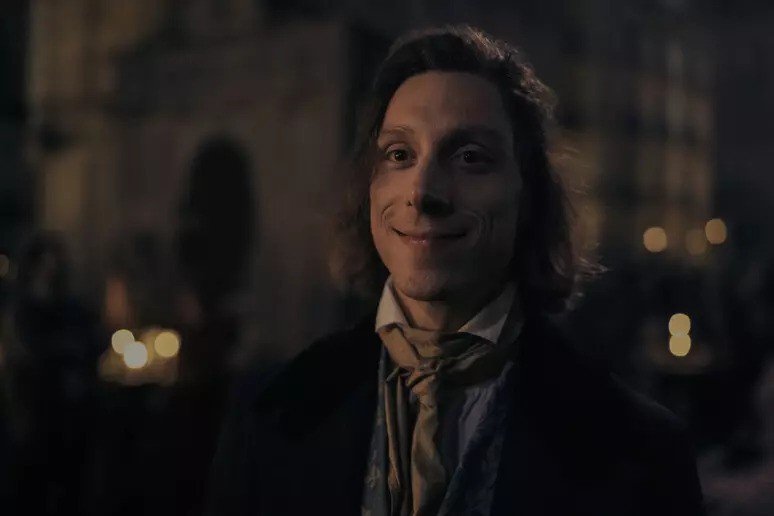
A film that clearly looks to Amadeus by Miloš Forman, but set in 19th-century Paris, when Frédéric Chopin (played by Eryk Kulm), at just 25 years old, was a true star of aristocratic salons and the French court, a constant presence at parties where he would perform for his many admirers—while early signs of the illness, tuberculosis, that would inevitably shorten his life were already beginning to appear, CE Report quotes ANSA.
An obstacle that, however, did not stop him from composing his works—sometimes on commission—and giving piano lessons to make a living.
The film also portrays his great love for George Sand (played by Joséphine de La Baume), his friendship with Franz Liszt (played by Victor Meutelet), and features a cameo by Lambert Wilson as King Louis Philippe I.
“Chopin, Nocturne in Paris” also stands out for its meticulous historical reconstruction. It is in fact a mega-production that required over two years of shooting, fifty-four days on set, 260 actors, more than 5,000 extras, and a crew of over 600 people. The production features imposing sets with 300 period vehicles—including carriages, stagecoaches, and omnibuses—over 1,000 costumes, 600 pairs of shoes, 200 top hats, and hundreds of accessories: gloves, handbags, umbrellas, jewelry.
In addition, eight costume rental houses from across Europe (London, Paris, Madrid, Berlin, Łódź, and Warsaw) were involved. Four months were dedicated to costume preparation and production, engaging five ateliers, shoemakers, and milliners, with a costume department that, for the most ambitious scenes, included up to twenty people. The total budget reached seventy-two million Polish złoty, approximately seventeen million euros, making it one of the most expensive Polish film productions in history.
“I wanted this work to be above all a film about a man, not a school assignment about Chopin. The fundamental principle of the screenplay was that all the events depicted truly happened: together with screenwriter Bartek Janiszewski, we merely offered our interpretation. It is not a traditional biography, but a collection of key moments in Chopin’s life starting from 1835,” the director writes in his notes.
“For several months I read dozens of Polish and foreign publications about Chopin’s life and his milieu, about the era in which he lived and created. I immersed myself completely in his world, until I understood its inner mechanisms and what truly mattered to his psyche.”
How important is the music in the film?
“It is obviously very important, but it is not the dominant element. Actor Eryk Kulm personally performed Chopin’s compositions, usually for no more than 30 seconds at a time, because the film is not about the music itself, but about its author, about a great artist. I did not want the psychological study to be overwhelmed by admiration for his work. There is also a great deal of illustrative music in the film, much of it contemporary, even electronic, creating a sharp contrast with Chopin’s pianistic masterpieces.”