Slovenia releases historical drama "Exodus 1945: Our Blood"
A new historical drama depicting events in early May 1945, when opponents of the communist regime fled Yugoslavia toward Allied-controlled Austrian Carinthia, is hitting Slovenian cinemas this week, shedding light on a traumatic chapter of the country's history.
Based on true events, Exodus 1945: Our Blood is the first Slovenian film to discuss the topic, CE Report quotes The Slovenia Times.
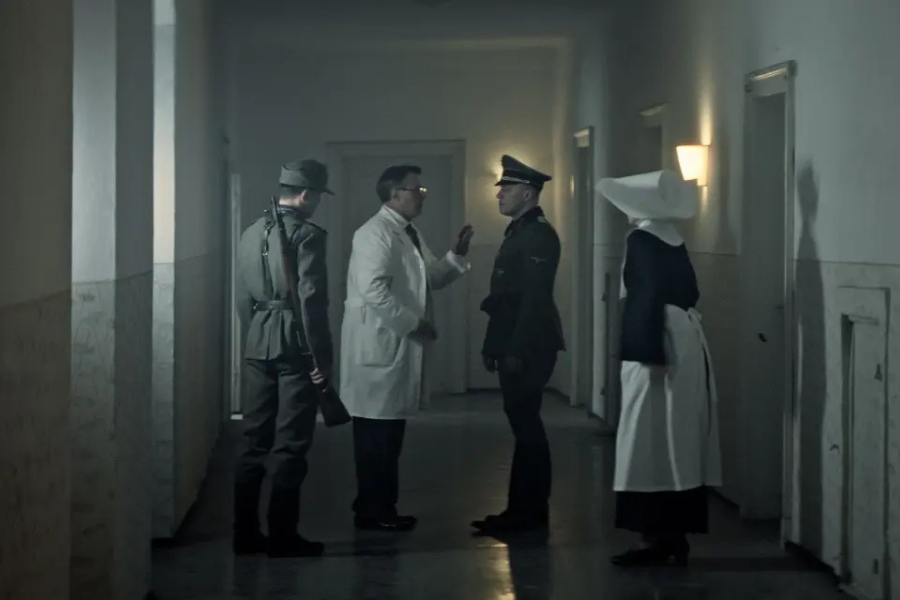
The main protagonists are two doctors, who set off from Ljubljana with their families on a medical train carrying civilians, German soldiers and members of the Slovene Home Guard (Domobranci), an anti-Partisan militia who fought alongside the Germans.
Forced to abandon the train, the refugees continue on foot to cross into Austria. Along the way, the protagonists and many of their companions face numerous trials and moral dilemmas, as they realise that the survival of some will mean certain death for others.
The film, whose production was funded by private donors, was shown on behalf of invitees and journalists at the Odiseja multiplex cinema in Ljubljana on 17 February before its general release on 19 February.
The event featured a talk with film producer and director of photography David Sipoš from Studio Siposh and screenwriter and director Vid Planinc.
The team behind the film says they were not looking for culprits for the post-war divide, but wanted to show the impact of the polarisation of society, and ordinary people as victims of the turmoil of war.
Sipoš said the film had earlier been previewed by Slovenian expatriates in the US and Canada, the audience who experienced the events depicted in the film either first-hand or through their parents and grandparents.
He noted the importance of stories that "inspire and encourage reflection", and stories that "bring to the screen collective history that has been pushed to the margins, but that are worth remembering".
Planinc stressed the personal aspect of the project, mentioning a scene where a father is forced to leave his immobile son on the train in order to save himself and take care of the rest of the family. Both the father and son realise this is their last goodbye.
The team also wants to raise donations to shoot a sequel about the post-war events in Viktring (Vetrinj in Slovenian), where one of the doctors negotiated with the British to make sure that several thousand civilian refugees were not returned to Yugoslavia.
Roughly 25,000 Slovenians are estimated to have decided to flee the country in early May 1945, most of them members of the pro-Nazi Domobranci. Some 10,000 people are believed to have perished in the post-WWII mass killings. Most of them were members of the Slovenian, Croatian and Serbian pro-Nazi or anti-communist militias whom the allies returned from Austria to Yugoslavia.
Photo: Studio Siposh