Türkiye to showcase restored ancient Balatlar Building Complex
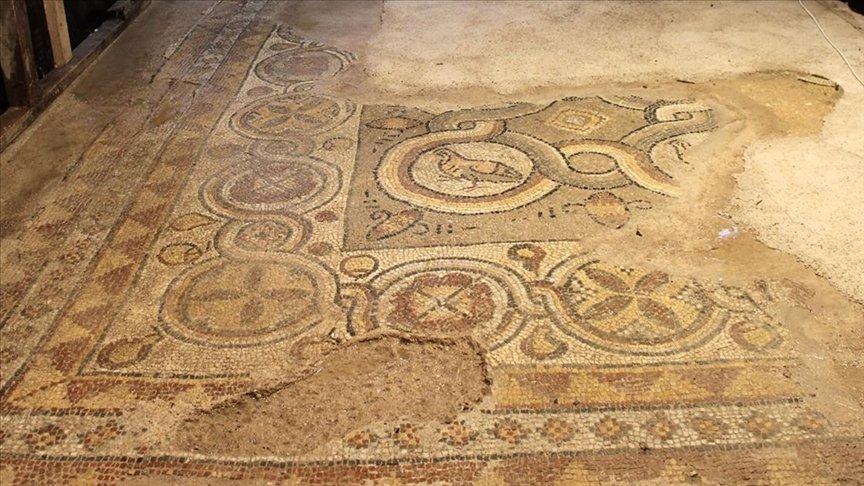
The 1,600-year-old floor mosaics uncovered during the Balatlar Building Complex excavation—carried out with the contributions of the Ministry of Culture and Tourism of Türkiye and Mimar Sinan Fine Arts University—and whose restoration has been completed, will soon be opened to tourism.
As part of this effort, and according to the Balatlar Building Complex Visitor Center Planning and Design Consultancy Project—prepared in cooperation with the Sinop Governorship and the North Anatolian Development Agency (KUZKA) and expected to be completed soon—a visitor center will be created at the excavation site. The center will display not only the mosaics but also other historical artifacts uncovered in the area, CE Report quotes Anadolu Agency.
In addition to the exhibition area, the center will include wooden walkways, platforms to ensure safe circulation, information boards, and guidance systems.
Governor Mustafa Özarslan told reporters that the Balatlar excavation site holds an important place in the city’s cultural tourism route due to its architectural integrity and archaeological data.
Özarslan noted that excavation works under the leadership of Prof. Dr. Gülgün Köroğlu have been ongoing since 2010, and that many artifacts belonging to the Hellenistic, Roman, Byzantine, Seljuk, and Ottoman periods have been unearthed so far.
He stated that they are carrying out a joint project with KUZKA to present the historical site to visitors in a scientific, organized, and controlled manner, and added:
“Within the scope of the project, a visitor center design will be developed that prioritizes both conservation and visitor management, and is based on the scientific data of the Balatlar Building Complex. The visitor center will have a comprehensive layout. The architectural approach will be fully compatible with the historic texture, prioritizing natural materials and ensuring accessibility for people with disabilities. The Balatlar Building Complex will bring a new point of attraction to Sinop’s tourism route and increase tourism activity in the city center. It will contribute to the development of scientific and cultural tourism and make Sinop more visible at the national and international levels.”