Croatia's Osijek Business Centre plans €25M expansion
The growing number of events, increasing interest from organizers and free exhibition programmes for entrepreneurs demonstrate how the Osijek Business Centre in Croatia has become a hub for business meetings, product presentations and connecting entrepreneurs with the market.
Since opening in April 2023, the Business Centre of Osijek-Baranja County has hosted more than 100 trade fairs, conferences and other events, CE Report quotes HINA.
Alongside the growing number of users, support programmes for small businesses provide opportunities to showcase products and services and establish connections with potential customers and business partners.
The Centre was built as part of an investment in entrepreneurial infrastructure in eastern Croatia, with the aim of creating favourable conditions for business events and economic cooperation. Osijek-Baranja County is the owner and investor, while the City of Osijek participated as a project partner.
"The Business Centre is not just a building for us – it is development infrastructure and a place where we bring together entrepreneurs, investors, the business community and new business opportunities," said Osijek-Baranja County Prefect Nataša Tramišak.
She added that the goal is to create conditions in which entrepreneurs can develop their businesses more easily, while new investments and jobs contribute to the county's economic growth.
The construction of the Centre's first building was an investment worth approximately €10 million, with more than two-thirds of the funding secured through the European Regional Development Fund. The project was implemented under the 2014–2020 Operational Programme Competitiveness and Cohesion, through the Integrated Territorial Investments (ITI) mechanism.
According to Ivana Rešetar, Director of the Business Centre of Osijek-Baranja County, 23 events were held in the year the Centre opened, followed by 28 in 2024 and 35 in 2025. During 2026, the total number of events hosted since its opening surpassed 100.
Larger trade fairs require time for installation, operation and dismantling, meaning that the venue and its staff can be occupied for between 10 and 15 days per event, Rešetar explained. She also highlighted the growing number of external organisers and the continuous scheduling of new events as additional indicators of the Centre's development.
"Infrastructure can be built, but you cannot administratively give it life. Life comes from the people who use it, entrepreneurs who see it as an opportunity and organisers who keep coming back," Rešetar said.
For small businesses and tradespeople, trade fairs provide an opportunity to meet customers directly, showcase products and assess market demand. Such opportunities are particularly important for start-ups, as exhibition costs can make it difficult for them to reach a larger number of potential customers.
Through the Trade Fair Incubator programme, new entrepreneurs are offered free exhibition space. At the 2026 Spring and Crafts Fair, 27 entrepreneurs took advantage of this opportunity, while another 15 did so at the Beauty and Health Fair. At the Autumn Fair, 58 women entrepreneurs exhibited free of charge, marking the highest number in the 13 years since the support programme was introduced, according to Centre data.
Behind these figures are entrepreneurs presenting their products to a wider audience for the first time, meeting customers and establishing contacts for future cooperation, Rešetar noted.
"We must provide entrepreneurs with space, visibility, knowledge, contacts and an opportunity to reach the market," she said.
The economic impact of these events can extend beyond the Centre itself. The arrival of exhibitors, speakers and visitors from other parts of Croatia and abroad increases demand for accommodation, hospitality, transport and other services. While the scale of these effects depends on visitor numbers, event duration and spending, the ability to host major business gatherings in Osijek creates opportunities to retain a share of economic activity within the region.
In the broader development context of Slavonia and eastern Croatia, such infrastructure can help connect local producers with new markets and business partners. Tramišak said the county has recorded an increase in employment, a 27.2% decline in unemployment and an 8% rise in wages, while the number of registered trades has increased by more than 1,300 since the beginning of the year. A total of €1,447,300 has been allocated in the county's 2026 budget for its Entrepreneurship Support Programme.
The county is also preparing the second phase of the Business Centre's development, which includes a conference and congress centre, a business tower and a hospitality facility, with the estimated investment value reaching approximately €25 million.
Project and technical documentation is being prepared for the conference and congress centre, while documentation for the other two buildings is being adjusted to meet the necessary conditions and requirements, Tramišak said.
According to Rešetar, the growing number of events and increasing interest from organisers indicate the need for further development. The planned expansion is expected to enable the hosting of larger business gatherings and strengthen cooperation between entrepreneurs, investors, and the scientific and educational communities.
"Osijek-Baranja County is a driving force behind the development of eastern Croatia, and our task is to turn all its development potential into concrete opportunities. That is why we continue investing in entrepreneurship, business infrastructure and projects that create added value – because a strong economy means more jobs, higher wages and a better quality of life for our citizens," the county prefect emphasised.
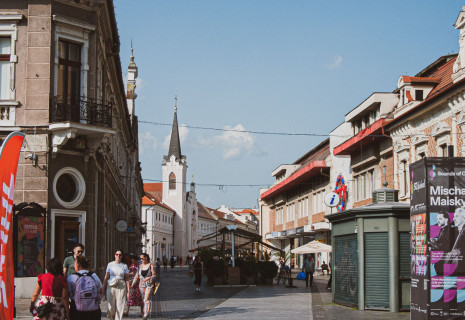
Photo: Pexels (Free Stock Photos)