Bosnia lacks central record of withdrawn, destroyed meat
There is no unified database in the Federation of Bosnia and Herzegovina tracking inspections, withdrawals, and destruction of meat and meat products.
Meanwhile, federal veterinary inspectors conducted 40 inspections in the first six months of this year that found violations resulting in fines totaling approximately BAM 48,000, CE Report quotes FENA.
Data provided to Fena by the Federal Administration for Inspection Affairs, the Federal Ministry of Agriculture, Water Management and Forestry, the Food Safety Agency of Bosnia and Herzegovina, and the Veterinary Office of Bosnia and Herzegovina show that meat inspections are carried out at several levels, from production and retail facilities to border crossings. However, at the Federation level, there is no consolidated record of the quantities of meat withdrawn from the market or destroyed following violations.
The issue of meat controls gained renewed attention after veterinary inspectors in the Republika Srpska entity withdrew 4.5 tonnes of meat and meat products from the market during inspections of butcher shops and other facilities involved in meat production and trade due to identified irregularities.
The Federal Veterinary Inspection Service of the Federal Administration for Inspection Affairs told Fena that it continuously conducts inspections at wholesale and retail facilities, catering establishments, slaughterhouses and processing plants, as well as during the road transportation of products of animal origin.
During the first six months of 2026, federal veterinary inspectors carried out 22 inspections at meat and milk processing facilities, 105 at wholesale and retail outlets, 24 at slaughterhouses for ungulates and poultry, 58 at catering establishments, and 105 inspections of road transportation of products of animal origin.
The Federal Administration said violations were identified in 40 inspections, resulting in penalty notices totaling approximately BAM 48,000.
Another 26 violations of the law were recorded in road transportation, with penalties yet to be imposed, while 40 administrative measures were issued over minor irregularities, ordering businesses to rectify the deficiencies.
“During inspections, federal veterinary inspectors check the origin and traceability of products, storage and preservation conditions, labeling, expiry dates, compliance with prescribed temperature regimes, and veterinary documentation. During road transportation, the hygienic conditions of vehicles are also checked, including disinfection certificates, with particular attention paid to the transport of fresh and frozen meat,” the authorities said.
The Federal Administration stressed that measures are taken against businesses selling products of suspicious or unknown origin, without the required labeling and documentation, as well as thawed products placed on the market in violation of prescribed conditions.
Inspectors also monitor the sale of minced meat, as the sale of meat that has been minced in advance, without a customer's request, is prohibited.
However, there is no consolidated figure showing how much meat and meat products were withdrawn from the market or destroyed in the Federation during these or inspections conducted by other levels of government.
The Veterinary Sector of the Federal Ministry of Agriculture, Water Management and Forestry confirmed to Fena that there is no unified database in the Federation of Bosnia and Herzegovina covering inspections, withdrawals and destruction of meat and meat products.
The ministry explained that food businesses keep records of waste generated during production or through the return of products of animal origin, while approved animal-waste collection facilities are also required to maintain records of the quantities collected.
The ministry also warned of an insufficient number of veterinary inspectors. There are a total of 70 veterinary inspectors at the federal, cantonal and municipal levels in the Federation of BiH.
“It is evident that the number of veterinary inspectors is insufficient, which prevents more efficient and comprehensive field inspections,” the Veterinary Sector of the Federal Ministry of Agriculture said.
The sector explained that procedures for the withdrawal and destruction of animal waste are regulated, but the relevant documentation is maintained by food businesses. Cantonal inspections check records concerning quantities, transportation and disposal sites, while the transport and safe disposal of the waste are carried out by public utility companies.
The costs of storing, transporting and destroying animal by-products are borne by food businesses.
The Federal Ministry also said it does not have information on possible trade in meat of unknown origin or the operation of unregistered slaughterhouses, referring questions on those issues to federal and cantonal veterinary inspection authorities.
While the Federation lacks consolidated data on quantities withdrawn from the market, the Veterinary Office of BiH has data on meat entering the country.
The Office told Fena that since the beginning of the year, border veterinary inspectors have inspected a total of 26,854 consignments subject to veterinary controls, including 8,621 consignments of meat and meat products.
Import bans were issued for 30 consignments.
The Office explained that all types of meat undergo comprehensive documentary, identification and physical inspections upon import, while samples are taken for laboratory analysis when necessary. If a consignment fails to meet the prescribed requirements, its import is prohibited and the goods are returned to the country of origin or to the consignor.
“The most common irregularities detected by border veterinary inspectors concern inadequate documentation, primarily veterinary and health certificates, improper certification and labeling of consignments, as well as meat originating from countries or regions from which imports are prohibited,” the Veterinary Office said.
As for laboratory testing of meat and meat products, excluding fish, 851 analyses of various parameters were carried out this year, with three producing positive results.
The Veterinary Office explained that following a positive result, the next ten consignments from the same producer are subject to additional laboratory testing, with the importer covering the cost of those analyses.
According to the Veterinary Office, in 2026 there have been no cases in which imported meat had to be withdrawn from the BiH market after already being placed on sale.
However, 38,968 kilograms of poultry meat with positive laboratory results were destroyed because it could not be returned to the country of production.
This quantity therefore refers to imported meat that never reached the BiH market and does not represent meat subsequently withdrawn from retail outlets.
According to the Office, BiH imports most of its meat and meat products from Italy, Spain, Austria, Croatia, Germany, the Netherlands, Poland, Turkey, Brazil, Argentina and Serbia.
The Food Safety Agency of BiH also monitors the safety of meat already on, or potentially entering, the market.
The Agency said it received two notifications in 2026 concerning meat and meat products available or potentially available on the Bosnian market.
It explained that when it is established that a problematic product has been distributed on the BiH market, the competent inspection authorities initiate procedures for its withdrawal or recall.
“Information on risky products, after an assessment that they are or could be present on the BiH market, is immediately forwarded by the Agency to the competent inspection authorities, while information on unsafe food and measures taken, including product withdrawals and recalls, is published on its website,” the Agency said.
The issue of meat controls also leaves open the long-standing question of systematic management of animal waste.
The Federal Ministry of Agriculture said that approved facilities for collecting animal waste exist in the Federation, while the Brovis company facility in Visoko is authorized to process animal by-products for its own needs. Other approved facilities are intended exclusively for their collection.
The Federal Ministry recalled that around a decade ago, a Strategy for the Management of Animal Waste in Bosnia and Herzegovina was drafted. It envisaged the construction of facilities for the safe disposal of animal waste and appropriate collection centers throughout the country.
However, the strategy has still not been adopted at the state level.
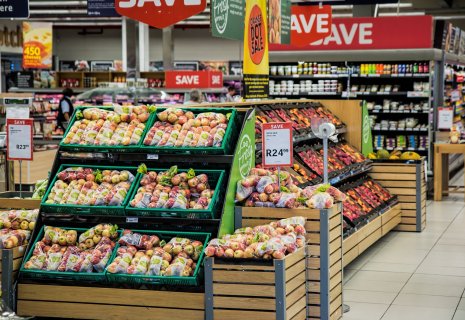
Photo: Pexels (Free Stock Photos)