Slovenia imposes stiffer fines for public order offences
Slovenia is imposing stiffer fines for a number of public order offences, including disturbing public peace with musical instruments, improper display of foreign flags and begging in what is the most extensive reform of legislation in the field in two decades.
Since its passage in 2006, the public order and peace protection has received just two small updates, and the legislation valid so far still determined fines in Slovenia's old currency, the tolar, which the country changed for the euro in 2007, CE Report quotes The Slovenia Times.
With the bill passed by the National Assembly on 17 December the entire framework for sanctioning public order offences is being overhauled with the addition of new kinds of prohibited conduct and a general increase in fines.
Noise and musical instruments
The law increases penalties for disturbing public peace with musical instruments, sound systems, televisions or radios. Fines of €150-300 apply for causing disturbance, including through playing instruments.
Playing musical instruments is exempt if it is for education or professional purposes and does not exceed normal use of private premises in terms of volume, frequency and duration.
Higher fines apply at night. Disturbances between 10pm and 6am carry penalties of €200-400, though no fines apply for permitted activities or urgent maintenance work.
This change was prompted by a much publicised case of a primary school student who was fined by police for practising the piano too loud during the day after a neighbour lodged a series of complaints with the police.
A court subsequently threw out the fine with the argument that the level of noise she produced was not out of the ordinary, and that the neighbour's right to afternoon rest is not absolute.
Higher fines for begging
New provisions tighten rules on begging in public places. Aggressive or offensive begging is punishable by fines of €200-600.
Begging involving animals carries fines of €500-800, while using a child raises penalties to €800-1,200.
Hooliganism and violence at sports events
The law introduces higher penalties for disorderly or violent behaviour related to sports events.
Bold or violent conduct at a sports event, nearby venues or related areas carries fines of €500-1,000, including behaviour such as provoking fights while travelling to events.
Physical assault at sports events is punishable by fines of €600-1,100, with the amount more than doubling for involvement in a fight.
Carbide cannon use restricted
The use of carbide cannons, hugely popular in particular in rural areas, is permitted only during Easter holidays and around Labour Day, between 6am and 10pm, and is subject to safety rules.
Even during permitted periods, carbide use is banned in densely populated residential areas, near hospitals, at public gatherings, and in protected natural areas.
Violations carry fines of €500-1,000, while causing fear or distress through carbide use is punishable by fines of €250-500.
Rules on foreign flags and symbols
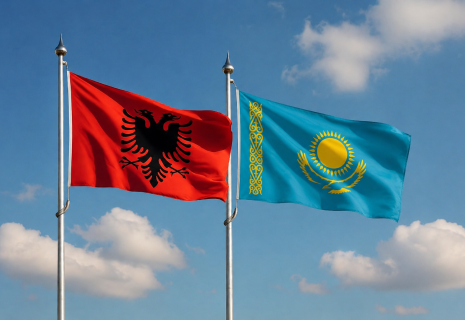
The law specifies when foreign flags or symbols may be displayed, including during official visits, international meetings, sports events, expressions of solidarity, artistic or political expression, or at hotels and similar premises.
Improper display of a foreign flag or symbol is punishable by fines of €150-300, rising to €500-1,500 for legal entities.
Deliberate desecration or destruction of the Slovenian, EU or a foreign flag in public carries fines of €1,000-2,000, except when part of artistic work for film, television or theatre.
Stricter rules for collecting donations
The law also regulates in greater detail than existing legislation the collection of voluntary donations, which may be collected by non-profit legal entities and by individuals only with a special permit from local authorities.
Permits require a justified reason, such as illness, injury, natural disaster, humanitarian need or other public-interest purposes, including culture, sport, environmental protection, animal welfare or health promotion. The law sets out penalties for violations.
As reported by CE Report, Ljubljana introduced a year-end ban on all street musicians.
Photo: Aleš Osvald/STA