Experts warn AI, short-form content change reading habits
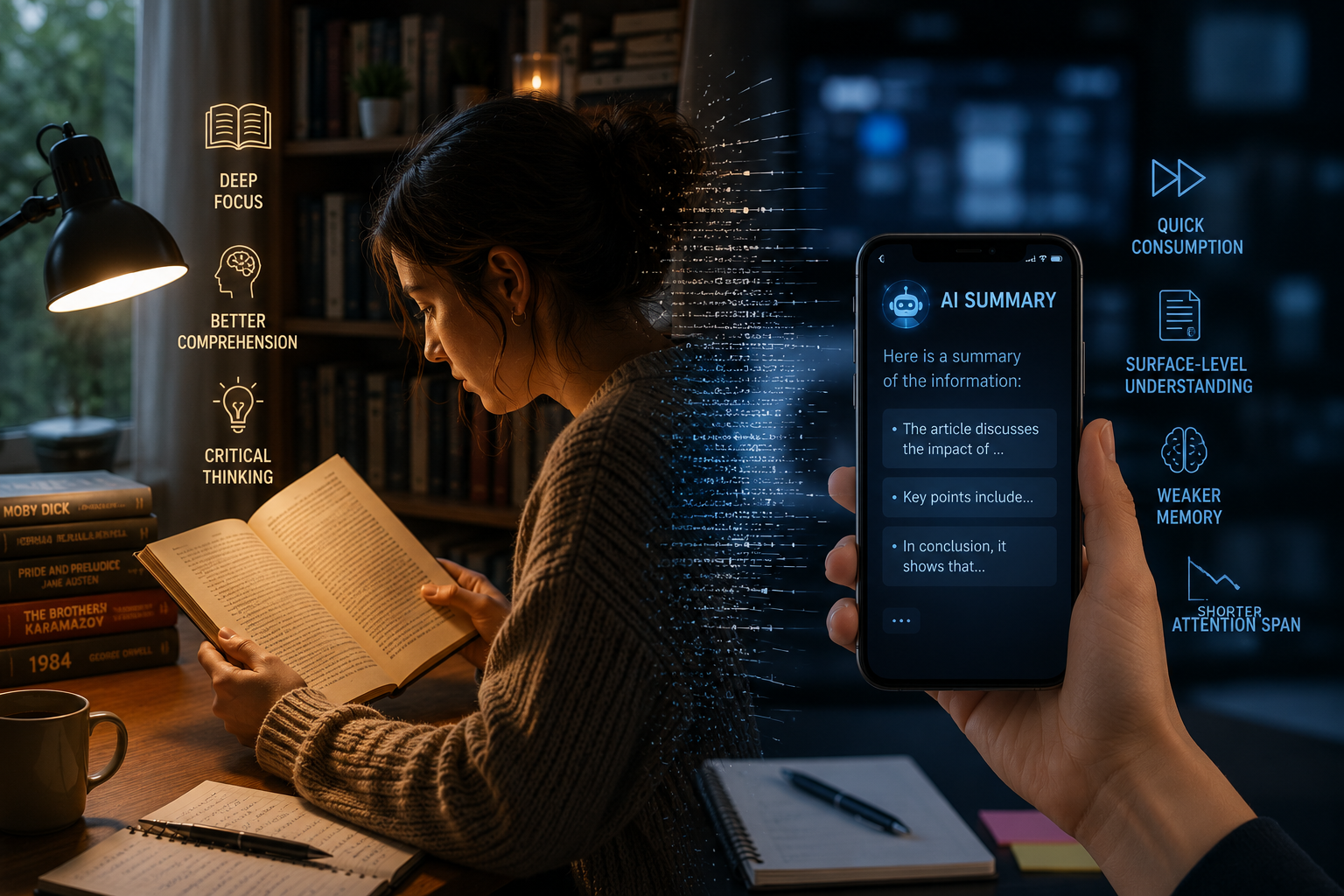
As artificial intelligence becomes increasingly integrated into everyday life, experts say the contrast between the rapid, algorithm-driven consumption of content and the deep reading experience offered by books is becoming more apparent, with significant implications for reading habits.
With AI tools such as ChatGPT and Gemini becoming part of daily life, researchers are increasingly examining how these technologies influence the way people read, CE Report quotes Anadolu Agency.
Experts argue that artificial intelligence is not solely responsible for the decline in reading culture. However, by encouraging users to rely on summaries and condensed content, AI is reducing the time people spend reading books, potentially affecting learning, memory, attention, and deep comprehension.
Speaking to Anadolu Agency, U.S. experts shared their views on whether artificial intelligence has sparked a new battle between algorithms and books.
AI is contributing to a decline in reading
Susan Baron, a linguist and author at American University in Washington, said reading habits have changed dramatically over the past decade. Despite technological advances, she stressed that reading physical books remains superior for concentration and learning.
“Artificial intelligence contributes to how much people read,” Baron said. “I deliberately use the word ‘contributes’ because it contributes to people reading less.
She noted that the decline in readership began before the rise of AI, adding that artificial intelligence should not be blamed as the sole cause.
What readers may lose
Baron said people are increasingly shifting their reading habits toward digital formats, causing them to miss many of the benefits of engaging with original works.
“Reading is a source of relaxation, a way to reduce stress, and an opportunity to escape into other worlds and identify with people who live—or have lived—different lives,” she said. “If our dependence on AI reduces our motivation to read, we risk losing all of those experiences.”
She also warned that social media platforms, particularly short-video apps such as TikTok, have significantly reduced attention spans.
“We don’t necessarily see AI’s direct impact here, but AI-generated recommendations and videos are also shortening our attention spans,” Baron said.
Asked whether AI could mark the end of reading, she replied: “I don’t think AI will end reading, but it is making reading shorter, narrower, and reducing the value we place on it.”
AI summaries may weaken learning
Daniel Willingham, a professor in the Department of Psychology at the University of Virginia, said people are increasingly accepting AI-generated answers instead of consulting original sources.
“We no longer even visit websites,” he said. “For roughly two-thirds of our searches, we simply accept Gemini’s AI-generated answer. That’s even more concerning because we often don’t know the original source.”
Willingham explained that relying on AI summaries rather than original materials has two major cognitive consequences.
The first, he said, is that people retain fewer facts because memory is built through active thinking.
“The less time you spend reading, the fewer memories and facts you retain. Spending less time reading is therefore a threat to comprehension,” he said.
The second consequence concerns people’s ability to evaluate information.
“If I allow AI to read multiple sources, assess the evidence, and decide what is most credible—which is increasingly what we’re doing—I end up seeing less of the evidence myself. That poses a serious threat to learning,” Willingham said.
AI is not the only factor
Willingham emphasized that reading a book is fundamentally different from reading an AI-generated summary.
“Spending weeks with the characters of a novel, reflecting on them and understanding the author’s perspective is obviously not the same as reading a 15-minute AI summary,” he said.
He added that people spend less time reading books today than they did 25 years ago, but AI is only one factor.
“Artificial intelligence is not the only reason people are reading less. Digital media, especially video-based content, also plays a major role,” he said.
Photo: Chat GPT