"True sugar" discovered near Milky Way center
Scientists have made a breakthrough that could shed new light on the origins of life beyond Earth and the formation of organic molecules by detecting a "true sugar" molecule for the first time in an interstellar cloud near the center of the Milky Way.
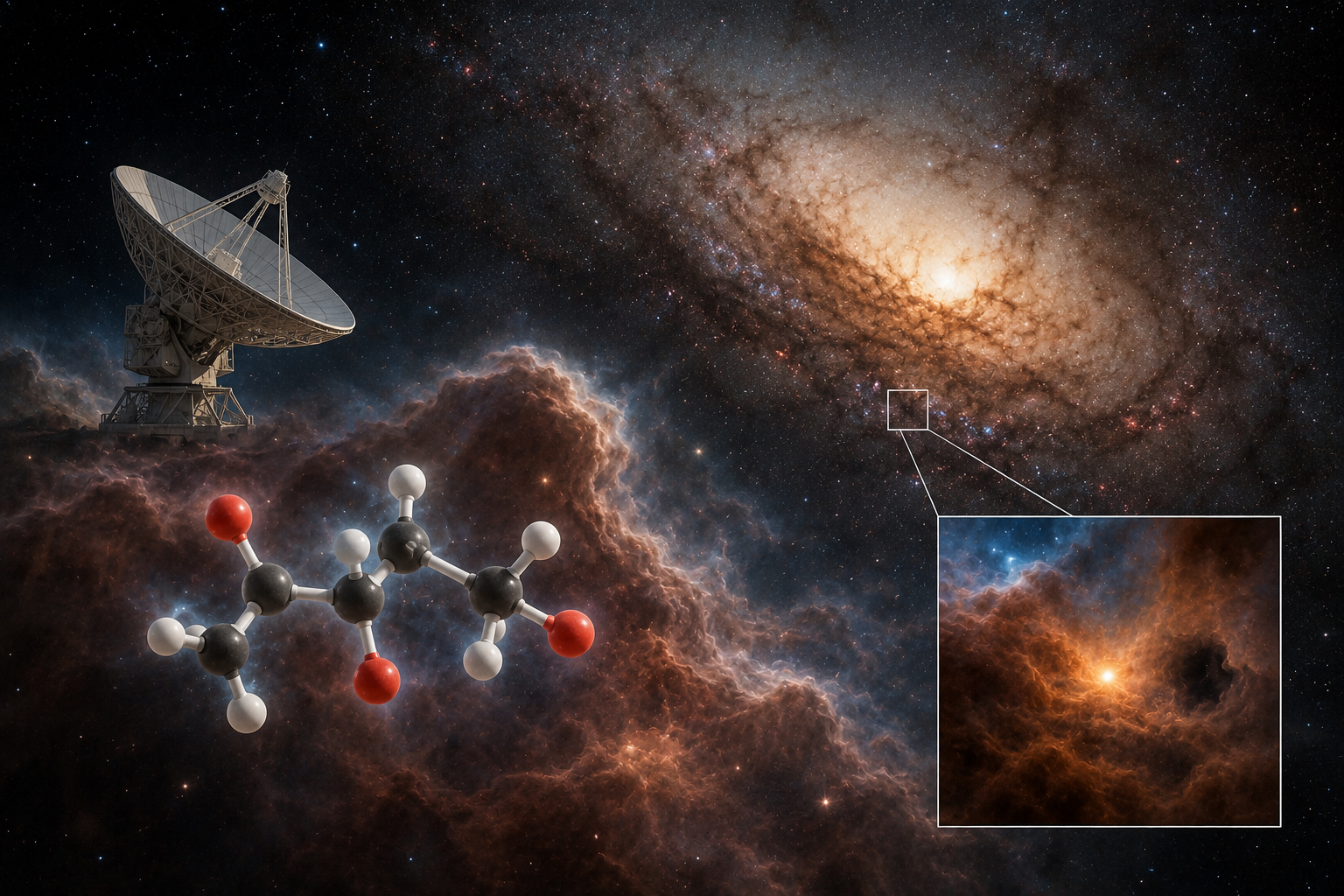
According to a study published in the journal Nature Astronomy, an international research team led by astrochemist Izaskun Jimenez-Serra of the Spanish Astrobiology Center analyzed radio signals emitted by gas and dust clouds near the center of the galaxy using two radio telescopes, CE Report quotes Anadolu Agency.
By comparing the frequency patterns produced by molecules in space with laboratory molecular data, the researchers found that the detected signals matched erythrulose, a naturally occurring sugar molecule.
Erythrulose, which consists of four carbon, eight hydrogen and four oxygen atoms, is a type of sugar naturally found in raspberries on Earth.
Previous studies had identified sugars such as glucose and ribose in meteorites and asteroids that reached Earth, but scientists had been unable to determine exactly where or at what stage these molecules formed in space.
The latest laboratory analyses and telescope observations provide evidence that sugar molecules can be synthesized independently of life through chemical reactions occurring in icy interstellar environments, even before the formation of stars and planets.
Researchers say the discovery represents a crucial first step in understanding how the building blocks of RNA and DNA, which carry genetic information in living cells, may have formed.
According to the team's calculations, between 500,000 and 50 million metric tons of this sugar molecule may have been delivered to Earth during its early formation through impacts from asteroids and comets.
Photo: Chat GPT