NASA detects potential life in Mars's Gale Crater
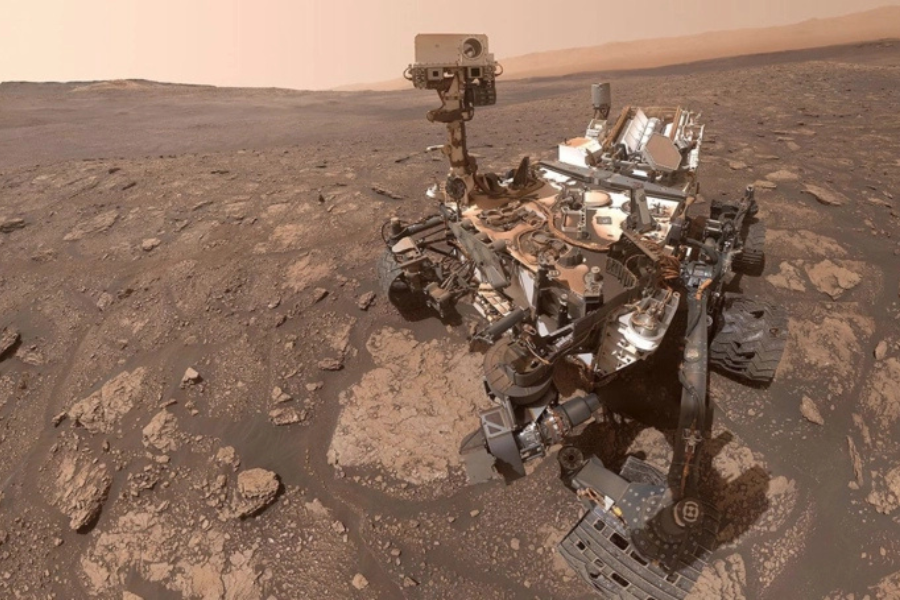
NASA's Curiosity rover has detected several organic compounds, including some never before seen, on Mars, researchers said.
A team led by University of Florida's Amy Williams performed a chemical experiment in situ on another planet for the first time, uncovering a mix of organic molecules, including chemicals that are considered building blocks for life on Earth.
The experiment identified more than 20 chemicals using samples recovered from Mars's Gale Crater, which was formed more than 3.5 billion years ago by the impact of a large meteor and was the focus of Curiosity's efforts, CE Report quotes MIA.
"We think we're looking at organic matter that's been preserved on Mars for 3.5 billion years," said Williams.
"It's really useful to have evidence that ancient organic matter is preserved, because that is a way to assess the habitability of an environment. And if we want to search for evidence of life in the form of preserved organic carbon, this demonstrates it's possible."
Williams said that the chemicals identified include a nitrogen-bearing molecule with a structure similar to DNA precursors, which had not been found on Mars before now, as well as benzothiophene, a large, double-ringed, sulfurous chemical often delivered to planets by meteorites.
"The same stuff that rained down on Mars from meteorites is what rained down on Earth, and it probably provided the building blocks for life as we know it on our planet," Williams said.
The scientist said that the experiment cannot determine if the chemicals uncovered are potential signs of ancient life on Mars or were delivered by meteorites. Rock samples would have to be brought to Earth to establish that.
The findings were published in the journal Nature Communications.
Photo: NASA