Moldova's wind tender attracts strong investor interest - EXCLUSIVE
Moldova advances competitive wind energy tender amid strong investor demand and storage integration plans.
This was said by the source in the Ministry of Energy of the Republic of Moldova in an exclusive interview with CE Report.
The Ministry of Energy of the Republic of Moldova has outlined its approach to evaluating bids for a wind power tender that has attracted strong investor interest, significantly exceeding the available capacity.
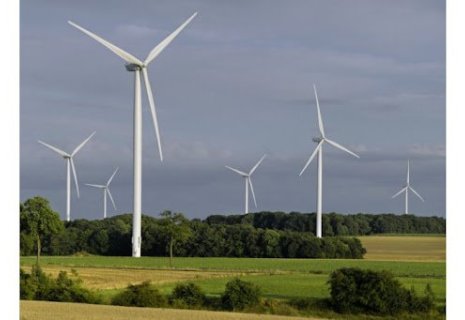
Sixteen bids have been submitted for the construction of wind power plants, totaling more than 423 MW, compared to the tendered capacity of 170 MW. Officials say this high level of interest makes the selection process highly competitive and rigorous, with a strong focus on ensuring both technical feasibility and timely implementation.
Price and technical readiness as key selection pillars
The main award criterion will be the lowest offered price, capped at MDL 1.44/kWh, within the total allocated capacity of 170 MW. Successful projects will be implemented under a fixed price/variable premium support scheme, designed to balance investor predictability with market competitiveness.
Beyond price, bids must pass strict technical admissibility checks. These include compliance with tender documentation, completeness of applications, proposed technical solutions, project maturity, grid connection feasibility, and the technical and financial capacity of bidders. The evaluation committee may also request clarifications or additional information to ensure a thorough assessment.
Financial guarantees to ensure delivery
To secure project reliability, the tender framework includes mandatory financial guarantees. Each bid must be accompanied by a bid bond of MDL 249.61/kW (EUR 12.31/kW), issued as an irrevocable and unconditional bank guarantee from a Moldovan or internationally recognized financial institution, valid for 180 days and extendable if necessary.
After winning the tender, investors must provide a performance bond of MDL 1,248.05/kW (EUR 61.55/kW), designed to ensure compliance with obligations related to commissioning and operation. The deadline for commercial operation is set at 36 months after publication of the government decision granting eligible producer status, with a possible extension of up to 24 months in justified cases not attributable to investors.
Energy storage integration into the grid
The Ministry also detailed its strategy for integrating energy storage systems into the national grid, treating them as fully integrated but operationally distinct assets within renewable energy projects.
Storage facilities may be co-located with generation plants or connected separately, but will be managed under unified project frameworks. Clear metering systems will ensure separation between electricity generation and storage charging and discharging, supporting transparency and compliance with support schemes.
Storage is expected to play a key role in system balancing and flexibility, helping integrate variable renewable energy, particularly wind. Operators will be allowed to participate in wholesale and balancing markets, assuming full commercial responsibility.
Depending on the regulatory framework, storage will operate either in separate balancing groups during the PPA phase or within a unified balancing group under the CfD regime. Integration will be supported through compliance with grid codes and real-time coordination with the transmission system operator.
Contribution to 2030 renewable energy goals
Authorities estimate that 170 MW of wind capacity could generate around 410,000 MWh annually, replacing fossil fuel-based electricity production. This would contribute an additional 5% toward Moldova’s goal of reaching a 30% renewable energy share in gross final electricity consumption by 2030.
Officials also note that integrating storage systems will help reduce renewable energy curtailment, improve grid efficiency, and strengthen Moldova’s energy security.
This interview was prepared by Laura Hoffman