Luna 9 marks historic first images of another world
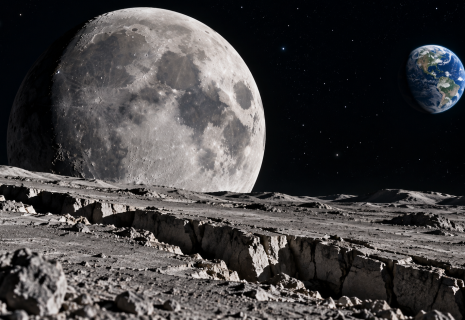
Sixty years have passed since the first lunar landing: on February 3, 1966, the Soviet lander Luna 9 became the first vehicle to touch down on the Moon and photograph its surface.
The images sent back to Earth were the very first ever taken of the surface of a world other than our own planet. The Luna 9 mission was part of the Luna program, launched in 1959 by the Soviet Union, which until then had recorded a series of failures, CE Report quotes ANSA.
The spacecraft carrying the lander was launched on January 31, 1966, aboard a Molniya-M rocket from Site 31 in Tyuratam (Kazakhstan). On February 3, as it was nearing the end of its journey and was about 75 kilometers above the lunar surface, it ignited its engines to slow down. Signals received on Earth — including by several Western stations — detected rapid deceleration, and one minute later all signals stopped. It was later revealed that the main engine shut down at an altitude of 150 meters, after which the descent continued using four small auxiliary engines.
When the lander was about 50 meters above the surface, the spherical module separated from the spacecraft and successfully carried out the first soft landing on the Moon. It bounced several times before coming to rest in the Ocean of Storms region. Four petal-like structures then opened on the sphere, lifting the internal dome-shaped section that housed the instruments.
Known as the Automatic Lunar Station (ALS), the lander was a 58-centimeter-diameter sphere made of a hermetically sealed container. It housed a radio system, a programming device, batteries, a thermal control system, and a radiation detector. As the antennas prepared to transmit data back to Earth — using the inner surfaces of the petals as reflectors — the camera began its work.
The very first images of the surface of another world reached Earth on February 4, received by astronomers at the Jodrell Bank Observatory near Manchester. However, the images were not well defined. Due to bureaucratic delays, the Soviets only managed to release the images the following day, this time in good quality.
Over the six days of the mission, a total of 40 images were transmitted, showing that the lander was located in a flat area. Photos of the same regions were taken at different times, allowing researchers to use the changing shadows to reconstruct a detailed profile of the landscape, determining the size and shape of rocks and craters.