NASA astronaut visits Slovenia
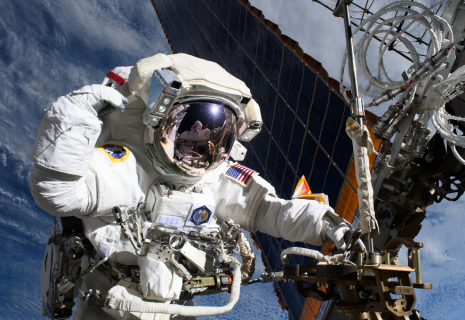
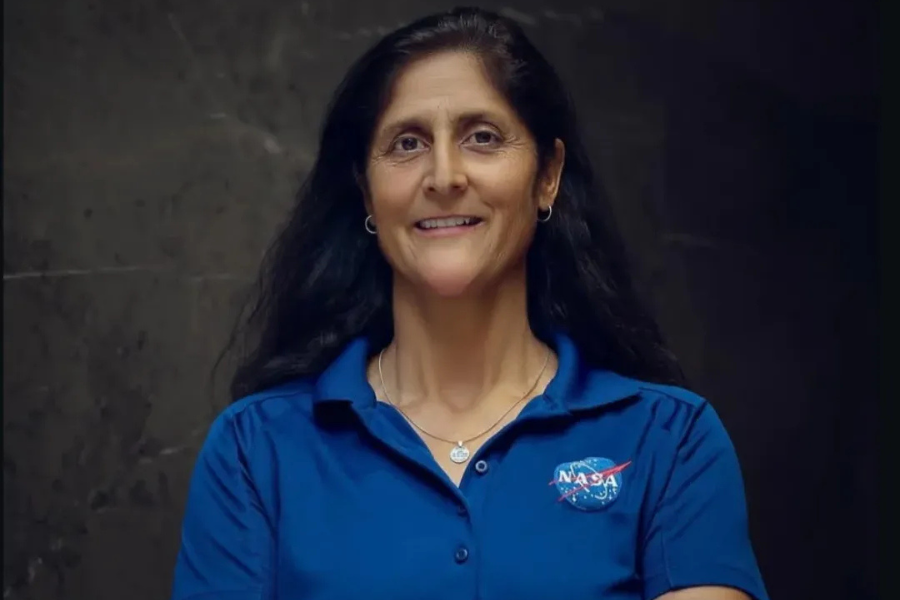
NASA astronaut Sunita Williams, who holds a record for most spacewalk time by a woman, is back in Slovenia, the country of her maternal great-grandmother, for a three-day visit to share her experience of living and working in space, discuss cooperation in space exploration and promote science among young people.
Williams has visited Slovenia several times before, most recently in October, when together with her mother and sister she visited Leše near Tržič in the north of the country, the native village of her great-grandmother Marija Bohinec, CE Report quotes The Slovenia Times.
This was after her last space mission, scheduled to last eight days, was extended to over nine months due to problems with Boeing's Starliner service module. During her prolonged time in space she talked to Leše locals by direct video-link, telling them she would want to enjoy Slovenian potica cake and kranjska sausage if she was to come back.
This time, Williams is visiting between 13 and 16 January at the invitation of Foreign Minister Tanja Fajon and Minister for Slovenians Abroad Matej Arčon. Apart from meeting Slovenia's most senior officials, she is also visiting several academic and research institutions.
Being curious key
At the outset of her visit she gave a talk to a packed audience at the Herman Potočnik Noordung Centre of Space Technologies in Vitanje in the north of the country, named after a Slovenian space-travel pioneer and visionary who conceived the idea of a geostationary satellite.
She said it was not her plan to be an astronaut, but she went through a lot of steps to get there. Her message to young generations is that being steadfast in your desires, you can do it.
"I'm going to share my story of what's like to live and work in space and hopefully get folks excited and encourage them to join in and be part of it."
Asked what helped her through the long months in space, she said:
"I think the stubbornness of my mother's family, being Slovenian, and the ability to just like put your head down and do it; the strength came from my mother's side."
But she also said that when doing the experiment up in space she thought the best thing is to not know everything about what is expected and to be curious.
"Because we might find something that we didn't expect. Being curious about what we're learning and what we're doing is key."
She encouraged young people to have courage and passion so that in the future, regardless of what they do, they will push new boundaries and discover new worlds.
She also said she was happy to come back to "my home country" once again and enjoy the wonderful nature and scenery, and people and food. She admitted she had one genuine kranjska sausage as soon as she arrived in Ljubljana and it was "delicious". Williams even took one kranjska sausage to the International Space Station in 2006.
Time for Slovenia to send astronaut into space
She noted there have so far been as many as four astronauts with partly Slovenian roots, so perhaps it was time for Slovenians to send one of their own into space.
Given everything that has been done so far on the International Space Station and with another landing to the Moon being announced, the next generations will have ample opportunity to explore space, she said.
Williams lauded Slovenia for making large and important steps towards space exploration since her last official visit in 2016. Slovenia joined the European Space Agency (ESA) as a full member starting from 2025 and has become a party to the Artemis Accords.
"We are truly developing the space industry, including science diplomacy, and giving our best in promoting science, innovation, space technology and industry," said Foreign Minister Fajon, who accompanied Williams to Vitanje. She finds her visit a major opportunity for the country.
Williams also met President Nataša Pirc Musar and Prime Minister Robert Golob for discussions focusing on the importance of science, innovation and international cooperation in space exploration, and Slovenia's role in global scientific projects.
"Thank you for inspiring and supporting the young generations," Pirc Musar said on X.
During the four day visit, Williams is also meeting with Slovenian scientists, academic staff, students and representatives of space science companies.
She will visit the Planica Nordic Centre, including the Laboratory for Gravitational Physiology of the Jožef Stefan Institute, where the country's main scientific institution studies the impact of microgravity on the human body in collaboration with ESA.
Photo: Instagram