UNESCO recognizes World Turkic Language Family Day
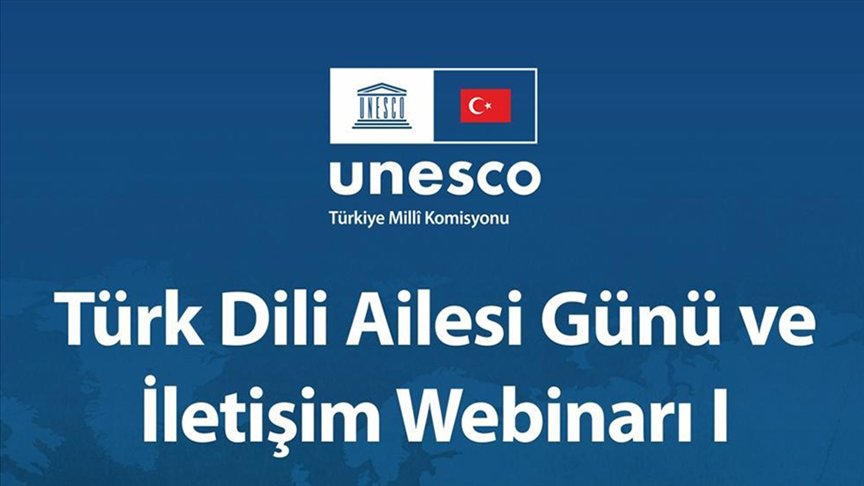
Speaking at the opening of the event, Prof. Dr. Deniz Bayrakdar, Chair of the Commission’s Specialized Committee on Communication, said it was gratifying that December 15 was recognized as World Turkic Language Family Day at the 43rd UNESCO General Conference held in Samarkand, Uzbekistan.
Bayrakdar noted that the decision was taken as a result of initiatives by the Presidency and the work carried out by the Turkish National Commission for UNESCO and the permanent delegation, emphasizing that language is among countries’ top priorities, CE Report quotes Anadolu Agency.
Stating that “the Turkic language and Turkish are ancient languages that enable communication across a vast geography,” Bayrakdar underlined that journalism and the media play an important role in the correct and careful use of Turkish.
Prof. Dr. Öcal Oğuz, President of the Turkish National Commission for UNESCO, said that the recognition of December 15 as World Turkic Language Family Day was the result of a long and multilateral diplomatic process. “The date of December 15 has been accepted by the international community, through UNESCO, as World Turkic Language Family Day,” he said.
Oğuz explained that the process began in 2017 and that a common consensus was reached through consultations with the national commissions of Turkic-speaking countries. He added that the chosen date is based on the Göktürk Inscriptions and the scholarly studies that deciphered them, integrating UNESCO’s ideals such as the rapprochement of cultures, the value of science, and dialogue through knowledge.
Following the speeches, a journalism panel was held online under the moderation of Assoc. Prof. Dr. Hilmi Bengi, Deputy Chair of the Communication Specialized Committee of the Turkish National Commission for UNESCO. Speakers included Gayana Yüksel, founder of Crimea News Agency; Sabir Şahtahtı, lecturer at Azerbaijan State Pedagogical University; Tolga Özgenç, Anadolu Agency Asia-Caucasus News Director; TRT anchor Hakan Şahin; and journalist Güngör Yavuzaslan.
Yüksel drew attention to the fact that the Crimean Tatar language is listed as seriously endangered in UNESCO’s Atlas of the World’s Languages in Danger, noting that this is the result of historical and political processes. She said the Crimean Tatar population is around 300,000 in 2025, a demographic reality that directly affects the public use of the language, adding, “If a language disappears, not only words are lost, but also a people’s way of perceiving the world.”
Şahtahtı thanked everyone who contributed to decisions related to the Turkic-Islamic world at UNESCO’s 43rd General Conference and stressed the need for concrete projects in education, media, and publishing to strengthen the goal of a common language and a common alphabet.
Özgenç thanked those involved in UNESCO’s recognition of World Turkic Language Family Day, noting that Anadolu Agency strives to fulfill the 19th-century thinker Ismail Gasprinski’s principle of “unity in language, thought, and action” across regions where Turkic peoples live. He said that with advancing technology, communication and developing a common language have become easier, adding that the spirit of the Turkic world championed by Gasprinski is still needed today.
Özgenç stated that Anadolu Agency will continue its coverage related to the Turkic language, give more voice to researchers, and maintain in-depth reporting on the history of the Turkic language. He added that the agency will continue to highlight figures such as Khoja Ahmed Yasawi, Mahtumquli Fragi, and Abai Qunanbaiuly, and will provide extensive coverage of the Turkology Congress to be held in Baku next year marking the centenary of the First Turkology Congress. Efforts will also continue to implement a common Turkic alphabet and increase the number of journalists of Turkic origin trained at the AA News Academy.
Hakan Şahin emphasized that mutual understanding is essential, noting that he has been able to travel and communicate in Turkish in Crimea, Azerbaijan, Albania, Kosovo, North Macedonia, and Northern Cyprus. He stressed the importance of preferring Turkish equivalents over foreign words and using correct pronunciation, saying everyone who speaks a language has a responsibility to ensure it is passed on to future generations.
As reported by CE Report, journalist Güngör Yavuzaslan recalled that Turkish TV series are widely watched from the Middle East to Europe, and from Latin America to Asia, increasing interest in learning Turkish. He added that this process should be managed strategically and that correct usage and pronunciation of Turkish in TV series are of great importance.