How Europe wins: Main takeaways from European Forum Alpbach 2026 - OPINION (PHOTO)
By Aytan Aliyeva
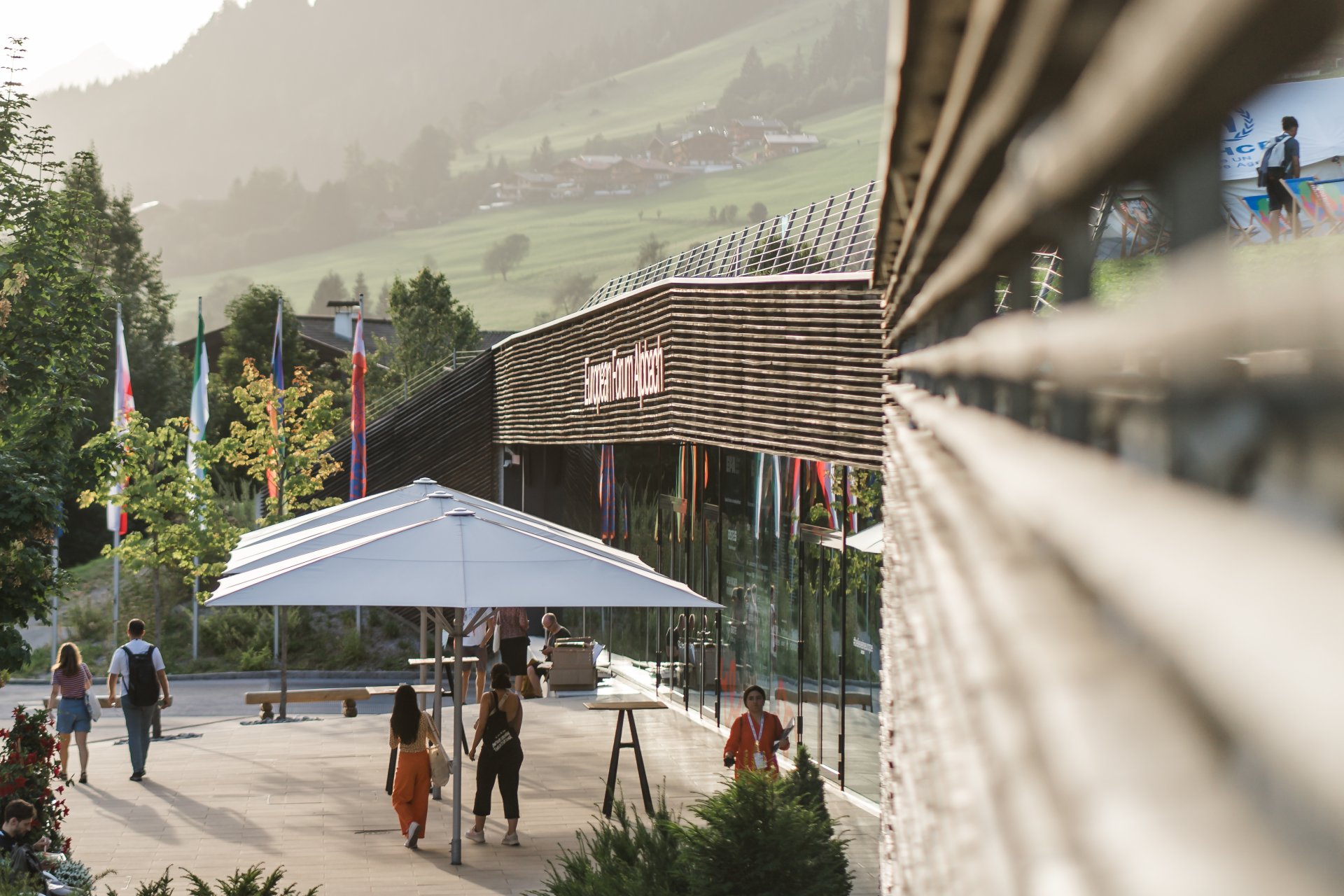
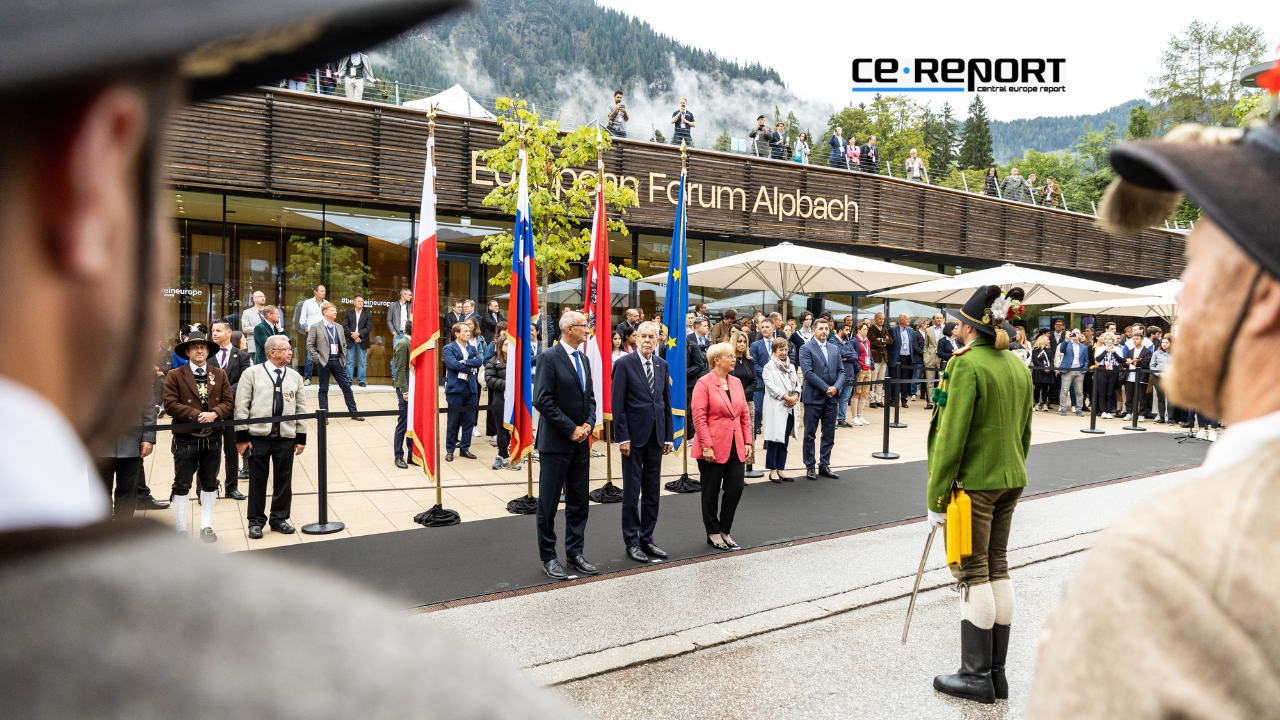
The 82nd European Forum Alpbach brought around 4,800 participants to the Tyrolean village over its full program, including almost 700 scholarship holders from more than 60 countries. The Conference Days, held from 30 August to 4 September, concentrated the wider Forum into four main-stage focus areas alongside the permanent tracks of Security, Finance and Economy, Climate, Democracy and the Rule of Law.
Taken as a whole, the discussions produced less a single policy prescription than a common diagnosis: Europe has significant resources, but too often lacks the mechanisms, political will and confidence required to turn them into power.
Europe’s problem is implementation, not ideas
The strongest message across the Conference Days was that Europe is no longer short of diagnoses. Its structural weaknesses have been documented repeatedly: fragmented markets, insufficient defence capacity, slow decision-making, energy dependence, underdeveloped capital markets, technological gaps and growing pressure on democratic institutions. The official Conference Days program itself reflected that shift. Rather than asking whether reforms are needed, the first focus topic of the “Capability & Renewal: Mobilising Europe’s Power to Act” asked whether Europe can renew the institutional foundations that enable action at all.
The discussion moved beyond the familiar debate about vetoes and qualified-majority voting toward deeper questions of agility, subsidiarity, accountability and political courage. That distinction matters.
Europe's problem is not only that its institutions are inefficient. The problem is political. Governments often know what needs to be done, but they struggle to build long-lasting groups of supporters, keep the public satisfied, and accept the costs of important decisions. This applies equally to defence, climate investment, enlargement, infrastructure and economic reform.
Security has become the main focus of European policy
Security was no longer treated as a separate part of defence policy. Instead, it appeared as the organizing framework connecting foreign policy, economic policy, energy, technology and infrastructure. The war in Ukraine has accelerated that transformation. Europe is being forced to reassess assumptions that shaped the post-Cold War period: that large-scale war on the continent was unlikely, that American security guarantees could be taken for granted, and that economic interdependence would generally reduce geopolitical risk. The Conference Days repeatedly returned to the question of how Europe can build a more credible security architecture while accommodating very different national threat perceptions.
That diversity is real. Geography matters. The countries on the eastern border of Europe have a different relationship with Russia compared to those in the south or west. The debate therefore moved toward the concept of “effective unity” rather than absolute uniformity. Coalitions of willing and capable states were presented not necessarily as threats to European integration, but as pragmatic tools where full consensus is impossible. The underlying principle was that Europe must avoid allowing unanimity to become a mechanism for permanent inaction. Yet the security debate also showed the limits of institutional engineering. A new defence structure cannot make political will if governments do not already have it.
It can't automatically bring together different ideas about military force or risk. European defence therefore requires both capability and political legitimacy.
European sovereignty means reducing critical dependencies
One of the clearest shifts in the Forum was the meaning of sovereignty. It was not presented primarily as isolation or self-sufficiency. Rather, sovereignty increasingly meant having choices. A sovereign Europe is one that is not forced into decisions because it lacks energy, technology, financial capacity, military capability or access to critical infrastructure. That explains why defence, energy, semiconductors, data, payments and capital markets increasingly appeared in the same conversation. The Security track framed Europe’s task as increasing geopolitical influence, strengthening defence and reducing dependencies in a fragmented global system. The same logic appeared in economic and technological discussions.
Dependence becomes strategically dangerous when it is concentrated in areas where disruption would affect entire economies. The semiconductor supply chain is an obvious example. A major crisis in East Asia would not remain a distant geopolitical event; it could quickly affect European manufacturing, AI development and financial markets.
Competitiveness is no longer only an economic question
The Finance and Economy track approached Europe’s economic problems through the pressures of geopolitical shifts, technological change, slow productivity growth, demographic trends and weak investment. Its stated objective was not only prosperity, but Europe’s ability to sustain its role in the world. This was one of the most important shifts in Alpbach. Competitiveness is increasingly being treated as a prerequisite for strategic autonomy. Defence, energy infrastructure, support for Ukraine, industrial transformation and technological investment all require money. Without stronger growth and productivity, governments will face increasingly difficult trade-offs between strategic ambition and fiscal reality.
The Single Market, therefore, emerged not simply as an economic integration project but as a geopolitical asset. A fragmented market prevents European companies from scaling as easily as competitors in the United States or China. It also weakens Europe’s ability to mobilise capital and build companies capable of competing globally. The same applies to capital markets. Europe has substantial private savings, but too little of that money is transformed into productive investment in European companies, infrastructure and innovation. This helps explain why the Capital Markets Union surfaced as one of the most important unfinished European projects.
Europe has capital, but still struggles to mobilize it...
The second main-stage focus, “Finance and Trust: Funding Europe’s New Promise,” made clear that budgets and financial architecture are political questions. Behind every allocation in the EU’s Multiannual Financial Framework lies a choice about what Europe considers important: defence, technology, social cohesion, climate transformation, infrastructure or enlargement. The program linked financing to trust between generations, member states, citizens and institutions. That framing was significant. Europe’s financial challenge is not simply to spend more. It is to develop financial systems capable of mobilizing long-term investment while maintaining political legitimacy. A deeper capital market would allow European savings to finance more European innovation and infrastructure. At present, fragmentation across national legal and financial systems still limits scale. The payments debate exposed the same structural issue from another angle. Europe has made major progress through SEPA and instant payments, but cross-border finance remains technically and institutionally complex. In the future, Europe will work together on using digital currencies and making sure that different payment systems can be used together.
Energy is becoming the foundation
Energy emerged as one of the most important cross-cutting issues of the Conference Days. Europe’s ability to remain competitive in advanced manufacturing, AI, data centres and defence production will depend heavily on access to reliable and reasonably priced power. That means defence spending cannot be considered in isolation. A continent that increases military budgets while underinvesting in grids, generation and cross-border energy infrastructure risks creating a different strategic vulnerability.
The third main-stage theme, “Technology & Society: Developing Europe’s Next Infrastructure” linked sovereignty to resilient energy systems, data and compute infrastructure, and technologies capable of supporting democratic life. This was a broader definition of infrastructure than Europe has traditionally used. Infrastructure is no longer just roads, railways and bridges. It increasingly means: energy grids, data centres, cloud and compute capacity, semiconductor supply chains, digital payment systems, industrial AI, and secure communications.
The strategic question is therefore not simply how Europe produces electricity, but whether it possesses the physical systems required to sustain the next generation of economic activity.
Europe should not try to become a copy of America or China
The technology discussions challenged the assumption that Europe’s only path to success is to reproduce American or Chinese models. Europe undeniably trails in some areas of frontier AI and large-scale digital platforms. But the Forum also highlighted areas where European strengths remain substantial: engineering, manufacturing, industrial data, process standards, safety regulation and highly specialized industrial companies. This suggests a different strategy. Europe might have more chances to succeed with industrial AI and the application layer than by trying to copy every major American technology company from the beginning.
The United States may be ahead in some areas of technology. The production of microchips is very important in East Asia. Europe is in charge of important industrial technologies and standards. That reality makes the idea of complete technological decoupling unrealistic. Europe therefore needs to determine which dependencies are acceptable, which are dangerous and where strategic capacity must be built domestically.
Climate policy should be an economic opportunity, not only a regulatory obligation
The Climate track reflected another important evolution. Europe remains committed to climate neutrality by 2050, but the political environment around climate policy has become more difficult. The official EFA framing acknowledged that climate action now has to operate amid geopolitical competition, changing political priorities and growing concerns about competitiveness. This matters because climate policy intersects with industrial policy and security. Dependence on imported fossil fuels creates geopolitical vulnerability. At the same time, renewable-energy systems, electric vehicles and digital technologies require enormous quantities of minerals, infrastructure and electricity. The sustainability debate therefore became more complicated than a simple contrast between “green” and “non-green.” A serious transition requires accounting for where environmental and social costs are actually borne. The wider lesson was that Europe will not sustain its climate strategy politically if it is perceived only as a source of restrictions and higher costs.
Enlargement is geopolitics
The discussions on the Western Balkans showed another significant change in tone. Enlargement is increasingly seen not simply as a technical accession process, but as one of Europe’s most powerful instruments of influence. The strategic logic is straightforward: if the EU does not offer countries in its neighbourhood a credible political and economic future, other powers will expand their influence. That does not mean standards for membership should disappear. It means that countries which carry out difficult reforms must believe that accession remains genuinely possible. Otherwise, the EU risks weakening its own leverage. The historical power of European integration has always rested partly on attraction. European political space expanded largely because countries wanted to join it.
Europe needs a different relationship with the Global South
One of the most important external perspectives at Alpbach was that Europe cannot define its global role only through its own concerns. Partners in Africa, Asia and Latin America increasingly reject binary geopolitical choices. They may want European investment, Chinese technology, American capital and regional partnerships at the same time. Europe therefore needs a more flexible idea of alignment. The African discussion was especially direct. The traditional model of loans, aid and raw-material extraction is increasingly inadequate. Many countries want investment that creates local value, jobs, energy infrastructure and industrial capacity. The implication is that Europe’s partnerships must become more reciprocal and economically credible. Europe also faces a perception problem when its values appear to be applied across different conflicts and regions.
Build a European model rather than imitate someone else’s
The final main-stage theme, “Envisioning the Europe We Build,” brought the Forum’s different strands together. Its premise was that the global order is being reshaped by force, markets, technology and competing political models, but that Europe’s answer should not simply be imitation. That may be the most important conclusion of EFA26. Europe cannot out-China China or out-America America. Its strategic task is to determine what a European model of power looks like. That model would need to combine: economic scale with social cohesion, military capability with democratic control, technological innovation with human dignity, climate ambition with competitiveness, open markets with resilience, and global partnerships with credible values. That is far harder than simply spending more on defence or passing another industrial strategy. It requires Europe to integrate policies that are still often treated separately.
From Alpbach to 2035: the test is whether Europe can act
The Forum closed with the Alpbach Manifesto 2026, which organized the final call to action around security, finance, climate and democracy. Its ambition is long term: to define a vision of Europe by 2035, when the European Forum Alpbach reaches its 90th anniversary. The Manifesto calls for less fragmentation in security, deeper financial integration, stronger shared responsibility on climate and a more capable democratic system. The direction is coherent with the wider Conference Days. The conclusion from Alpbach was not that Europe lacks power. Europe has a vast market, large pools of savings, advanced industry, scientific capacity and a network of international relationships. The central question is whether Europe can connect them. That is what “How Europe Wins” came to mean.
The Forum’s most important takeaway was therefore less dramatic than its title, but more consequential: Europe wins when it develops the capacity to act on what it already knows.
Gallery