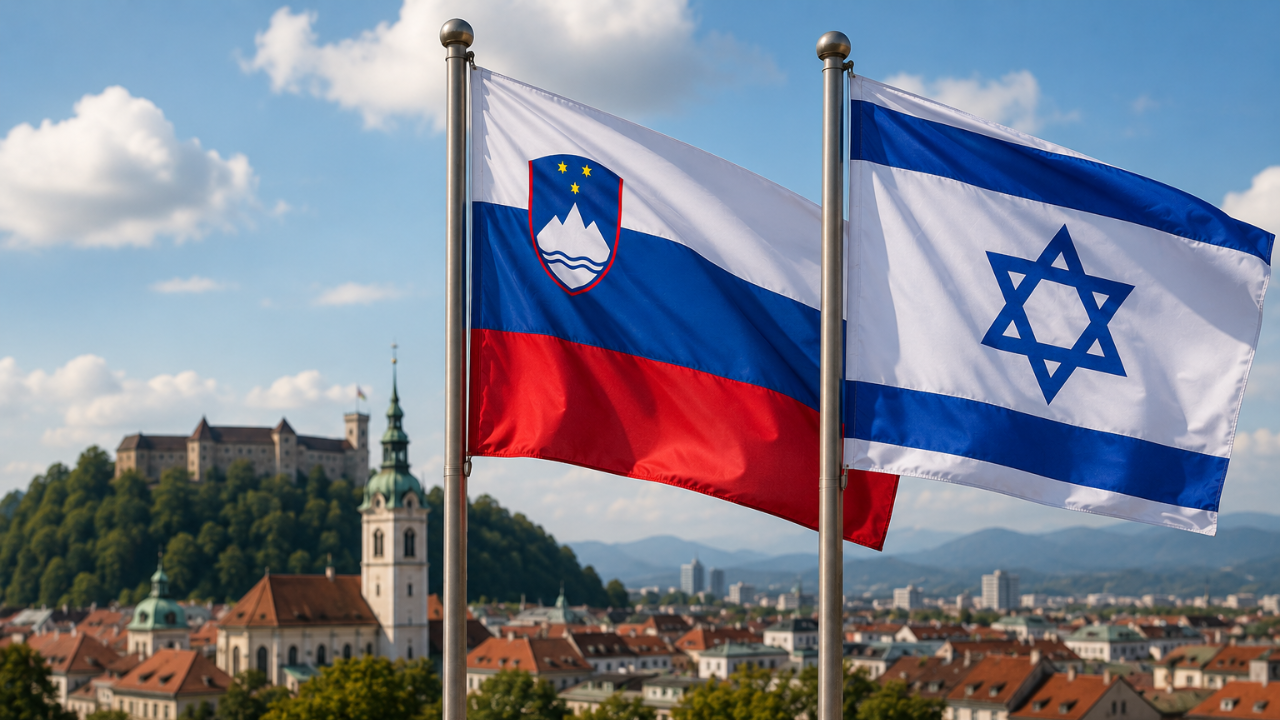
Israel opens first resident embassy in Slovenia
Israel has opened its first resident embassy in Slovenia, marking the latest and most visible step in a rapid warming of ties since a new government took office in Slovenia.
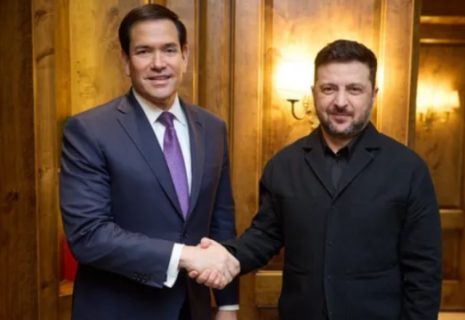
Israeli Foreign Minister Gideon Sa'ar inaugurated the embassy on 9 September alongside his Slovenian counterpart Tone Kajzer, who said the permanent diplomatic presence would strengthen political dialogue and create opportunities for trade, investment, science, technology and culture, CE Report quotes The Slovenia Times.
"An embassy is more than a diplomatic mission. It is a bridge between our countries, economies, institutions and people," Kajzer said.
Sa'ar called the embassy opening and the warm welcome he received from the Slovenian counterpart a "historic day in the relations between our nations".
A sharp change in direction
The opening capped months of rapprochement under Prime Minister Janez Janša's right-wing government, which has said it wants a more pragmatic foreign policy focused on Slovenia's interests.
Even before returning to the prime ministerial office, Janša nurtured close ties with Israel, visited the West Bank, which he sometimes refers to Judea and Samaria, and met with representatives of Israeli settlers.
Slovenia and Israel established diplomatic relations in 1992, but ties cooled under the previous government of Robert Golob following Hamas's 7 October 2023 attack on Israel and Israel's subsequent military operations in Gaza.
Slovenia condemned the Hamas attack but was also vocally critical of Israel's response and formally recognised Palestine in June 2024. President Nataša Pirc Musar was among the first political leaders to describe Israel's actions in Gaza as genocide.
The previous government also declared Israeli Prime Minister Benjamin Netanyahu and two senior ministers personae non gratae, banned imports from illegal Israeli settlements in the occupied Palestinian territories and prohibited arms trade with Israel.
Janša's government repealed those measures in June.
The change was signalled almost immediately after Janša took office, when the Palestinian flag was removed from the government building. Sa'ar announced the planned embassy opening soon afterwards, saying Janša's election marked a new chapter in bilateral relations.
Most recently, Slovenia blocked a joint EU statement condemning the expansion of Israeli settlements in the occupied West Bank.
Kajzer declined to say whether Slovenia would join sanctions against Israeli settlers adopted by some other European countries recently or consider moving its embassy in Israel to Jerusalem.
Trade, technology and business
Aside from stronger political ties, Slovenia is also seeking closer economic and technological ties with Israel.
A Slovenian-Israeli business forum held in Ljubljana on the day of the embassy opening brought together 12 Israeli and 35 Slovenian companies, with technology, healthcare and agriculture identified as areas with the greatest potential.
While Israel is not among Slovenia's largest trading partners, goods trade reached €244 million last year, up 14% from the previous year despite the political tensions, with Slovenian exports rising 35% to €131 million.
Kajzer and Sa'ar also signed a cooperation programme covering education, science, culture, youth and sport through 2030.
The two ministers described the relationship as extending beyond business. Sa'ar called Israel a stable trading partner and stressed the potential for cooperation in medicine, artificial intelligence and technology.
Domestic political fallout
The rapprochement has deepened political divisions in Slovenia, where centre-left parties are strongly pro-Palestinian, a sentiment underpinned by rule-of-law concerns, and where relations with Israel have become one of the defining fault lines in national politics.
Sa'ar's visit was accompanied by protests, including a rally organised by a left student group calling for the closure of the Israeli embassy and an end to economic cooperation with Israel that organisers said attracted 5,000 people.
Some leftist politicians were among the several hundred protesters, including former President Milan Kučan, who remains an influential figure on the left.
The warming of relations with Israel looks set to inform Slovenian domestic politics for weeks, if not months, to come as opposition parties, angered by the government's U-turn on Israel, have already set the stage for a major battle.
They announced an impeachment motion against Janša and a no-confidence motion against Kajzer just before the embassy was officially launched, citing the government's Israel policy.
"Because of the promises and debts of one person - the prime minister - Slovenia has become subjugated to the interests of a foreign state, Israel," Golob said. "Slovenia no longer has a sovereign foreign policy."
Not a single impeachment motion has so far succeeded in Slovenia and few votes of no confidence have, but the move gives opposition parties plenty of opportunities to criticise the government in parliament.
Photo AI