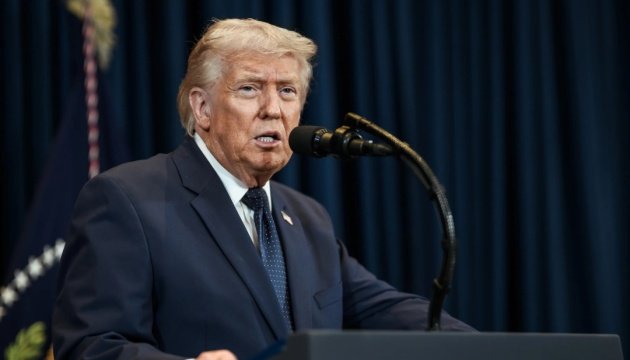
Trump signals diplomatic opening with Iran while keeping pressure on
U.S. President Donald Trump said that the United States is engaged in "constructive discussions" with Iran and that there is a chance of reaching an agreement in the ongoing conflict, but warned that U.S. military strikes would resume if negotiations fail, Reuters reported, CE Report quotes MOLDPRES.
Despite Trump's optimism, Tehran appeared to test the pause in the U.S. military campaign, as Saudi Arabia, Jordan and Iraq reported drone attacks on Monday.
On Saturday, Washington abruptly suspended its two-week air campaign against Iran, marking the latest strategic shift by Trump in the five-month-long conflict.
"We are having constructive discussions," Trump said on Monday. "I think there is a very good chance that something will happen. If it does, great. If it doesn't, we'll go back to what we were doing two days ago," he warned, referring to airstrikes.
Later, at a campaign rally in Michigan, Trump said of Iran: "You can't bribe them. You have to beat them, and we will beat them decisively. But we'll see how it ends. Right now, very friendly negotiations are taking place."
Iranian Foreign Ministry spokesperson Esmail Baghaei said on Monday that messages continue to be exchanged through mediators and that Iran has not abandoned diplomacy, but dismissed reports that Tehran had requested negotiations as "fabrications."
"That is not part of our DNA," Baghaei said.
A senior Iranian official told Reuters on Sunday that Iran would suspend its own attacks as long as Trump's self-imposed ceasefire remains in effect.
However, Iran's Central Military Command later accused the United States of threatening ships and oil tankers in its territorial waters and of attempting to impose an "illegal naval blockade," which it described as an escalation of the regional conflict.
Saudi Arabia later announced that it had intercepted drones targeting oil facilities, including sites in the capital, Riyadh. The kingdom said the drones had been launched from Iraq by Iran-backed armed groups and reserved the right to respond.
Separately, Iran-backed Houthi forces in Yemen claimed responsibility for attacking the East-West oil pipeline that transports crude to Saudi Arabia's main Red Sea port of Yanbu, describing the strike as retaliation for Saudi drone operations.
Tehran also reiterated that it maintains control over the strategically important Strait of Hormuz, a key route for global energy supplies, through which Trump has insisted international shipping must be allowed to pass freely.
The suspension of the U.S. military campaign after 13 consecutive nights of increasingly intense bombing, together with Trump's comments about negotiations, pushed oil prices lower.
According to a U.S. official and several American media reports, Trump's decision to halt the air campaign reflected military advice that the bombing had reached the limits of what it could achieve.
The official told Reuters that military commanders informed the president they were running out of high-value targets and that Chairman of the Joint Chiefs of Staff General Dan Caine had expressed concern about the depletion of air-launched munitions.
Trump rejected suggestions that the United States was facing an ammunition shortage, saying the military was rapidly replenishing stocks depleted by deliveries to Ukraine. He added that he wanted more "sophisticated equipment."
Photo: White House