UN Security Council warns of escalating war risks after Russian drone crash in Romania
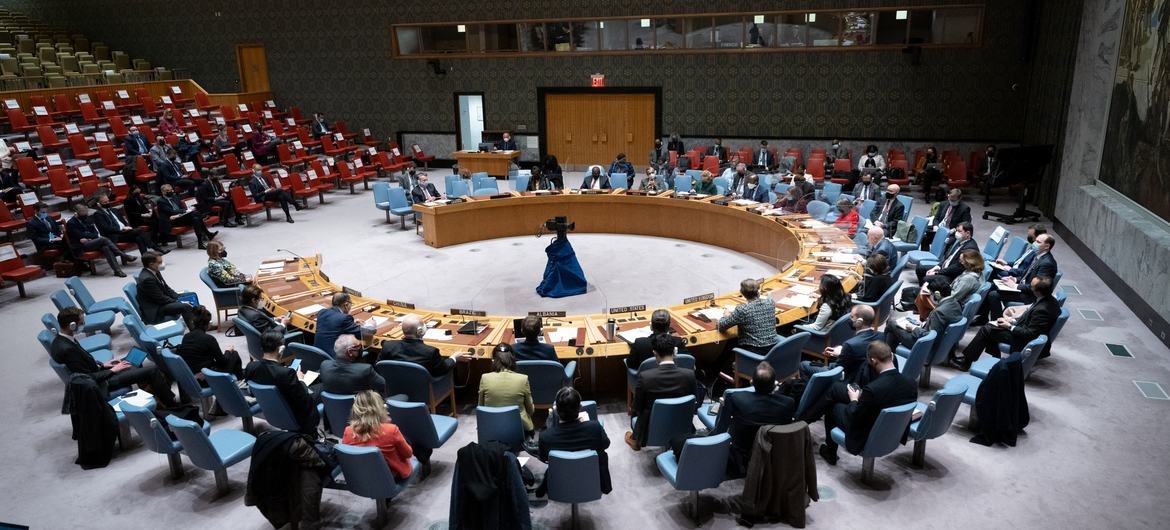
Holding its fourth emergency meeting on the war in Ukraine in just two weeks, the United Nations Security Council discussed allegations of yet another grave security incident — a reported Russian Federation drone crash in neighbouring Romania — as the representatives of Moscow and Kyiv sparred over their version of the event.
If confirmed, the reported drone crash in the Romanian city of Galaţi would mark the first time Moscow’s increasingly frequent drone incursions into the airspace of North Atlantic Treaty Organization (NATO) countries has resulted in civilian casualties, CE Report informs via the United Nations' official website.
It also comes at a period of “sharp escalation” in the more than four-year-old war, stressed many of the Council’s 15 members, warning that the spiralling violence will have devastating consequences for the wider region if it continues.
“Last Friday, a dangerous incident crystallized our oft-stated warnings about potential spillover of the war,” said Kayoko Gotoh, Director for Europe, Central Asia and the Americas of the Departments of Political and Peacebuilding Affairs and Peace Operations, in her briefing to the Council.
On the night of 28 to 29 May, she said, an armed drone exploded on the top floor of a 10-story residential building in the eastern Romanian city of Galaţi, injuring two residents, a woman and a child.
While this was not the first reported breach of Romanian airspace by an armed drone since the war began in 2022, she said it comes on the heels of a “worrying trend” marked by drone incursions into the airspaces and territorial waters of countries bordering either Ukraine or the Russian Federation — as well as a sharp escalation of hostilities and a spike in civilian casualties.
Meanwhile, she said, the risk of military miscalculation is particularly dangerous for the safety of nuclear facilities, including Ukraine’s Zaporizhzhia Nuclear Power Plant — where a drone reportedly struck a turbine building on 30 May.
“Amidst heightened tensions, it is incumbent on all concerned to act responsibly and to refrain from any action that could destabilize the situation further,” she stressed, warning: “[This] dangerous trajectory of escalation and intensification […] risks getting out of control.”
Moscow’s Reckless, Irresponsible Escalation
Taking the floor following that briefing, some Council members rejected what they described as Moscow’s “reckless” and “irresponsible” escalation in recent weeks.
“Russia’s rhetoric and actions show no consideration for legitimate security concerns of its neighbours,” said Latvia’s delegate, echoed by the representatives of France and Greece. Today marks the third time since September 2025 that the Council is meeting not at the request of Ukraine, but of another neighbouring country, because of the dangers arising from Moscow’s war of aggression, she said.
“Russia — a permanent member of this Council — itself poses a grave threat to international peace and security,” she stressed. “The repeated violations of European airspace […] are further evidence of Russia’s irresponsibility and desperation,” she added, reminding Moscow that the war was wholly unprovoked and remains “entirely of Russia’s choice”.
Romania: Gravity of Situation Demands More Diplomatic Pressure
“The seriousness of this moment cannot be overstated,” said Oana-Silvia Ţoiu, Minister for Foreign Affairs of Romania, noting that today marks the first time since the UN’s founding that her country has called for an emergency Council meeting on a situation of direct concern to its security.
“We have a joint responsibility not only to draw a line, but to make sure we do not move that line,” she said. The Council — the international community’s most powerful common tool to prevent the impression of normalization of war — must address Moscow’s actions. While Romania has seen more than 40 drone incursions into its airspace in 2026 alone, this is the first time one resulted in civilian injuries.
“The gravity of the action and the responsibility of the perpetrator are clear,” she stressed, citing a Romanian technical report which found clear, conclusive evidence identifying the drone in question as a Russian Federation “Geran-2” model — similar to others previously observed in its airspace. Romania stands firmly with Ukrainians, whose sovereignty should be respected and whose resilience is to be admired. “We should continue to increase diplomatic pressure on the aggressor to stop [the war],” she stressed.
Spillover Effect in Region Strengthens European Partners Resolve
“What happened in Romania was not a single incident,” said Ukraine’s delegate, pointing out that there are primetime broadcasts on Russian Federation television openly calling for strikes against major European capitals, like London, Paris and Berlin. Stressing that Moscow is testing the resolve of neighboring countries, he said the incident should be treated as a turning point — the safest Romanian sky begins with better protecting Ukraine’s skies.
Echoing those points, the Republic of Moldova’s delegate also decried Moscow’s reckless use of military force in close proximity to civilian areas, describing any violation of Romania’s security as a matter of direct concern for the entire region. Pointing to the impact on the Republic of Moldova, he said his country has registered 49 incidents involving unauthorized over-flights, as well as falling debris. The Republic of Moldova’s electricity supply has also been affected and transboundary environmental pollution has invaded its territory.
“This incident demonstrates the growing impact of Russia’s war against Ukraine beyond Ukraine’s borders,” agreed the United Kingdom’s speaker. Joined by the representative of the United States, he emphasized that the North Atlantic Treaty Organization (NATO) stands “fully ready to defend its members”. Likewise, “Denmark stands in full solidarity with Romania, our [European Union] partner and NATO ally,” said that country’s delegate.
The speaker for the European Union, in its capacity as observer, said the regional bloc is poised to strengthen protection against Moscow’s threats, including through eastern flank watch and other initiatives to consolidate European defence readiness. “We must all further raise the cost for Moscow,” he said, calling on Council members to work with the European Union to pressure the Russian Federation to accept a ceasefire and engage in good faith. “Ukraine is ready, members of this Council are ready”; it must finally happen, he added.
Moscow Rejects Allegations as Unfounded, Biased
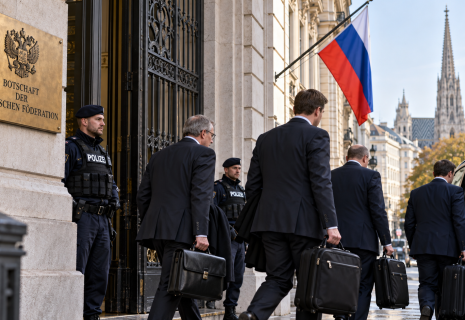
Moscow’s representative firmly rejected the many “unfounded and biased” allegations levelled against his country, which he said represents an attempt to generate “yet another wave of anti-Russian media hype”. Outlining the real facts of the reported incident in Romania, he said Russian Federation forces did conduct strikes on Ukrainian military targets on the evening in question.
However, he said, the Romanian authorities’ finding that a Russian Federation drone crashed in Galati is impossible, as such a drone — with a payload of approximately 50 kilogrammes of explosives — would have entirely destroyed any building it struck, which is inconsistent with photographic evidence of the alleged incident. Calling for an objective and impartial investigation into the incident, he warned against “rushing to assign blame” against his country. He also turned briefly to the situation at the Zaporizhzhia Nuclear Power Plant, alleging that Ukrainian fighters used fibre-optic cables in recent days to breach the plant’s control room.
Alarm over Ever-Escalating Rhetoric, Rejection of Diplomacy
Other speakers drew attention to broader, increasingly worrying trends, such as ever-escalating rhetoric and the continuous rejection of diplomacy by warring parties.
The representatives of Colombia, Council President for June, and the Democratic Republic of the Congo expressed concern about the “progressive normalization of a wartime logic” which leads to a continuous cycle of military actions and reactions, while China’s representative said the Ukraine war’s trajectory of “spiraling escalation” threatens not only its parties, but also risks “irrevocable consequences” for the wider region.
Pakistan’s representative agreed that the longer the war goes on, the greater the risk of spillover and miscalculation. “Regrettably, this is a pattern that we are now witnessing,” he said, calling for a prompt resumption of the United States-facilitated dialogue process as the most viable way forward.
Unmanned Drones Undermine Safety in Adjacent Neutral Territory
Meanwhile, the representatives of Bahrain and Panama voiced specific concern over the limited control and precision capabilities of unmanned drones. The latter said countries using such weapons must be held strictly responsible for their impacts.
“The absence of hostile intent has never equalled the absence of consequence, especially to innocent civilians,” added Liberia’s delegate. When highly automated, weapons-grade systems are operated in dense electronic warfare environments, immediately adjacent to neutral territory, accidents risk compounding and escalating, he said, noting the technical margins of modern conflicts are too narrow to guarantee the safety of neutral States.