Croatia frontrunner in EU Recovery and Resilience Mechanism, says EP
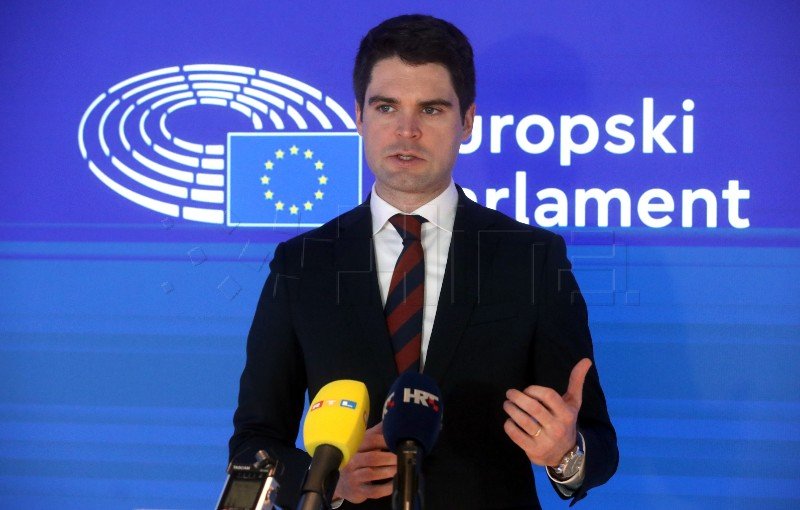
Croatia is a European frontrunner in utilizing the Recovery and Resilience Mechanism (RRM) and is also one of the countries that has benefited the most from it, said Karlo Ressler, head of the European Parliament delegation.
At a press conference at the Doživi Europu Center, conclusions from the working visit of the European Parliament delegation for the Recovery and Resilience Mechanism were presented. According to Ressler (HDZ, EPP), Croatia leads in both the quality and quantity of RRM use, as well as in establishing structures that ensure strong political coordination and fast inter-ministerial cooperation, CE Report quotes HINA.
He added that Croatia is one of the countries that has profited most from the RRM, which forms the basis of its National Recovery and Resilience Plan (NRRP), with around €10 billion available for multiple investments—equivalent to about 13% of its GDP.
“Croatia is a frontrunner not only in quantitative terms but also qualitatively, in terms of what will ultimately remain as a base for economic growth, improving living standards, and reducing disparities compared to other member states,” Ressler stated.
At the same time, he noted that implementation across Europe has not been equally successful, a lesson that must be taken seriously.
EP Delegation Composition and Visit
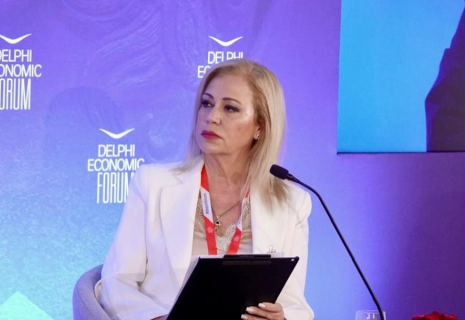
The six-member working group delegation includes members from the Budget Committee (BUDG) and the Economic and Monetary Affairs Committee (ECON). Alongside Ressler, the delegation comprises Stephen Nikola Bartulica (ECR, DOMiNO, Croatia), Angelica Winzig (EPP, Austria), Tomasz Buczek (PfE, Poland), Morten Lokkegaard (Renew, Denmark), and Rada Laykova (ESN, Bulgaria).
The delegation was in Zagreb from February 16 to 18 and held numerous meetings with officials, auditors, and stakeholders from various sectors to discuss their involvement in planning, implementing, and co-financing the NRRP.
They also met with members of three committees of the Croatian Parliament—Regional Development and EU Funds, European Affairs, and Finance and State Budget—representatives of the Agency for the Audit of EU Program Implementation (ARPA), and the core coordination team for the NRRP, including the chief coordinator Zvonimir Savić, who is also the special advisor to the Prime Minister on economic affairs.
Visits to LNG Terminal, Rimac Robotaxis, and Merkur Hospital
The delegation also visited NRRP-financed investments, including the expanded LNG terminal on Krk Island and the Rimac robotaxi project, Verne.
Ressler highlighted that the LNG terminal expansion, including pipeline extension, is practically the largest NRRP-financed project through RePower EU, with investments exceeding €500 million, significantly strengthening Croatia’s position in Europe’s energy map.
At the Rimac Campus, where Verne robotaxis are produced, discussions focused on the indicators required for NRRP financing. The robotaxi project involves phased financing, and by the end of November last year, 60 prototypes were presented, marking one of the indicators for the eighth NRRP tranche.
Ressler noted that the model makes sense as disbursements are linked to achieving certain results, and he hopes subsequent steps will be successfully implemented. Rimac Group has already received about 50% of the allocated funds for its project, demonstrating tangible progress.
The delegation will also visit Merkur Clinical Hospital, one of the first public facilities rebuilt after the earthquake, also financed through the NRRP.
Remaining NRRP Tranches for Croatia
Croatia has around €10 billion available under the NRRP, including €5.8 billion in grants. The European Commission has so far disbursed seven tranches totaling €6.4 billion. The eighth tranche, worth €897 million, is expected in March, bringing total disbursements to €7.3 billion.
Two tranches remain, the largest in terms of funds, totaling €2.8 billion. The deadline to meet required criteria—reforms and investments under the NRRP—is the end of August, with disbursement expected by year-end.
Croatia is the only EU country confirmed to have fully met all indicators for the eight completed requirements. The European Commission has confirmed the successful completion of 253 reform and investment milestones linked to these eight requirements.
Negotiations on the New EU Multiannual Budget
Ressler said Croatia’s NRRP experience will be highly relevant in negotiations on the new EU multiannual budget, which aims to further improve the model linking investments to reforms and simplifying processes for end-users.
The European Commission proposes a so-called “megafund” in the new long-term budget, implemented through national and regional partnership plans (NRPP), modeled on the RRM. Disbursements would be tied to achieving objectives and indicators, rather than traditional reimbursement of actual costs.
Ressler will lead European Parliament negotiations on the megafund on behalf of the Budget Committee. The fund will consolidate investments in economic and social cohesion, agriculture and rural development, fisheries, prosperity, and security.
foto Denis Cerić