Swiss-led OSCE pursues institutional survival through inclusive wartime diplomacy - OPINION
By Aytan Aliyeva
Switzerland holds the 2026 Chairpersonship of the Organization for Security and Co-operation in Europe (OSCE), marking the third time it has assumed this role after 1996 and 2014. The chairmanship highlights Switzerland’s long-standing commitment to dialogue, mediation, and cooperative security, and is led by Swiss Foreign Minister Ignazio Cassis in his capacity as Chairman-in-Office. he chairmanship is guided by Switzerland's tradition of neutrality and multilateral diplomacy, and comes at a time of significant pressure on the European security order, particularly due to Russia's war against Ukraine. Against this political landscape, Switzerland has set out a number of priorities, including upholding the Helsinki principles, encouraging open dialogue between all participating states, reinforcing democracy, the rule of law, and human rights, tackling the security implications of new technologies, and improving the OSCE’s ability to prevent conflicts and manage crises effectively.
The visits by OSCE leadership to Kyiv and Moscow took place at a key moment in the Russia–Ukraine war, nearly four years after the full-scale invasion in February 2022. The conflict has deeply fractured European security and severely constrained multilateral cooperation within the OSCE framework, particularly amid growing polarization between Western States and Russia. In assuming the 2026 Chairpersonship, Switzerland explicitly sought to reaffirm the OSCE’s core role in conflict management, inclusive dialogue, and the pursuit of a just and lasting peace grounded in international law and OSCE commitments. Against this backdrop, the decision to undertake high-level visits first to Kyiv and then to Moscow represented a deliberate effort to revive diplomatic channels, demonstrate the organization’s continued relevance, and assess how OSCE instruments could support future negotiated settlement processes.
Visit to Kyiv
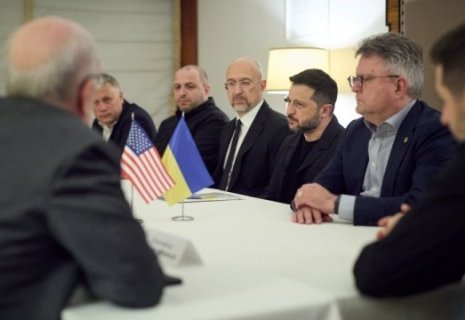
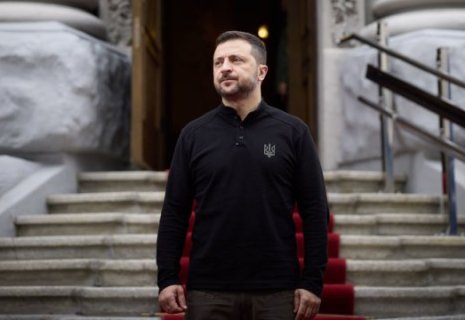
The visit to Kyiv by Chairman-in-Office Ignazio Cassis and OSCE Secretary General Feridun H. Sinirlioğlu constituted a strategically significant early engagement under Switzerland’s chairmanship, clearly signaling that Ukraine would remain central to the OSCE’s security agenda. Arriving on 2 February, the delegation met with President Volodymyr Zelenskyy, Foreign Minister Andrii Sybiha, and other senior officials to discuss the security situation, diplomatic efforts, and the OSCE’s potential role in advancing a peaceful settlement to the war.
The visit took place amid ongoing Russian attacks on civilians and critical infrastructure. The OSCE leadership warned that these attacks were causing lasting damage, emphasising the importance of respecting international humanitarian law. Against this backdrop, the OSCE leaders' presence in Kyiv served as both a diplomatic signal of engagement and an expression of institutional concern regarding the conflict's humanitarian, societal and long-term consequences.
Strategically, the OSCE leadership reaffirmed its firm support for a “just and lasting peace grounded in international law,” emphasizing the organization’s readiness to act wherever international engagement may be required and drawing on its extensive experience in complex conflict environments. Cassis stressed that hat the immediate priority remains supporting diplomatic efforts to negotiate an end to the war, while emphasising the importance of ensuring that the OSCE is operationally prepared to contribute to ceasefire monitoring and the implementation of a peace agreement once conditions permit. The presentation of these concrete instruments during the visit was intended to clarify the OSCE’s added value in a future peace process.
Politically, the Kyiv visit reinforced Ukraine’s status as a top priority within the OSCE and closely aligned with Switzerland’s chairmanship objectives, notably preparing for a potential peace in Ukraine, strengthening the OSCE as an inclusive forum for dialogue, and enhancing its ability to function under conditions of heightened security pressure. President Zelensky briefed the delegation on large-scale attacks against Ukrainian territory and outlined expectations regarding diplomatic engagement, while also discussing possible formats of practical cooperation between Ukraine and the OSCE. He further invited the organization to participate in the International Coalition for the Return of Ukrainian Children and expressed appreciation for Switzerland’s emphasis on a just peace during its leadership year.
The geopolitical signaling of the visit was equally significant. Cassis underscored that the trip aimed to reaffirm the OSCE’s role as a platform for dialogue and its readiness was part of a Swiss-led initiative to restore dialogue and trust within an organization that has faced a profound institutional crisis as a result of the war, while positioning the OSCE as a relevant actor in any future European security architecture.
Security discussions focused on the potential contributions of the OSCE should diplomatic conditions improve. Officials reiterated that, with the consent of the participating states and under the right operational conditions, the organization could facilitate ceasefire monitoring and support the implementation of an agreed settlement. During their stay, Cassis and Sinirlioğlu also visited the site of a Russian missile strike in Kyiv’s Solomianskyi district that killed 23 residents, receiving briefings on the impact of the attack. This reinforced the urgent and humanitarian context of the security dialogue.The Kyiv visit was less an attempt at immediate mediation than a strategic effort to position the OSCE for a future role in conflict management and post-war stabilization.
Visit to Moscow
The visit to Moscow by Chairman-in-Office Cassis and Secretary General Sinirlioğlu was a significant effort to maintain multilateral engagement amid one of the most serious crises in European security since the end of the Cold War. Following on from the visit to Kyiv, this trip was explicitly framed as recognition that dialogue requires engagement with all sides, and that the OSCE is committed to maintaining political communication with all participating states. Notably, this was the first time that an OSCE Chairperson-in-Office had travelled to Russia since 24 February 2022. This visit highlights the organisation's commitment to contributing to efforts to end the war and support a just and lasting peace consistent with international law.
At the operational level, the OSCE leadership met with Russian Foreign Minister Sergey Lavrov to discuss sustained multilateral dialogue, broader regional security challenges, and the OSCE’s continued function as a platform for constructive exchanges. Cassis and Sinirlioğlu emphasized that the organisation stands ready to support a negotiated settlement and assist with its implementation on the ground, drawing on its institutional tools and accumulated experience, should conditions allow. Cassis highlighted that presenting these available mechanisms was a core objective of the visit, underlining the OSCE’s expertise in contexts requiring prolonged international engagement.
Politically, the Moscow visit reflected an effort to stabilize an organization under severe strain from geopolitical divisions triggered by the war. Russian officials indicated that discussions would address ways to overcome what they described as a “deep crisis” within the OSCE, illustrating the extent to which the conflict has affected institutional cohesion. By engaging Moscow directly, the Swiss chairmanship signaled that isolating a major participating State would undermine the OSCE’s foundational purpose as an inclusive security forum spanning the Euro-Atlantic and Eurasian regions.
The geopolitical signaling extended beyond bilateral exchanges. The sequential Kyiv–Moscow itinerary conveyed a determination to draw on OSCE expertise to not only support an end to the war but also to address post-conflict challenges and contribute to shaping a sustainable European security order. Cassis reiterated that the visit had reaffirmed the OSCE’s role as a dialogue platform and its commitment to supporting peace initiatives based on the Helsinki principles. From a practical diplomatic standpoint, Russia expressed gratitude for Switzerland’s interest in resuming negotiations, indicating that the visit had helped maintain vital communication channels despite significant differences.
Security considerations were central to the agenda. Discussions addressed the war in Ukraine and the OSCE’s potential contribution to conflict resolution, including mechanisms that could be activated in a future settlement framework Sinirlioğlu also raised the cases of three detained OSCE staff members - Vadym Golda, Maksym Petrov and Dmytro Shabanov calling for their release and highlighting the organisation’s direct institutional stake in the conflict environment. This intervention emphasised the OSCE's dual role as a diplomatic actor and an organisation directly affected by the operational realities of the war.
The visit also had forward-looking diplomatic implications. Switzerland confirmed that it could provide the necessary logistics and security arrangements to enable Lavrov to participate in the OSCE Ministerial Council in Lugano. This reflects a pragmatic effort to preserve high-level engagement, despite the constraints imposed by sanctions, and to prevent further fragmentation of multilateral diplomacy.
Analytical takeaway
Overall, the visits to Kyiv and Moscow in February 2026 represent a strategic exercise in institutional positioning rather than an attempt at immediate mediation. By engaging with both capitals in quick succession, the OSCE leadership aimed to reaffirm the organisation's relevance at a time when the war in Ukraine has put multilateral security structures under pressure and tested the effectiveness of cooperative diplomacy. The mission highlights the OSCE’s commitment to supporting a negotiated settlement, including potential ceasefire monitoring and implementation mechanisms, thereby signalling its preparedness for a post-conflict environment.
the OSCE on its core mandate of safeguarding peace and security in Europe, and to reinforce the organization as an inclusive platform for dialogue, even between adversaries. Cassis described the war as a challenge requiring collective solutions involving all participating states, and explained the dual-track approach of reaffirming political support for Ukraine while maintaining diplomatic engagement with Russia.
The visits conveyed an effort to preserve space for structured dialogue amid deep polarization. Leaders consistently reaffirmed support for a just and lasting peace grounded in international law while emphasizing the OSCE’s unique experience in complex conflict settings. Continued communication with Moscow proved consequential, as Russian officials welcomed Switzerland’s efforts to resume dialogue, indicating that minimal channels for negotiation remain open despite systemic rivalry.
The mission functioned as a stabilizing signal toward an organization facing internal crisis. Direct engagement with both sides conveyed that excluding a major participating State would undermine the OSCE’s cooperative security model, even as discussions in Kyiv reflected the organization’s commitment to normative principles and accountability.
From a security perspective, the key takeaway is forward-looking: the OSCE is positioning itself primarily as a technical facilitator of future peace agreements rather than as the main mediator. Its comparative advantage lies in its field expertise, monitoring capacity and confidence-building instruments, which could support ceasefires and stabilization should political conditions evolve.
The Kyiv–Moscow mission highlights three broader conclusions:
- The OSCE is pursuing relevance through engagement rather than isolation.
- Switzerland is leveraging its neutral diplomatic tradition to rebuild trust within a fractured security order.
- The organisation is preparing for a potential transition from wartime diplomacy to post-conflict governance, even though the conflict itself remains unresolved.