Croatian Government boosts funding for diaspora programs - EXCLUSIVE
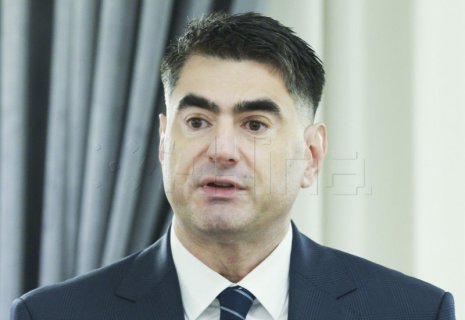
CE Report presents an exclusive interview with Alen Matanić, spokesperson for the Central State Office for Croats Abroad, in which he provides detailed insights into the selection process, funding priorities, and strategic initiatives aimed at strengthening the ties of Croatian communities worldwide with their homeland.
What were the main criteria used to evaluate and select the 126 diaspora programmes that received funding this year?
The Commission of the Central State Office for Croats Outside the Republic of Croatia (the Office Commission), as a professional evaluation body, assesses applications that meet the formal requirements, in accordance with the criteria prescribed by the provisions of the Public Call for applications for programs/projects of Croatian diaspora organizations in overseas and European countries and the Rules on financing programs/projects of Croatian diaspora organizations in overseas and European countries.
Applicants provide a detailed description of the program or project within their application, define objectives, expected measurable results, and budget, and attach the required documentation about the organization and the project leader, which demonstrates the quality level of project preparation. During evaluation, the overall impact and significance of the program or project for the Croatian diaspora community and its connection with the Republic of Croatia, the institutional capacity and experience of the applicant in carrying out activities, as well as the relevance of the project and the justification of planned costs in relation to the set objectives and expected results, are taken into account.
How does the Office assess the impact of these grants on preserving Croatian identity, language and cultural heritage among Croats abroad?
The Office measures the impact of projects it funds by monitoring the activities of Croatian communities abroad, the number of projects and organizational involvement, as well as participation in programs in the Republic of Croatia. In the evaluation, the specific characteristics of communities are taken into account, including the length of their activity, geographic location, and time of establishment, as these factors influence how identity, language, and cultural heritage are preserved.
Each application is subject to assessment by the Office Commission, a professional body that monitors this area and evaluates the alignment of proposals with the prescribed criteria. The Office also maintains ongoing contact with Croatian communities and collects feedback through the relevant embassies, enabling the monitoring of the impact of funded projects based on relevant data from the field.
This year’s allocation represents an increase of €600,000 compared to 2024. What factors influenced the decision to significantly raise funding for diaspora organisations?
The increase in allocated funds is the result of the continuous policy of the Government of the Republic of Croatia and the competent state institutions to provide systematic support to Croats living outside the Republic of Croatia, in line with strategic documents such as the National Development Strategy of the Republic of Croatia until 2030 and the National Plan for the Development of Relations of the Republic of Croatia with Croats Outside the Republic of Croatia until 2027. The increase in funds allows for additional support for the projects and programs of Croatian diaspora communities and strengthens their connection with the homeland.
How does the Office ensure transparency, accountability and effective monitoring of how the granted funds are used by recipient organisations?
Recipients of funding are contractually obligated to submit a final report on the implementation of the project, including evidence of expenses and activities. The Office monitors project implementation and uses various oversight mechanisms, including regular monitoring, evaluation of financial reports, and field inspections in the countries where recipients operate, to ensure transparent, responsible, and efficient use of allocated funds.
Are there plans to further expand financial support or introduce new programmes targeting younger generations of Croats abroad in the coming years?
The Government of the Republic of Croatia continuously develops policies and programs aimed at the inclusion of young Croats living outside the Republic of Croatia, with plans to expand financial support and new programs based on strategic documents and legal frameworks. By adopting the Law on Amendments to the Law on Relations of the Republic of Croatia with Croats Outside the Republic of Croatia in June 2025, the Council of Young Croats Outside the Republic of Croatia was established—an advisory body to the Government of the Republic of Croatia that monitors the needs of young people and provides recommendations for creating policies and programs that connect them with the homeland.
The Office, as the central state administration body responsible for relations with Croats outside the Republic of Croatia, implements a range of programs and projects aimed at young people. In particular, strengthening and developing the personal, intellectual, and professional capacities of young Croats has been identified as especially important. This is reflected in the successful implementation of the Scholarship Program, through which young Croats are awarded scholarships to study in Croatia and abroad.
Additionally, in cooperation with the Ministry of Science, Education, and Youth and higher education institutions in Croatia, the Office participates in implementing a project of special enrollment quotas at 11 higher education institutions in Croatia. Within this project, Croatian universities have reserved enrollment places for members of the Croatian national minority and the Croatian diaspora. This initiative continues a highly significant effort to connect young Croats outside Croatia with their homeland through personal visits, deeper exposure to Croatian culture, language, and daily life, and the acquisition of quality education at Croatian universities.
Furthermore, since 2018, in cooperation with the Faculty of Humanities and Social Sciences in Zagreb, free online Croatian language courses at beginner levels A1 and A2 have been established and made available to all participants. The development of a free mobile and web application for learning Croatian at level B1, available in Croatian, English, and Spanish, is in its final phase. These courses offer the opportunity to learn basic Croatian to those who have not had the chance to study the language, contribute to preserving the linguistic and cultural identity of Croats abroad, and represent advancements in the digitalization of Croatian as a foreign language education.
In addition to educational initiatives, the Office implements experiential programs and projects, such as organized visits to Croatia, including the Summer School Domovina, which promotes familiarity with Croatia and networking among young people, as well as the Korijeni (“Roots”) project, which connects schools in Croatia with Croatian communities abroad. These programs not only facilitate access to education and professional development for young Croats, but also strengthen their connection with the homeland and promote the preservation of Croatian identity and cultural heritage.
Photo: HINA
This interview was prepared by Julian Müller