Opinion: OSCE Ministerial Council exposes deep strategic fragmentation
By Aytan Aliyeva
The OSCE Ministerial Council as a pillar of political governance
The OSCE Ministerial Council (MC) is the Organization’s highest regular political decision-making body and a central pillar of its governance structure. It brings together the foreign ministers of all 57 participating States and meets annually to review developments in the OSCE area and provide political guidance. The MC adopts decisions and declarations that are politically binding and define the Organization’s strategic direction. While this consensus-based decision-making process reflects the OSCE’s inclusive nature, it also creates structural vulnerability to paralysis. Historically, the MC has functioned as a forum in which security concerns crossing ideological and regional divides could be addressed within a shared framework.
Over the years, the MC has made several significant and long-lasting decisions that have shaped the OSCE's identity. These include decisions that strengthen confidence- and security-building measures, as set out in the Vienna Document, and commitments to advance arms control, transparency, and military predictability. Decisions in the human dimension are equally important, and these include reinforced election observation, minority protection, rule of law, freedom of the media, and tolerance. The Maastricht Strategy Document (2003) introduced a notable expansion to the economic and environmental dimensions, establishing a connection between stability, good governance and sustainable development. The MC's strategic decisions contributed to the transformation of the OSCE from a Cold War confidence-building forum into a comprehensive security organization.
The 2025 Ministerial Council, taking place in the OSCE's 50th anniversary year, is a significant event in itself, but one which also stands apart from previous meetings. Instead of signifying unity or advancement, it highlights the extent of division within the Organization. The significance of this MC lies not in groundbreaking decisions but in the reaffirmation of the Helsinki principles in the face of erosion and violation. The anniversary highlights a transition from the creation of norms to their preservation. While consensus documents are often carefully worded and limited in ambition, their adoption still signals a shared minimum commitment to keeping the OSCE alive as a political framework. The MC in 2025, therefore, underscores the limitations and ongoing importance of ministerial-level diplomacy within the OSCE.
Finland’s 2025 Chairmanship: Resilience and Institutional stewardship
Finland's 2025 OSCE Chairmanship took place in a particularly challenging political environment and was clearly designed with resilience and continuity in focus. Finland did not aim to produce major political breakthroughs, acknowledging the structural limitations imposed by polarization and the consensus rule. Instead, it concentrated on protecting the OSCE's core functions and reaffirming its fundamental principles. The most notable symbolic moment was the OSCE 50th Anniversary (Helsinki+50), which Finland approached as a strategic reflection rather than a celebratory event. The anniversary highlighted the differences between the original Helsinki vision and the current reality, while emphasizing the continued relevance of its principles.
A second notable development was the first OSCE Youth Forum, which marked a generational broadening of the OSCE's engagement. The forum placed particular focus on youth involvement in security discussions, democratic resilience, and societal stability. While it lacked formal decision-making authority, it represented a strategic investment in long-term legitimacy. Another defining moment was the closure of the OSCE Minsk Group, which marked the conclusion of a long-standing mediation mechanism in the South Caucasus. This closure reflected geopolitical realities and the reduced scope for multilateral mediation.
Finland also took the initiative in advancing discussions on climate and security, digital challenges, and societal resilience. The financial innovation that came about as a result of an increased reliance on extra-budgetary funds was a practical necessity. During its term of office, Finland maintained a strong focus on Ukraine-related issues, particularly institutional continuity and the preservation of norms. When viewed collectively, these moments reveal a Chairmanship that accepted constraints and focused on institutional continuity rather than ambitious political outcomes.
Switzerland and the OSCE Chairmanship: historical experience and strategic continuity
Switzerland is scheduled to assume the OSCE Chairmanship for the third time in 2026, having previously served in this capacity in 1996 and 2014. Each of these Chairmanships occurred in a different historical context. In 1996, Switzerland chaired an OSCE that was expanding institutionally and operating in a relatively cooperative post-Cold War environment. The focus at that time was on the construction of structures, the consolidation of field missions, and the establishment of shared standards. By contrast, the 2014 Chairmanship was driven by a series of crises and marked by significant geopolitical tensions following the annexation of Crimea.
The 2026 Chairmanship is set to be a significant shift from previous experiences. Switzerland will function within a prolonged period of polarization, as opposed to acute crisis or optimistic transition. The OSCE of 2026 is financially fragile, politically divided, and institutionally constrained. In contrast to 2014, Switzerland will not be managing escalation but rather normalizing conflict. Therefore, the success of the process will be measured not by the results of the mediation but by the survival of the institutions involved. The Swiss role will prioritize restraint, predictability, and procedural legitimacy, rather than political activism.
Switzerland's neutrality is regarded as a politically acceptable stabilizing factor within a highly divided organization. Maintaining a neutral stance can reduce resistance from opposing groups and lower the threshold for achieving consensus. In contrast to the geopolitical considerations that typically surround alliance-aligned states, Switzerland maintains a neutral stance, avoiding the immediate assumptions of political allegiances. Its diplomatic tradition emphasizes on mediation, peaceful dialogue and procedural fairness. In a period where leadership itself can become politicized, neutrality offers credibility.
The decision to appoint Switzerland again also reflects strategic considerations among the participating states. Many states demonstrate a preference for continuity and trust management over activism. Switzerland's legal and political neutrality helps the OSCE to remain inclusive. Neutrality in this context is not passivity but a functional tool to prevent institutional breakdown. It enables Switzerland to act as an honest broker even when substantive progress is limited. In short, neutrality is now valued more for damage limitation than for transformative leadership.
Switzerland’s 2026 Chairmanship Vision
Switzerland's 2026 OSCE Chairmanship vision can be described as a commitment to leadership and guidance, rather than a desire for immediate and dramatic change. It is shaped by the recognition that the OSCE currently operates under permanent political constraint, where ambitious reform agendas are neither realistic nor consensual. Consequently, Switzerland is likely to frame its Chairmanship around the concept of stabilizing governance, ensuring that the Organization remains functional, credible, and relevant despite limited decision-making capacity. The central objective will not be to expand the OSCE's mandate, but rather to protect its institutional core and preserve its role as an inclusive security forum.
A key part of this strategy will be to maintain open and organized communication. It is anticipated that Switzerland will place strong emphasis on maintaining open communication channels in all OSCE formats, even in instances where achieving substantive agreement appears unlikely. This includes disciplined agenda-setting in the Permanent Council, careful management of politically sensitive debates, and increased reliance on informal consultations. In 2026, dialogue will be valued for its preventive and de-escalatory function in an environment of increased mistrust, rather than for its ability to produce immediate outcomes.
Another key component of Switzerland's vision is the early-warning and risk management systems. Although early-warning mechanisms are formally in place within the OSCE, they have often been less than fully utilised or overlooked for political reasons. Switzerland could give priority to improving the linkage between field reporting, thematic analysis and political discussion. This would enhance the OSCE's capacity to identify escalation dynamics before they become unmanageable. This focus aligns with Switzerland's pragmatic diplomacy and requires no new normative commitments, making it politically feasible.
Switzerland is also likely to raise the issue of the resilience of democratic processes, particularly in the context of digitalization. Without reopening ideological debates on democracy promotion, the Chairmanship may frame challenges such as disinformation, foreign influence, cyber threats, and the use of artificial intelligence in elections as shared security risks affecting all participating States. Addressing these issues through technical dialogue and confidence-building measures allows engagement even in cases where there is a high level of normative sensitivity.
Another potential focus area is the security implications of emerging technologies. Switzerland is well-positioned to initiate structured discussions on AI, autonomous systems, and digital surveillance from a risk-reduction and transparency perspective. These discussions would not aim to regulate, but rather to raise awareness, thereby contributing to predictability and mutual understanding. This approach would modernize the OSCE agenda without extending the scope of its mandate. The Chairmanship may encourage reflection on which OSCE tools remain effective and which require adaptation under current conditions. This represents a shift from expansion to internal validation.
Regions requiring strategic sttention in 2026
Given the limited political capital and operational leverage available, Switzerland's 2026 Chairmanship will need to concentrate on strategic engagement, focusing on regions and country contexts where the lack of OSCE presence would have the greatest impact. Attention will therefore be guided less by visibility and more by risk of disengagement and institutional erosion.
Ukraine will continue to be a central concern, though not in the sense of classical mediation. By 2026, the OSCE's involvement in Ukraine will be structurally established and long-term. Switzerland's role will be to protect and sustain OSCE activities linked to documentation, accountability, rule-of-law support, and institutional memory. These functions are maintained in order to safeguard the Organization's credibility. A reduction in OSCE engagement in the Ukrainian context would signal an acceptance of norm erosion, which would have consequences far beyond the conflict itself.
Another critical area of attention is the South Caucasus. Following the closure of the OSCE Minsk Group, the Organization's role in the region has been significantly reduced. However, complete disengagement would risk making the OSCE irrelevant in a strategically sensitive region. Switzerland, therefore, should direct its efforts towards confidence-building measures, facilitating dialogue, and technical cooperation where politically acceptable. This may include support for border security discussions, humanitarian and social confidence-building, and regional cooperation initiatives.
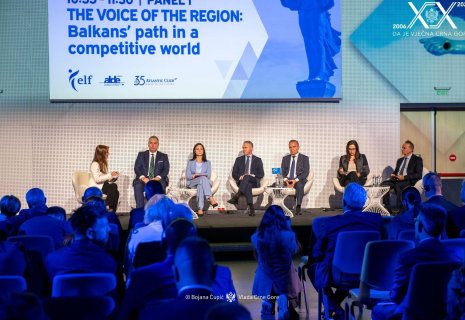
The Western Balkans are regions where the OSCE maintains a strong operational presence and a tangible impact. The ongoing challenges of democratic backsliding, electoral integrity, media freedom, and unresolved ethnic tensions continue to pose significant security risks. Under Switzerland’s Chairmanship, sustained attention to this region reinforces the OSCE’s preventive function and demonstrates that the Organization can still deliver concrete results. Engagement here also serves a symbolic function, highlighting that preventive security remains a core OSCE mandate.
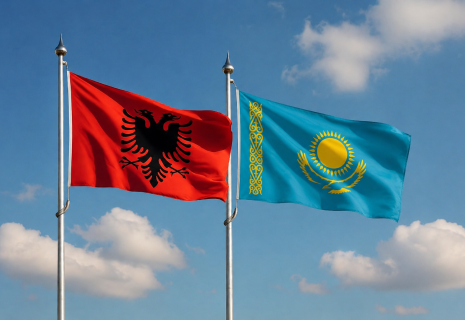
Central Asia should be a priority region due to its strategic position and openness to OSCE engagement. Countries such as Kazakhstan, Uzbekistan, and Kyrgyzstan continue to value the OSCE as a platform for dialogue on governance, border management, environmental challenges, and economic connectivity. Switzerland's neutral diplomatic profile is particularly advantageous in this context, allowing cooperation without alignment pressure. Focusing on Central Asia also helps to maintain the OSCE's balance of power between Europe and Asia, preventing the Organization from becoming overly focused on European interests.
Switzerland needs to maintain procedural and institutional attention to Russia and Belarus, despite minimal substantive cooperation. This does not imply political accommodation, but rather reflects the necessity of inclusivity for the survival of the organization. The marginalization of these actors would have a negative impact on the OSCE's universality and could lead to accelerated institutional fragmentation. Switzerland's task will be to maintain participation within established frameworks, manage obstruction, and prevent further erosion of consensus-based governance.
The Swiss Chairmanship's regional focus in 2026 should be selective, differentiated, and risk-driven. Switzerland's success will depend on its ability to maintain a presence in those areas where engagement is still valuable, to withdraw when necessary, and to ensure that the OSCE does not become irrelevant through lack of attention.
Nevertheless, the Swiss Chairmanship is likely to encounter a number of structural challenges. Prolonged political polarization is likely to persist and continue to impede the achievement of consensus on budgetary matters, mandates and appointments. It is anticipated that the current period of financial uncertainty will have a negative impact on the ability of institutions to plan effectively. It is evident that traditional arms control mechanisms are still in a state of weakness and remain underutilized. Switzerland is also tasked with managing asymmetric expectations from participating states. Some stakeholders will expect a leadership style aligned with established norms, while others will demand neutrality and restraint. Achieving the right balance between these demands and maintaining credibility will be a significant challenge. A further challenge is to be found in maintaining the relevance of the OSCE in the face of competition from other organizations. It is important to avoid overpromising outcomes, as this could risk further disappointment.
The uncertain path to the 2027 Chairmanship
Several countries are considered possible candidates for the 2027 OSCE Chairmanship, including Austria, Ireland and Kazakhstan. These states are institutionally reliable and politically acceptable under consensus rules. However, the continued absence of a confirmed chair is unusual. This delay is indicative of a consensus among stakeholders and a decline in leadership motivation, rather than procedural failure. Chairing the OSCE has become a politically costly and reputationally risky undertaking. States are reluctant to commit early due to uncertainty and limited leverage. While this situation does not yet constitute a full-blown crisis, it is a warning sign that should be taken seriously. This is indicative of a decline in confidence and long-term strategic planning capabilities. Prolonging this process could potentially compromise institutional credibility. At this time, the situation reflects strategic hesitation rather than collapse.
The survival of the OSCE is imperative, as its absence would exacerbate instability and prevent the resolution of dysfunction. No other organisation has the inclusive membership and comprehensive security concept that the OSCE does. The OSCE facilitates dialogue channels that remain operational even during periods of confrontation. It is unparalleled in its cost-effectiveness within its scope. Furthermore, the OSCE upholds these standards through systematic monitoring, comprehensive documentation and prompt reporting, even when enforcement is not feasible. However, criticism that an ineffective OSCE legitimises violations underestimates the power of institutional memory. It is important to note that documented norms remain politically relevant. The OSCE's future lies in managing expectations, rather than renewing ambition. It is best understood as a damage-limitation institution rather than a conflict-resolution engine. Survival is a strategic necessity. In a fragmented security order, endurance is the OSCE's core contribution.