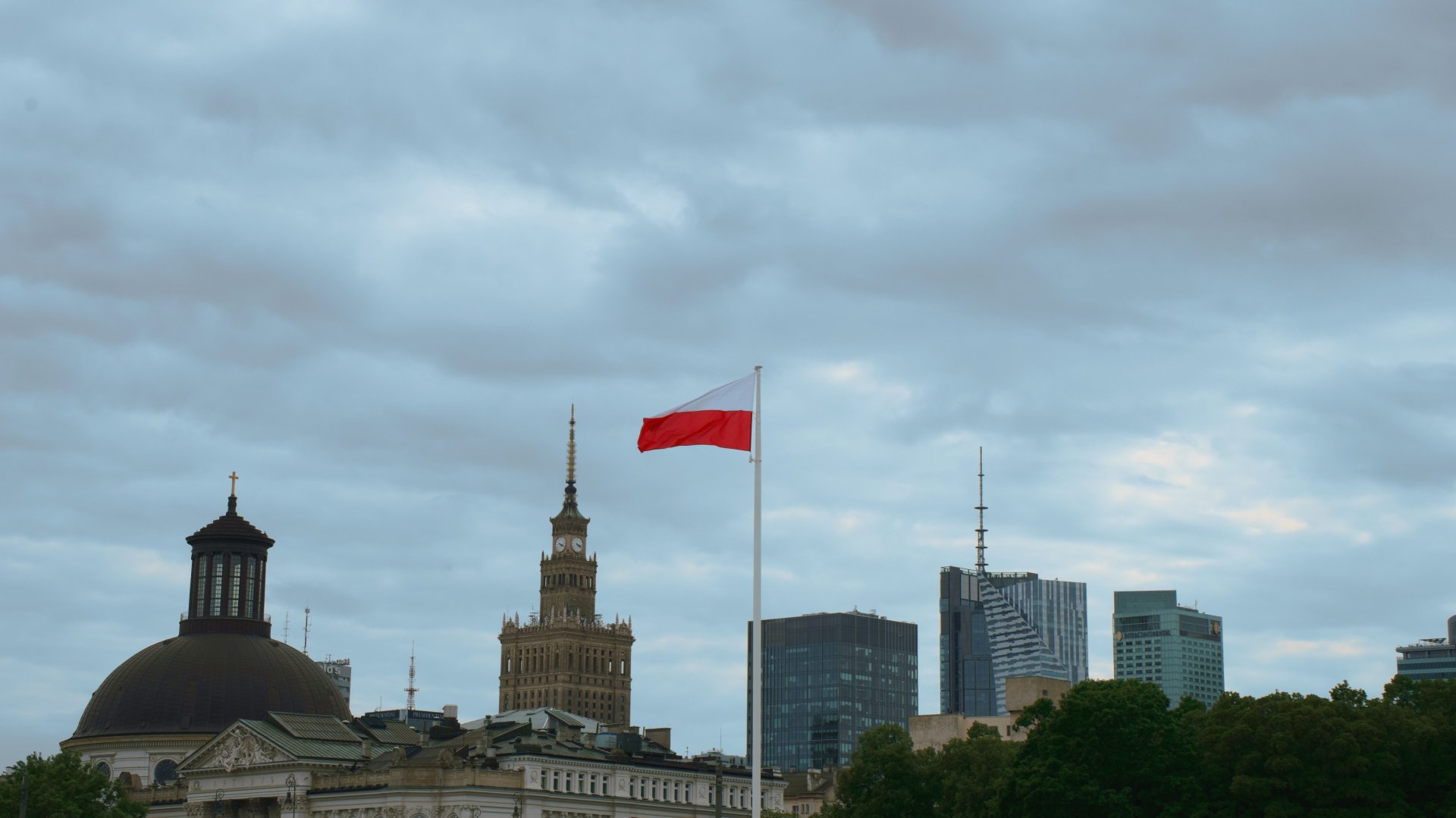
Poland combines public funding, private capital to drive AI development - EXCLUSIVE
Poland supports the development and deployment of artificial intelligence in businesses through a combination of grants, preferential financial instruments, and public investment in infrastructure and technological capacity.
This was said by the source at the Ministry of Economic Development and Technology of the Republic of Poland in an exclusive interview with CE Report.
One instrument targeted directly at SMEs is Dig.IT, financed under the European Funds for a Modern Economy programme (FENG). The grants are intended to support the digital transformation of micro, small and medium-sized enterprises in the manufacturing and production services sectors. Funding may cover, among other things, the use of artificial intelligence and machine learning, process automation, business analytics, cloud solutions, and cybersecurity.
For more advanced ventures, the SMART Path is available under FENG, supporting research, development, and innovation projects. Funding may cover both the development and deployment of technologies using artificial intelligence and other advanced digital technologies. The instrument is available to SMEs and large enterprises, as well as consortia.
Another instrument is STEP – the Strategic Technologies for Europe Platform, which is aimed at developing technologies that are critical for Europe. In the area of digital technologies, support may cover both research and development projects and investment projects related to the development and production of critical technologies. Micro, small, medium-sized, and large enterprises may apply for funding.
The grant system is complemented by preferential financial instruments for digitalisation. Using resources from the National Recovery and Resilience Plan, BGK offers loans for large-scale digitalisation projects covering, among other areas, IT, automation, cybersecurity, cloud solutions, and Industry 4.0.
In addition, the Digital and Environmentally Friendly Transformation Fund was established under FENG. It provides for loans to enterprises for the deployment and development of digital technologies. Loans for businesses are expected to become available in the second half of 2026.
Support is also available at the regional level through grants and preferential loans for digitalisation, automation, and the deployment of innovative technologies. The scope, amount and terms of financing vary between regions.
Financial instruments are complemented by companies’ access to specialised infrastructure and services supporting AI development, including through European Digital Innovation Hubs (EDIHs) and Testing and Experimentation Facilities for AI (TEF AI). These enable businesses, among other things, to test solutions before deployment, use specialised infrastructure, and validate artificial-intelligence-based solutions.
At the same time, Poland is developing AI infrastructure and computing capacity through AI Factories in Kraków and Poznań. For businesses, this means improved access for companies, start-ups and SMEs to advanced computing resources and environments needed to develop, test and deploy AI solutions.
Poland’s approach therefore combines direct funding for the development and deployment of AI in businesses, preferential financing for digital investments, and the expansion of infrastructure and services that enable domestic companies to create, test and scale artificial-intelligence-based solutions.
Detailed information on the available support instruments for the digital transformation of businesses, including instruments that can finance AI-based solutions, is available on the Biznes.gov.pl portal.
Documents outlining Poland’s objectives and strategy for AI development include:
Poland is building a funding ecosystem for advanced technologies that combines public support with private capital. The key instrument dedicated to artificial intelligence, quantum technologies, space technologies and dual-use solutions is the Deep Tech Programme, under which public funds are co-invested with private capital. At the same time, the Innovate Poland initiative provides financing pathway for innovative companies, from the early-stage start-up phase, through venture capital and private equity funds, to a potential initial public offering (IPO).
In order to unlock domestic capital, Individual Investment Accounts (OKI) are being introduced in 2026, enabling citizens to invest tax-free in the capital market; according to estimates, this could bring an inflow of approximately USD 21.1 billion in new funds to the Warsaw Stock Exchange by 2040.
The government is also investing directly in computing infrastructure. A network of ‘AI Factories’ is being established in Poznań, Kraków and Wrocław, providing supercomputing resources, data centres and training facilities for researchers and businesses, with a view to further investment in facilities such as ‘AI Giga Factories’. The development of the Polish ecosystem is supported by the Vinci fund from the BGK Group and the AI Lab Poland initiative, which support the identification and scaling of domestic start-ups with global potential (including leaders such as ElevenLabs). This is complemented by targeted programmes from the National Centre for Research and Development (NCBR) (including INFOSTRATEG), the National Science Centre (NCN), the Polish Development Fund (PFR) and the Polish Organisation for the Promotion of Innovation (POPC), the development of sovereign language models (PLLuM), and has set a target of allocating at least 10 per cent of public procurement budgets to the implementation of AI-based solutions.
Poland recognises that the expansion of energy-intensive data centres and AI infrastructure will require reliable, large-scale electricity supplies and a resilient power grid.
In the short and medium term, the stability of the gas system is based on diversified LNG supplies, including from the United States. Poland is expanding its LNG import capacity, including through the FSRU terminal in the Gulf of Gdańsk, to strengthen the flexibility and resilience of the gas system.
As part of the ESSA (Energy Security and Strategic Autonomy) initiative, Poland is integrating conventional sources with the intensive development of offshore wind in the Baltic Sea, onshore wind farms and photovoltaics. Nuclear power is intended to become a key source of zero-emission, dispatchable electricity in the longer term, alongside renewable sources and grid development. Poland is also pursuing SMR projects, although their timelines and contribution to the national power system remain subject to project development and regulatory processes. The relationship between energy availability, industrial competitiveness and the expansion of computing capacity is also being addressed in international discussions, including in the G20.
Poland is actively addressing a key challenge facing the global AI market: the lack of objective measurement tools to assess the performance, safety and reliability of advanced models. The national strategy aims to transform the ethical concept of Trustworthy AI into concrete, measurable engineering standards.
The main pillar of these efforts is the Central Office of Measures (GUM), which developing metrological capabilities relevant to the testing and objective evaluation of AI systems. Research and development work on the transparency and explainability of models is directly funded under the INFOSTRATEG programme implemented by the National Centre for Research and Development (NCBR).
The implementation of standards takes place on an open, voluntary and market-based basis, with the participation of the Polish Committee for Standardisation (PKN), the academic community and the Council for the Future – an advisory body to the Prime Minister, in cooperation with international standardisation organisations (ISO, IEC, IEEE). Rather than creating rigid administrative barriers, Poland is focusing on practical testing and regulatory environments: the network of European Digital Innovation Hubs (EDIH, including HPC4Poland and hub4industry), which offers industry a ‘test before invest’ approach, the e-Health Centre (CeZ), which standardises medical data formats for AI diagnostics, and the UKNF’s regulatory sandbox for the fintech sector. The objective is to allow companies to test and validate AI solutions while regulatory and technical standards continue to evolve.
During bilateral talks with key partners, Poland is seeking to deepen economic cooperation through technology transfer, local production, joint R&D and stronger integration of Polish companies into international supply chains.
With multi-billion defence contracts, the priority is to localise production, build independent maintenance, repair and overhaul (MRO) capabilities at Polish defence plants, integrate domestic suppliers (Local Content) into the supply chains of Hanwha and Hyundai, and guaranteeing rights to joint exports to third-country markets. Implementation of the Treaty on Security and Defence Partnership (the Northolt Treaty of May 2026) and the delivery of flagship programmes worth over GBP 6 billion – the NAREW air defence programme and the construction of MIECZNIK frigates in partnership with Babcock as well as commitment to the Multilateral Defence Mechanism (MDM) was also confirmed.
In line with Poland’s position as the EU’s main battery hub, discussions centred on establishing R&D centres in Poland for next-generation battery cells, battery management systems (BMS) and the recycling of raw materials. Topics relating to joint laboratories and microelectronics design, as well as partnerships in the nuclear energy sector, were also raised.
Poland also raised the use of instruments provided by BGK, PFR and KUKE, and the coordination of economic-policy priorities ahead of the UK’s G20 presidency and South Korea’s G20 presidency in 2028.
Representing region's largest economy, Poland intends to bring Central and Eastern European perspectives into the G20 discussion on technology, energy and competitiveness. As set out in the ministerial declaration (Pillar V), a key requirement is the development of empirical, standardised benchmarks and objective engineering tests for frontier models. Poland supports the development of comparable testing and evaluation methods before advanced AI systems are deployed at scale in the public sector. At the meeting, we presented a number of proven Polish e-government implementations, including mObywatel (digital ID and public services), the PLLuM model and the BLIK system (digital mobile payment method).
Poland also sees the need to ensure that the development of AI does not lead to excessive market concentration or limit access to innovation for smaller companies. One method of achieving this objective is to facilitate access to secondary research data from publicly funded projects for small and medium-sized enterprises (SMEs). Our priority is to promote the development of computing infrastructure, advanced data centres and semiconductor supply chains within the stable environment of NATO's and the EU's eastern flank. Adopting this approach will ensure the effective elimination of potential logistical bottlenecks and risks. The region's contribution of raw materials was emphasised, particularly in regard to copper, coking coal and helium. Discussions have taken place regarding the necessity for coordinated, international protection of submarine fibre-optic cables and power grids against hybrid threats.
Photo: Pexels (Free Stock Photos)
This interview was prepared by Julian Müller