Ukrainian lending growth remains strong despite war pressures - EXCLUSIVE
The National Bank of Ukraine (NBU) says it will continue prioritizing price stability, lending support, and gradual currency liberalization in response to slowing economic growth and mounting external pressures.
This was said by the source in the National Bank of Ukraine in an exclusive interview with CE Report.
The NBU recently downgraded Ukraine’s GDP growth forecast for 2026 to 1.3%, citing vulnerabilities in the energy infrastructure, delays in external financing, and broader geopolitical risks. In response, the central bank said its primary focus remains maintaining price stability as the foundation for sustainable long-term economic growth.
Since January, the NBU has kept its key policy rate at 15% after a 0.5 percentage point reduction earlier this year. According to the central bank, the decision is aimed at preserving the attractiveness of hryvnia-denominated instruments, ensuring foreign exchange market stability, and containing inflation expectations amid growing price pressures.
The bank stressed that its monetary policy is designed not only to curb inflation, but also to support the Ukrainian economy, which slowed significantly in the first quarter of 2026. The NBU expects the current policy stance will continue supporting lending activity, which remains one of the strongest drivers of economic resilience during the war.
Net hryvnia loans to businesses increased by more than one-third in 2025 after rising 25% in 2024. Lending growth has remained strong this year as well, with net hryvnia loans to businesses rising 32% year-on-year in March 2026.
The NBU also highlighted that, during the full-scale war, it shifted to a flexible inflation-targeting regime in order to balance inflation control with economic recovery and lending support. To improve flexibility in responding to macroeconomic turbulence, the central bank extended its policy horizon to three years, allowing temporary deviations from the inflation target of 5%.
In addition, the NBU plans to continue easing foreign exchange restrictions, particularly for businesses, if macroeconomic conditions allow. According to the central bank, Ukraine has already completed the first stage of its currency liberalization roadmap and most of the second stage, while implementation of the third stage has already begun.
Looking ahead to 2027–2028, the NBU expects stronger economic growth driven by investment, consumer demand, and the recovery of the energy system. However, the central bank emphasized that the success of this rebound depends heavily on structural reforms linked to Ukraine’s European integration process.
The NBU noted that Ukraine’s National Programme for the Adaptation of Ukrainian Legislation to EU Law includes nearly 1,875 tasks requiring the adoption of more than 1,600 EU legal acts.
According to the central bank, reforms connected to EU integration are expected to strengthen political and economic institutions, improve administrative capacity, reduce corruption, and deepen market competition. The NBU added that access to the EU common market and eventual EU membership remain key long-term goals for Ukraine’s economic development.
The central bank also stated that one of its strategic objectives is to align Ukraine’s financial regulations as closely as possible with EU standards by the end of 2027.
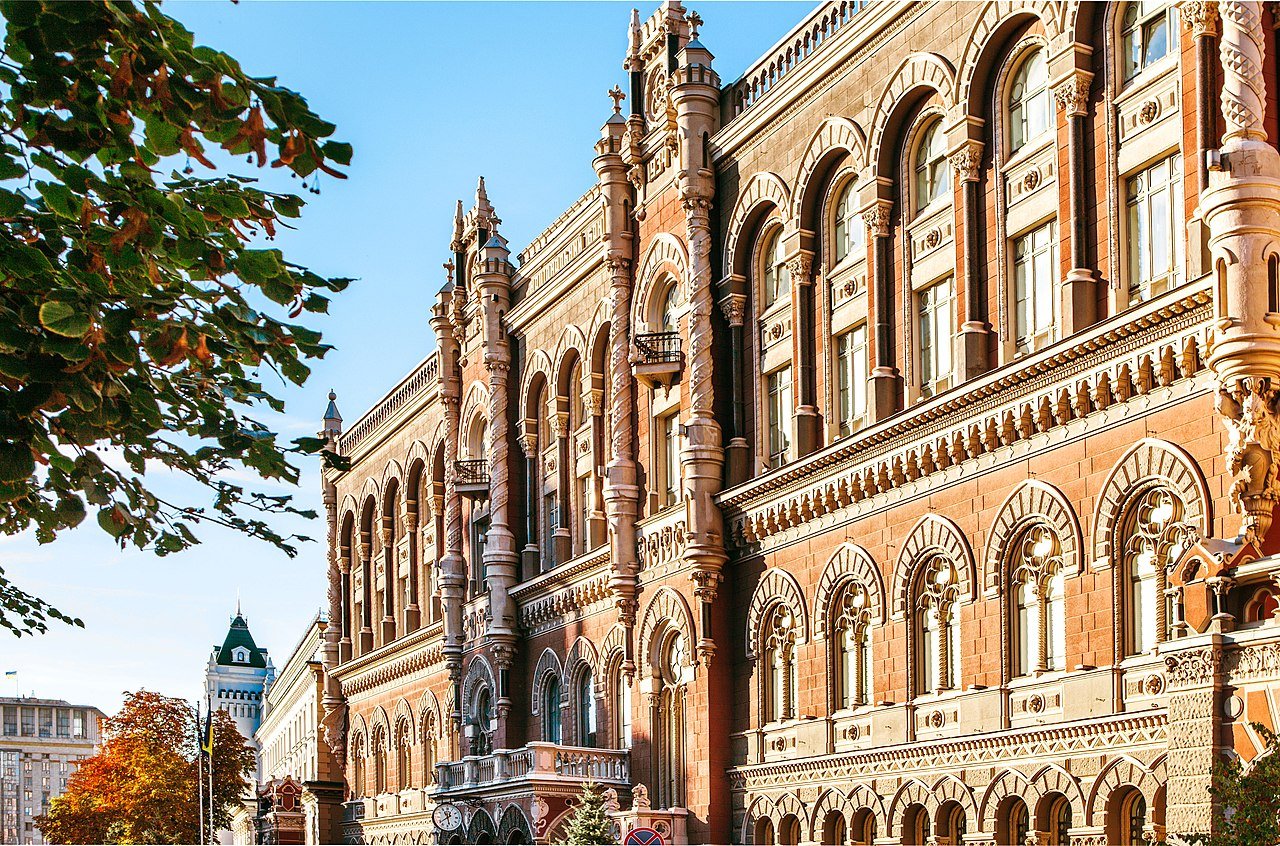
PHOTO: WIKIPEDIA
This interview was prepared by Laura Hoffman