Romanian farmers urge deeper review of Mercosur agreement
Farmers are asking President Nicușor Dan to carry out a deeper analysis of the Mercosur Agreement and its effects on Romanian agriculture, warning that under the current form of the agreement, small and medium-sized farms will face serious difficulties and European and national funds will be lost.
The farmers’ reaction comes after information appeared in the public space according to which President Nicușor Dan considered the Mercosur Agreement to be advantageous, following "consultations held with farmers 3–4 months ago," CE Report quotes AGERPRES.
"At this moment, Romanian farms have benefited from significant national and European funds. As a result of this effort, as well as the perseverance and hard work of Romanian farmers, we can boast notable results, such as leading positions in the EU for exports of cereals and livestock—goats, sheep, and poultry. There are sectors still facing major difficulties due to the lack of state response, such as the pig sector, but also highly performing sectors. Romanian farmers produce quality food at affordable prices, and their access to a highly competitive EU market is the best argument. We will not be able to maintain these results under the current agreement; on the contrary, small and medium-sized farms will be in real trouble and the funds mentioned will be lost. We respectfully ask you, Mr. President, to consider a more in-depth analysis of the Mercosur Agreement and its effects on Romanian agriculture, before the recently extended deadline," the Alliance for Agriculture and Cooperation (AAC) said in a statement.
The Alliance offered to bring to the discussion table farmers, members of the academic community relevant to agriculture, as well as representatives of professional organizations who have actively participated in working groups within Copa-Cogeca (the largest organization representing European farmers) and have supported farmers’ causes before MEPs and other decision-makers at both Romanian and EU level.
"We are convinced that the expertise and experience of AAC delegates can add value to any good-faith debate regarding agriculture at EU level in general and at national level in particular. Romania is a special case that must be approached prudently, taking into account its geographical specifics and political realities that have influenced agricultural development differently from most European states," they told the president.
AAC also said that several clarifications are necessary.
"Mr. President Dan or the relevant decision-makers did not formally or informally consult farmers from the member organizations under the AAC umbrella in a way that would result in a favorable position on the agreement. We ask which agricultural sectors or professional organizations the farmers involved in those favorable discussions came from, given that AAC consists of nationally representative professional organizations in agriculture, as recognized by a decision of the Bucharest Tribunal. Where are the impact studies and analyses weighing the positive and negative effects of this agreement on the Romanian economy? Why is it reasonable to claim that Romanian farmers agree with trade conditions against which protests have repeatedly taken place in Brussels and Strasbourg? We note that AAC member organizations also participated peacefully in the protests on December 18. How can it be mathematically explained that a state with a significant share of agricultural land at EU level fails to achieve aggregated results even close to that percentage?" the farmers asked.
Regarding the safeguard clauses mentioned by President Nicușor Dan, AAC argues that they do not work, citing the example of the agreement on Ukrainian grain entering the domestic market, which was supposed to transit Romania but instead flooded the market, including as livestock feed.
"We remind you, Mr. President, that you promised to appoint an agricultural adviser, not necessarily from a professional organization but someone knowledgeable about Romanian agriculture. This has not happened," the farmers added.
The European Union has postponed the signing of a free trade agreement with four Mercosur countries until January next year. The agreement between the EU and Brazil, Argentina, Uruguay, and Paraguay—under negotiation for over 25 years—was due to be signed at a summit in Brazil, dpa reported.
European Commission President Ursula von der Leyen said on Friday that EU countries need "a few more weeks" and that the signing of the Mercosur association agreement has only been "slightly" delayed until January.
An EU summit in Brussels failed to convince enough EU leaders to reach the required majority for signing the agreement—at least 15 of the 27 member states, representing 65% of the EU population. The controversial free trade agreement aims to boost trade between the two economic blocs but is viewed critically by several major EU countries, including France, Poland, and Italy.
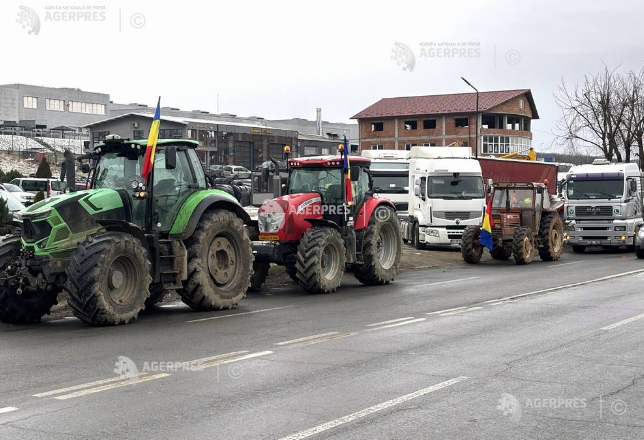
Thousands of farmers gathered in Brussels on Thursday during the meeting of EU leaders, blocking major roads. Some protests turned violent.