Croatia’s real estate market braces for 2026 amid new regulations - EXCLUSIVE
CE Report presents an exclusive interview with Lana Mihaljinac Knežević, Director of Zagreb West Real Estate Agency, focusing on the current trends and challenges in Croatia’s property market, including the impact of foreign buyer activity, regulatory changes, and the outlook for 2026.
How significant has the decline in foreign buyer activity been, particularly from Germany, and which markets are most affected?
Foreigners predominantly purchase residential properties, either as 2nd homes or as an investment for renting to tourists, in the coastal counties (‘županija'), namely (in descending order according to the number of purchases by foreigners): Primorsko-goranska županija, Istarska županija, Splitko-Dalmatinska županija, and Dubrovačka-neretvanska županija. Most purchases are by buyers from Slovenia, Germany and Austria, with the order changing from year to year. In some areas, the ratio of purchases made by foreigners is almost 90%. The drop in the first half of 2025. vs. the first half of 2024 (please refer to the presentation) is significant, but in summary: 27% in Primorsko-goranska županija, 20% in Istarska županija and 31% in Splitsko-dalmatinska županija.
The areas most popular with foreigners are directly affected by the economic situation in the buyers’ originating markets. Other factors are destimulating demand, especially from buyers who purchase as an investment, namely, new taxes (Property tax, which affects properties for short-term renting and those which are not the owners’ primary residence) and more strict regulations for units for rent to tourists. Tourism and short-term renting directly affect the lack of stock for sale and long-term renting in all areas on the coast, contributing to severe unaffordability for locals, who have less purchasing power than foreigners, so the government is introducing taxes and regulations which are aimed at de-stimulating purchases for renting to tourists.
Are there any regulatory or legislative changes expected in the near future that may impact property sales, rentals, or short-term tourist accommodations?
A few have already been introduced.
Property tax, introduced on 01.01.25, affects all properties which are not the owners’ primary residence and which are rented short-term. Annual tax, payable once a year, ascertained on 31.03., affecting the registered owner on that day. Calculated by the local authority, the amount is 0.50e-8,00E/m2. Primary residences and properties rented long-term, ie, for longer than 10 months per year, are exempt. The goal is to de-stimulate short-term renting and activate vacant properties.
Changes in the Law on Management and Maintenance of Residential Buildings, introduced on 01.01.2025, owners of properties for rent to tourists and short-term renting need consent from 80% of other owners in the building, and all the bordering units, to obtain a licence for short-term renting. Not applicable to properties which already have the licence, only for new applicants, but as licences are obtained for 5 years, eventually all applicants will be affected by the new regulation.
Program of Affordable rent, should begin in Feb 2026., stimulates owners whose properties have been vacant for more than 2 yrs to hand them over to the government Agency for the legal transfer and brokerage of real estate, who will in turn sign long-term tenancies with renters at affordable rates, and pay the difference between this amount, and the actual market level monthly rent to the owner, through two large payments from the agency. The owner hands over their property for a minimum of 5 years, a maximum of 10. Further information is available on https://apn.hr/novosti-2.
From 01.01.2025, a return of 50% of VAT (25% VAT is included in the price of new builds, and essentially transferred to the buyer on purchases of new builds) and the whole amount of property transfer tax (3% is levied on the buyers of any properties which are not new builds) for first-time buyers.
Further changes to laws which have been announced by the government: Law on Renting of Apartments, Law on Affordable Housing.
How are real estate agencies and developers adapting to the slowdown, particularly in major urban centres like Zagreb and coastal areas?
The period from 2021. until 2024. was characterised by one of the highest rates of price increases in the EU, due to several macroeconomic trends: inflation, low unemployment rates, rise in salaries and disposable income, low interest rates + rise in tourism activity and interest from foreign buyers + government subsidised loans for first-time buyers. In parallel, there has not been enough new development, so stock is very limited, and there is a huge imbalance between demand and supply, causing unaffordability. New builds are very expensive, especially in the main coastal cities and towns and in Zagreb, existing stock has been depleted, is often substandard quality, and its asking prices are too high. Owners of such properties are responding very slowly to the new market conditions, and maintaining prices which are too high, so many buyers are delaying purchases. Consequently, there has been a drop in the number of transactions, 15% in the whole of Croatia, 20% in Zagreb, and rates quoted above, in the coastal areas.
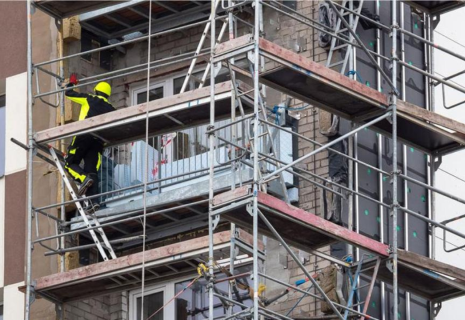
Developers were affected by rising prices in materials during COVID-19, and are generally affected by the lack of workers, high costs of land, which is very scarce in the most attractive areas, and high contributions for infrastructure. They are focused on the development of high-end properties, full prices are above average, and buyers with average income cannot afford them. There is an opportunity for the development of a whole new segment of developers who would be building affordable units, in collaboration with the local authorities, who, in turn, would have to stimulate the developers through cessation of land or reduced taxes. Unfortunately, though the government has introduced an Affordable housing strategy, this aspect, which would, in simple terms, increase the stock, is not very prominent.
Real estate agencies are operating in a very competitive environment, with many new ones coming to the market or growing in 2021 and 2024, but have been facing very tough market conditions in 2025, which we expect will continue in 2026. We expect downsizing in large agencies and fewer new ones being licensed in 2026.
Does the Croatian Chamber of Economy anticipate a market correction in 2026, and what are the expected timelines and mechanisms for price adjustments in used and new properties?
We expect that average price increases will be at lower rates, that the number of transactions will continue to fall on the coast, depending on the economic situation in the emitting markets (Germany, Austria, Slovenia), and in Zagreb, if the owners of used properties do not lower asking prices. If such corrections of used stock happen, the fall in transactions will be less significant. Average prices of new builds in Zagreb will not fall for now, as a limited number in relation to demand is coming to the market. We are waiting to see the impact of all the tax changes and new regulations which were introduced in 2025 and will be introduced in 2026, and hoping that more stock will become available. The war in Ukraine and the relationship between the EU, China and the USA also affect the market in Croatia due to the resulting uncertainty.
Photo: LinkedIn
This interview was prepared by Julian Müller