Romania’s Salvamont issues safety guidelines
Salvamont teams in Romania are making several recommendations as some of the ski slopes will open in the coming period, marking the start of the winter tourist season.
Tourists are advised to choose snow-sliding equipment that is appropriate in terms of technical characteristics and binding adjustments, body weight, and skill level, CE Report quotes AGERPRES.
They are also encouraged to approach the ski slopes cautiously at the beginning of the season, as they may not have the same athletic abilities they had at the end of last season and need a short period of readjustment. Skiers should descend in a manner that does not endanger the life of another skier or cause them harm.
At the same time, winter sports enthusiasts are advised to adjust their speed and skiing style according to their technical preparation, physical condition, snow quality, slope difficulty, weather conditions, and slope traffic density. They should also carefully choose their descent line to protect skiers below.
“You must overtake the skier downhill either on the right or on the left, provided that the overtaking is wide enough to avoid any unexpected movement of the skier being overtaken. Make sure, by carefully checking traffic from above and below, that you and other skiers are safe when crossing a slope or resuming skiing after a temporary stop. Avoid stopping on the slope, especially on narrow sections or those with limited visibility. In case of a fall, clear the slope as quickly as possible. Use only the edge of the slope to go up or down on foot, without skis. Respect the signs and markers installed on the slopes and leisure ski routes: do not ski in the forest, do not descend straight down the slope, sledding is prohibited, do not walk on the slope. Respect the international color markings for slope difficulty: green – very easy, blue – easy, red – medium, black – difficult,” the Salvamont Romania Facebook post states.
In the event of an accident on the slope, the local Salvamont team must be notified directly through the National Salvamont Dispatch at 0Salvamont (0725.826.668) or through the 112 emergency number, specifying the caller’s name, what happened, how many people need help, when the accident occurred, and the location of the injured persons.
In this context, rescuers also offer recommendations on how to act in case of an incident:
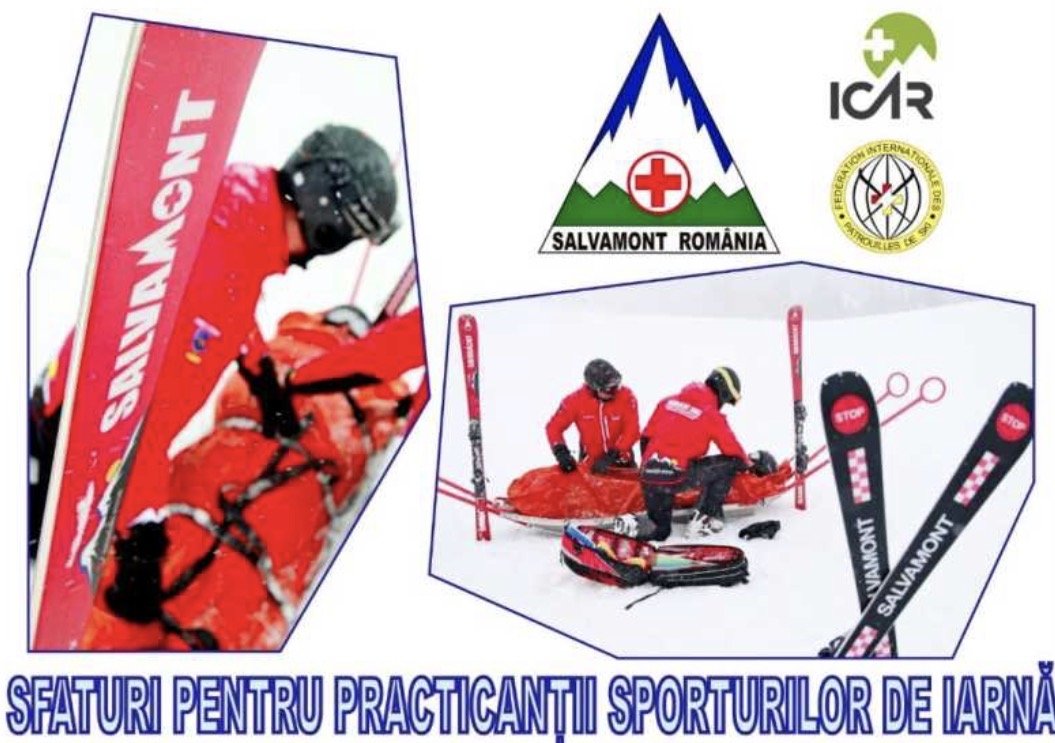
“Try to protect the accident site and the injured person by placing a barrier of skis stuck in the snow 5–6 meters uphill until the Salvamont team arrives. Keep the injured person warm and provide psychological support. In the case of severe falls, try not to move the injured person and allow only medically trained individuals—doctors, assistants/paramedics, or mountain rescuers—to intervene. Spinal trauma cases are quite frequent in winter sports accidents, and intervention by untrained persons or without proper equipment can be fatal. Do not accept transport off the slope except with specific rescue equipment, such as a rescue sled, and only after proper immobilization of the affected area. Do not use improvised sliding devices like bags or plastic lids—they are uncontrollable and cause serious accidents,” Salvamont representatives add.
Between 300 and 500 mountain rescuers will be on duty daily in winter sports resorts, in more than 80 Salvamont bases and posts in areas where winter sports are practiced or where there is a large influx of tourists.