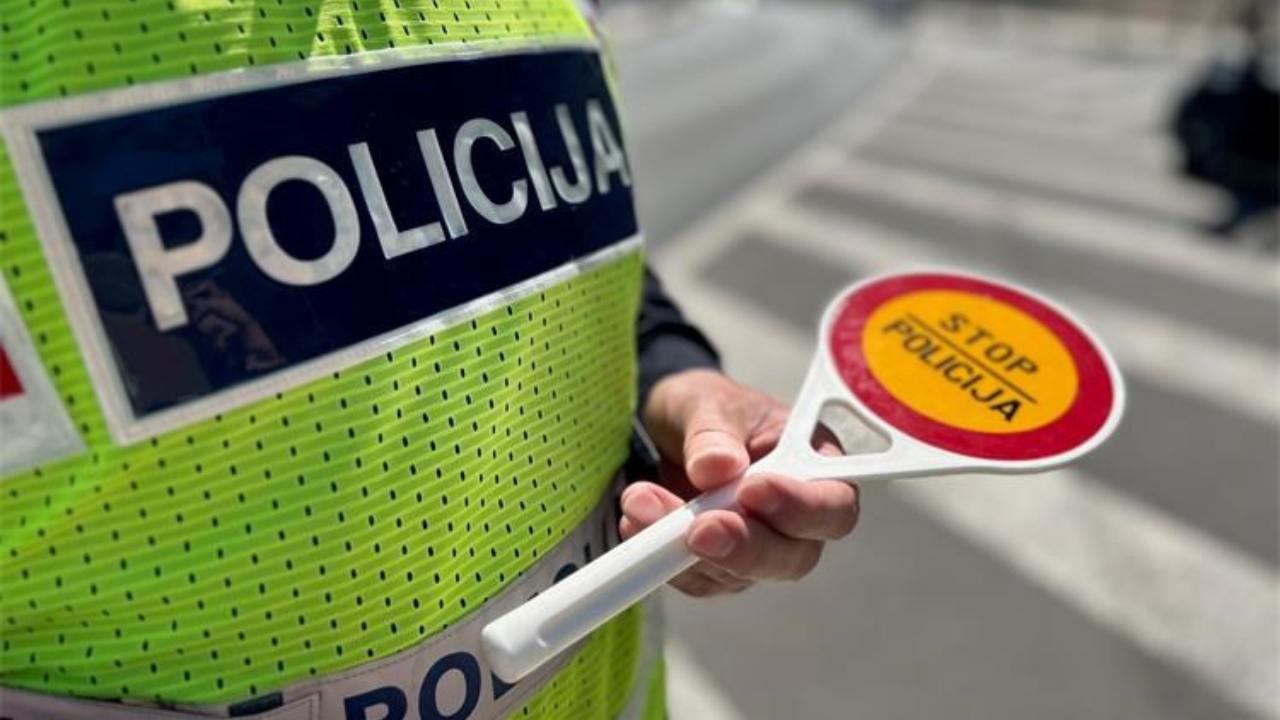
Croatian police outline strategy to combat tourist crime - EXCLUSIVE
During the summer months, our area records property crimes targeting tourists, collectively referred to as tourist-related crime, as these offences primarily affect domestic and foreign visitors. The most common offences include thefts on beaches, pickpocketing in crowded city streets, and thefts in shopping centres.
This was said by the source in the Zadar Police Administration of the Republic of Croatia in an exclusive interview with CE Report.
On beaches, the most frequently stolen items are mobile phones, laptops, and jewellery, while pickpockets mainly target wallets, bank cards, and cash. Carelessness remains one of the leading factors contributing to these crimes.
During the summer season, police also record thefts of bicycles and electric scooters, as well as thefts of valuables from unlocked vehicles. In some cases, the perpetrators are foreign nationals who temporarily relocate to the Adriatic coast during the tourist season and operate in organised groups. Within police circles, they are commonly referred to as "nomadic thieves."
Regarding crime statistics for the first six months of 2026, theft and aggravated theft account for the largest share of reported offences. A total of 39 foreign nationals were victims of theft or aggravated theft, with stolen property mainly including wallets, jewellery, mobile phones, electric scooters, and similar valuables.
During the same period, foreign nationals were also identified as perpetrators of property crimes within the jurisdiction of the Zadar Police Administration. Eight foreign nationals were reported for committing thefts involving mobile phones, cash, and other valuables.
Under the Act on Nationals of European Economic Area Member States and Their Family Members, which is fully aligned with the provisions of Directive 2004/38/EC, an expulsion order may be issued against an EEA national only if that person's conduct constitutes a genuine, present, and sufficiently serious threat to public policy or public security, following an individual assessment of all the circumstances of the case. Such an order applies only to the territory of the Republic of Croatia and does not constitute a ban on entry or residence in other European Union Member States.
When a third-country national commits a criminal offence in the Republic of Croatia, the Ministry of the Interior may issue an expulsion order if, pursuant to the Foreigners Act, it determines that the individual's conduct poses a threat to public order. The decision is made following an individual assessment of all relevant circumstances. In addition to the expulsion order, an entry and residence ban within the European Economic Area may also be imposed, lasting from three months to 20 years, depending on the circumstances of the specific case and the assessed threat to public order.
In addition to enforcement measures, the police also implement preventive activities aimed at reducing property crime through public advice, warnings about common methods of theft, and similar awareness campaigns.
As part of the local crime prevention project "Safety in Tourism of Zadar County," led by the Crime Prevention Council of Zadar County, the police continuously carry out preventive activities throughout the summer months. These activities focus on preventing thefts and pickpocketing at beaches, campsites, shopping centres, city squares, and other locations where large crowds are expected.
The activities are frequently conducted in cooperation with crime prevention officers and police officers from Hungary, Poland, Austria, and Germany who are stationed within the Zadar Police Administration as part of the "Safe Tourist Destination" project.
The activities take place in campsites, beaches, streets, and public squares across Zadar's tourist destinations, where police officers educate both domestic and foreign tourists about the importance of protecting their personal property to avoid becoming victims of crime. The goal is to increase awareness of self-protection measures, inform visitors about the characteristics of these offences, and explain the typical behaviour of offenders.
During these activities, visitors are also provided with "Safe Holiday" brochures containing self-protection advice in 14 languages, along with important emergency telephone numbers where citizens can seek assistance.
Photo: Zadar Police Administration
This interview was prepared by Julian Müller