Slovenia launches fund to cover rare disease treatments
Slovenia has passed legislation to establish a fund to finance rare disease treatments available only abroad.
The scheme will fill an absence that has so far been accommodated by fundraising campaigns, CE Report quotes The Slovenia Times.
The public health insurance fund ZZZS will be in charge of the dedicated systemic financial source, which is designed to cover the costs of healthcare services and imported medicines for life-threatening rare diseases where no equivalent domestic treatment exists.
The new fund will mainly help children suffering from rare diseases whose treatment costs a lot, for example, up to one million euros or more.
A key provision allows for the financing of advanced medications that may not yet hold full EU marketing authorisation but are approved by equivalent regulatory bodies in third countries enjoying the same standards as the EU's, as well as drugs currently undergoing phase III clinical trials.
Another major addition is that parents of children with rare diseases have the possibility to demand the inclusion of a foreign expert on a medical board that is to give an expert opinion in relevant cases. The foreigner in question would have to be a specialist from European Reference Networks or OECD national networks for rare diseases.
To ensure financial stability, the fund will be supported by compulsory health insurance, private donations, and national budget allocations should other sources prove insufficient.
Lack of systemic funding absorbed by crowdfunding in the past
The fund is seen as the culmination of efforts to provide a systemic source of funding after a spate of high-profile cases where parents turned to crowdfunding for treatment abroad.
Another major development in Slovenia's response to rare diseases was the start of a clinical trial for the development of the first gene replacement therapy for the CTNNB1 syndrome at UKC Ljubljana, the country's leading medical centre.
In December, Urban, a six-year-old boy suffering from this rare genetic neurodevelopmental disorder, became the first patient in the world to receive this pioneering therapy.
In the early 2020s, there were several crowdfunding campaigns to raise money for Urban's treatment, and the therapy's development has been spearheaded by his mother, researcher Špela Miroševič.
A show of cross-partisan support, but some concerns remain
The new fund received broad cross-partisan support in the 18 February vote. The law's sponsor, Social Democrat (SD) MP Meira Hot, described the legislation as a "concrete step forward" that introduces transparent, expert-based criteria.
However, the debate in the National Assembly did feature sharp disagreement over a rejected amendment regarding crowdfunding.
The opposition Democratic Party (SDS) proposed that if a medical board denies treatment but a family raises at least 20% of the funds privately, the fund should cover the remainder regardless of the expert opinion. The junior opposition party New Slovenia (NSi) echoed this sentiment, saying that the state should pay without exception if a cure exists.
In response, Hot argued the amendment failed to address medical justification, noting that the law already provides a safeguard in the form of the possibility of requesting a foreign expert to be on the medical board.
Meanwhile, the Viljem Julijan Association, a charity that has been at the forefront of fundraising efforts for gene therapies for children with rare diseases, was disappointed with key aspects of the new legislation.
They pointed out that children participating in phase I clinical trials will not be eligible for funding, as coverage is restricted solely to patients enrolled in phase III trials.
While describing the fund as a step forward and a glimmer of hope for some children, the association cautioned that only when the measures have been put into practice will it become clear whether the law has truly come to life or remain a dead letter.
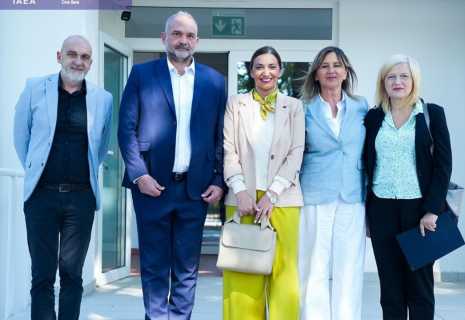
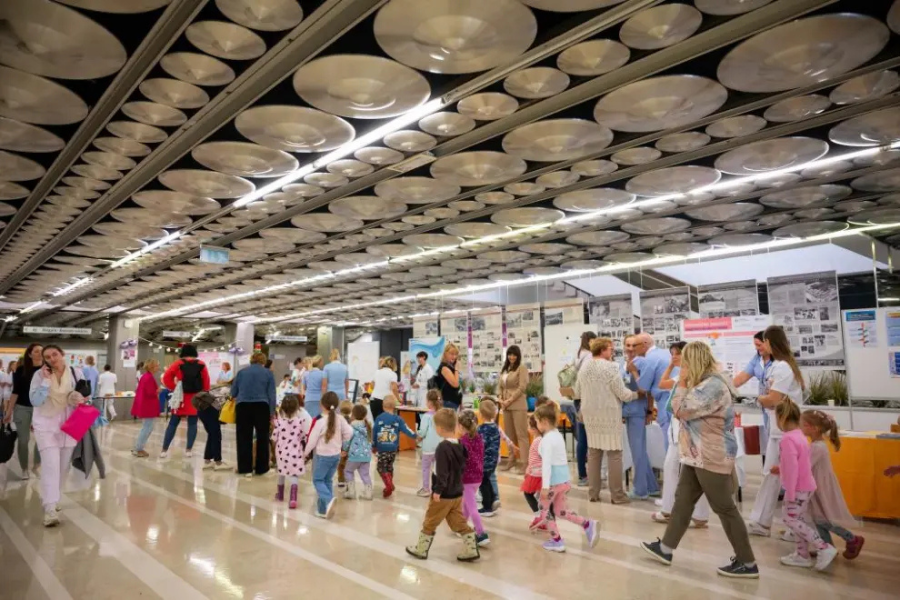
Photo: Boštjan Podlogar/STA