Bulgaria outlines timeline, partners for Kozloduy units 7 and 8 - EXCLUSIVE
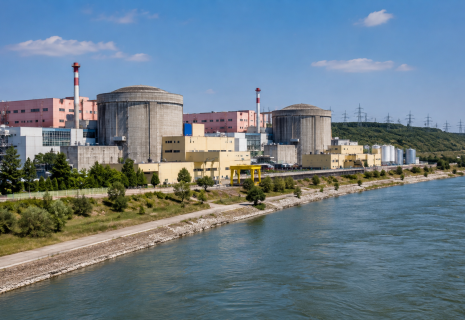
The Ministry of Energy of Bulgaria, in an exclusive interview with CE Report, has outlined key details on the construction and commissioning of Units 7 and 8 at the Kozloduy Nuclear Power Plant, emphasizing international standards, local participation, and contributions to Bulgaria’s long-term clean energy goals.
According to the Ministry, the project is being implemented by Kozloduy NPP – New Build EAD, in cooperation with strategic partners Westinghouse and Hyundai Engineering & Construction, as well as international consultants. It follows a clearly defined timeline in line with the International Atomic Energy Agency (IAEA) guidelines and Bulgaria’s regulatory framework, the Ministry said.
Timeline and key milestones
Following a strategic decision of the National Assembly in 2023, the project entered the implementation phase, including preliminary engineering services and feasibility studies for localizing the AP1000 design. In 2024, licensing procedures were launched for both units, along with an Environmental Impact Assessment for Unit 8. An engineering contract with the Westinghouse–Hyundai consortium marked the start of practical implementation, the Ministry said.
In 2025, Kozloduy NPP – New Build submitted an application for a design permit for Unit 7, while the regulator issued a site selection permit for Unit 8. Pre-notification to the European Commission for state aid approval was submitted, alongside financial advisory arrangements with Ernst & Young and Citi bank. An owner’s engineer agreement was also concluded in December 2025, the Ministry said.
Formal notification to the European Commission for state aid approval is scheduled for early 2026. The construction permit for the basic design stage is expected in 2026, followed by a Final Investment Decision by the National Assembly and an engineering, procurement, and construction (EPC) contract in early 2027. Approval of detailed design and issuance of construction permits are expected by 2030, with first nuclear concrete for Unit 7 planned for the end of that year and construction of Unit 8 starting in 2031, the Ministry said.
Local involvement and workforce development
The Ministry highlighted that Bulgarian companies and specialists will play a central role in the project, with a minimum of 30% local participation stipulated in contracts. Hyundai Engineering & Construction will involve Bulgarian firms in construction, infrastructure, logistics, and material supply, while Westinghouse will engage local engineers in design, technical support, training, operation, and maintenance, the Ministry said.
Currently, 36 local companies are expected to participate, including new memoranda of understanding for products and services such as valves, electrical equipment, pressure vessels, and auxiliary systems. Bulgarian specialists are already contributing to investment design, licensing procedures, nuclear quality assurance programs, and construction preparation activities, the Ministry said.
The Ministry also emphasized workforce development. Bulgarian professionals with international nuclear project experience have been recruited, including returning nationals. Partnerships with universities and the Ministry of Education and Science provide scholarships and internships for students in critical nuclear fields, ensuring sustainable staffing for the sector, the Ministry said.
Safety, compliance, and clean energy goals
The Kozloduy NPP – New Build project is being developed in full compliance with national and international legislation, including IAEA, WENRA, and EU frameworks. All site selection and environmental approvals have been rigorously reviewed, and the Nuclear Regulatory Agency has confirmed site suitability. The project operates under an Integrated Management System aligned with ISO 9001 and ISO 14001 standards, promoting safety, environmental protection, and continuous monitoring, the Ministry said.
Once completed, Units 7 and 8 will deliver approximately 2,400 MW of zero-carbon electricity, strengthening Bulgaria’s energy security and supporting decarbonization targets. The Ministry said the project, designated a strategic priority by the government, combines advanced technology, strict regulatory oversight, and international expertise to provide safe, reliable, and sustainable nuclear power for decades.
This interview was prepared by Laura Hoffman