Hellenistic marble goddess head unearthed in ancient Metropolis
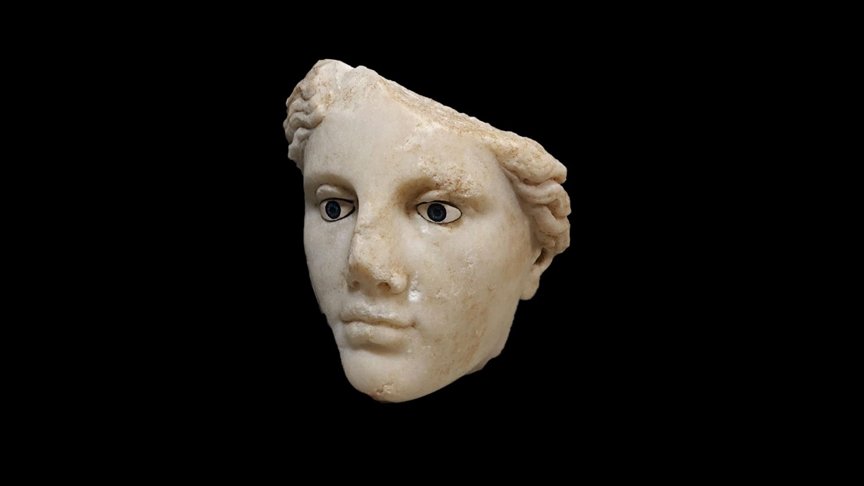
A marble statue head believed to date back to the Hellenistic period has been unearthed at the ancient city of Metropolis in the Torbalı district of İzmir.
According to a statement from the excavation leadership, excavations at Metropolis—known as the “City of the Mother Goddess”—began in 1989 and have been carried out since 2007 under the direction of Prof. Dr. Serdar Aybek from the Department of Archaeology at Dokuz Eylül University’s Faculty of Letters. The work continues within the Ministry of Culture and Tourism’s “Heritage for the Future” project, with support from the Sabancı Foundation, CE Report quotes Anadolu Agency.
During this year’s excavations, a marble head of a goddess statue was discovered in an area identified as a commercial structure.
Excavation Director Aybek stated that the statue head’s hair details, portrait characteristics, and the flawless joining of two separately carved pieces indicate a Hellenistic origin. He added that the dimensions suggest it belonged to a monumental statue.
After careful cleaning by restorer Didem Taner, it was observed that the pupil area had been carved during the initial production phase to create a cavity for the eye. Similar examples found in Greece suggest these cavities were prepared for the later insertion of colored stones. Due to its size, the artifact is believed to belong to a monumental statue and provides important data on Hellenistic-period sculpture production in the city.
Aybek also noted that the artifact may belong to the goddess Hestia, explaining that it appears to be proportionally compatible with a body fragment previously found in the Assembly Building, thought to represent Hestia, the protector of the council. An experimental “eye reconstruction” study conducted by restorer Taner Özgür helped visualize the statue’s impressive appearance in antiquity.