Moldova unveils GDP growth in 3Q2025
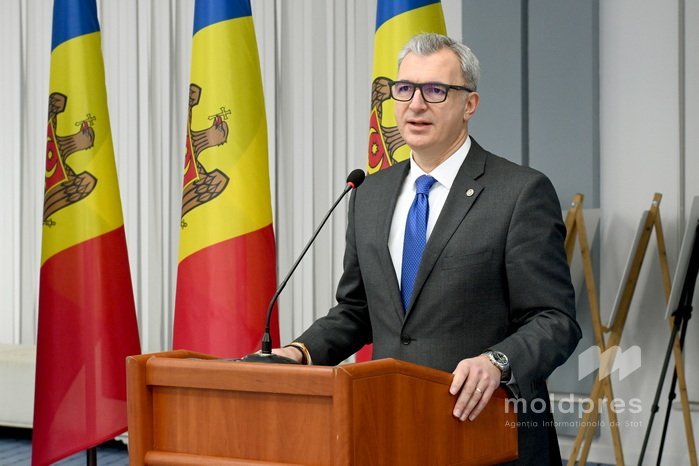
The year 2025 marked a transition from managing a series of crises to a period of gradual economic recovery in Moldova, driven by investments, productivity growth, and competitiveness, within the framework of European integration, according to Deputy Prime Minister and Minister of Economic Development and Digitalization, Eugeniu Osmokesku. He presented the 2025 activity report and outlined strategic directions for 2026.
In Q3 2025, GDP grew by 5.2%, and cumulative growth from January to September reached 2%. Economic growth was fueled by investments, agriculture, construction, exports, and a revival of domestic consumption, CE Report quotes MOLDPRES.
"Growth was primarily driven by the agricultural sector, about 15%, construction around 8%, and industry about 3%. This confirms our vision from the start: Moldova needs to shift from a consumer-based to an innovation and production-based economy," Osmokesku said.
Investment was the main growth driver, with gross fixed capital formation rising nearly 18% in Q3. 2025 saw an upward trend in foreign direct investment (FDI) inflows, with net capital inflow in H1 exceeding $213 million and reinvested profits increasing by over 50%. The European Union remains the main investment partner, accounting for more than 85% of foreign capital from EU member states.
"We want Moldova to develop based on investment and innovation. Total investment for the first nine months of 2025 reached $16.7 billion. Net capital inflow in H1 was $213 million, three times higher than in H1 2024. Reinvested profits amounted to $215 million, 50% more than in 2024. We propose allocating about 55% of the 2026 budget to investments, development of investment projects, and measures benefiting citizens and the business environment," the Deputy Prime Minister stated.
European integration was a strategic foundation of Moldova’s economic policy in 2025. The country completed the selection process and began technical negotiations on priority clusters. The Ministry of Economic Development and Digitalization manages nine negotiation chapters and coordinates the "Internal Market" cluster.
"Moldova’s European integration is our number one priority. We will coordinate efforts across ministries, agencies, and the private sector to advance Moldova’s European agenda for the benefit of citizens and businesses," Osmokesku said.
Currently, almost 70% of Moldova’s exports are destined for the EU. Romania, Turkey, Italy, the Czech Republic, and Ukraine account for more than 60% of exports. Over 2,200 Moldovan companies export to the EU, representing more than 70% of all exporters. Expanding access to new markets will be a priority in the coming period.
Support for SMEs remains a key priority. Through programs implemented by the Entrepreneurship Development Organization, over 400 projects were funded, mobilizing more than 4.3 billion Moldovan lei into the economy. The number of grant recipients doubled, and deregulation measures significantly reduced administrative burdens on businesses.
"Thanks to programs implemented by the EDO, company investments in Moldova reached 7,846,716 lei in 2025 alone, which is an impressive figure," Osmokesku noted.
Significant progress was also made in digitalization. Over 75% of public services for businesses are now available online, and most interactions between entrepreneurs and government institutions are conducted electronically.
In 2026, the Ministry plans to continue reforms aimed at attracting productive investments, boosting exports, supporting entrepreneurship, and accelerating digital transformation. These goals are part of the Economic Growth Reform Plan 2025–2027 and reflect the strategic aim of European integration.
As reported by CE Report, additionally, the abolition of EU roaming charges will allow Moldovan citizens to communicate at national rates within the European space, a concrete step toward the Single Market. The new Freelancers Law introduces a simplified legal framework with easy registration and a flat tax of 15% (within a set cap) without excessive bureaucracy.