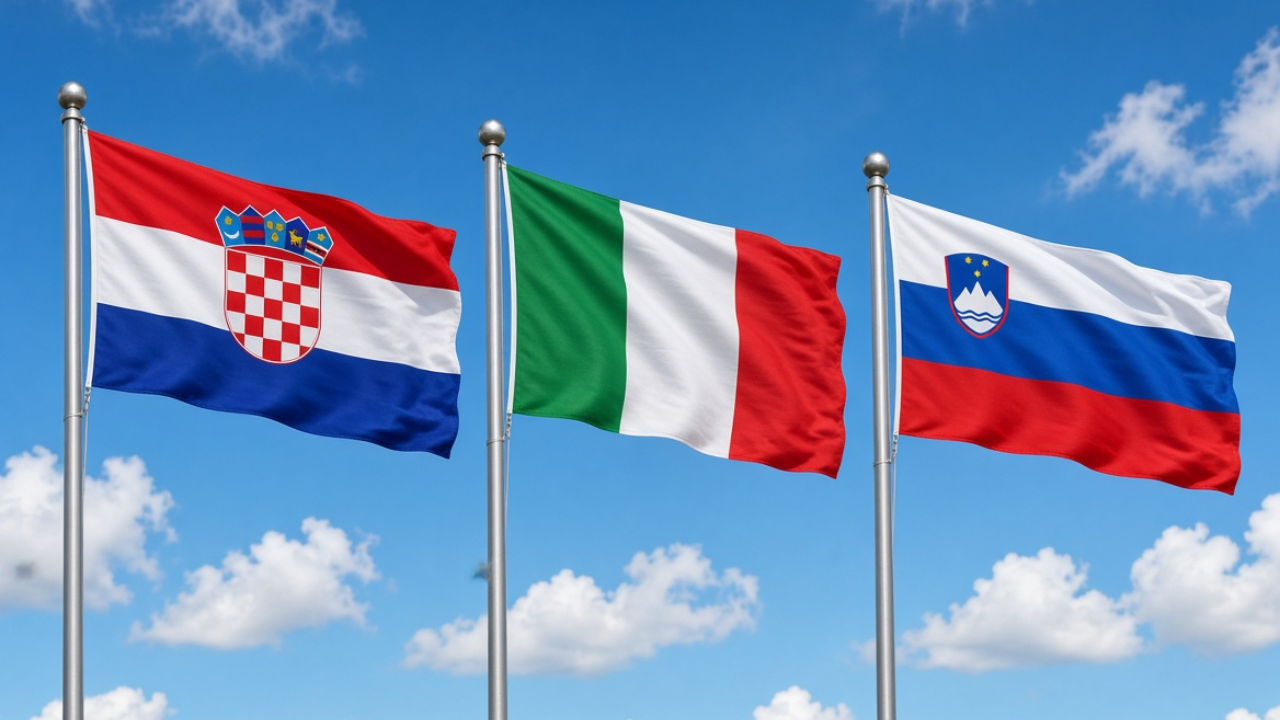
Croatia, Italy, Slovenia to step up border cooperation
The number of irregular migrants along the Western Balkan route is declining, but the route remains active, and Croatia, Italy and Slovenia will therefore continue trilateral border patrols, Croatian Interior Minister Davor Božinović said in Pordenone.
The interior ministers of Italy, Croatia and Slovenia expressed satisfaction with their cooperation to date at a trilateral meeting in Pordenone, Italy, and confirmed their readiness to further improve it through regular information exchange, joint operational activities and a coordinated response to security challenges, CE Report quotes FENA.
“Our three countries share the common goal of ensuring the security of citizens, effectively managing migration and further strengthening the Schengen area as a zone of security and free movement,” Italian Interior Minister Matteo Piantedosi said, adding that this cooperation had produced good results.
In support of this, he highlighted that the number of cases of irregular border crossings fell by 28% in the first eight months of this year.
Croatian Interior Minister Davor Božinović stressed that irregular migration along the Western Balkan route had continued to decline this year.
He warned, however, that the route remains active and that the situation in the area must therefore be monitored closely.
“We will therefore continue trilateral border patrols, as they have produced results, particularly in the fight against migrant smugglers,” Božinović said.
He said that 842 migrant smugglers had been arrested this year and that the results achieved this year were more significant than those recorded in the previous period in terms of prevention. Last year, nearly 25% more attempted entries into EU territory were prevented.
Frontex in Bosnia and Herzegovina
Speaking about Frontex, Božinović stressed that Croatia had advocated for the deployment of Frontex in Bosnia and Herzegovina, given that more than 95% of irregular migrants travelling along the Western Balkan route come from the direction of Bosnia and Herzegovina.
“Our goal, as well as that of the European Commission, which is why negotiations were held with the authorities in Bosnia and Herzegovina, was to resolve the status of Frontex there. At the moment, they are establishing certain activities, mainly at the airport on the eastern border of Bosnia and Herzegovina, which is very important. However, what interests us most is the western border, where migrants mainly attempt to cross illegally into Croatia,” Božinović said.
“That is one of the issues that I believe we will discuss going forward,” Božinović added.
He said he saw Frontex’s future mission in two aspects: strengthening the capacities of countries through which irregular migrants pass on their way to EU territory, and addressing returns. He argued that such a large organisation with such a substantial budget could certainly play a much more efficient and effective role in returning irregular migrants to their countries of origin.
“Our challenges are more or less the same. Today, there is hardly a security challenge, particularly for police forces, that does not have a cross-border dimension. The better we cooperate, exchange information and participate in joint operational activities, the more successful we will be in responding to all the demands,” Slovenian Minister of the Interior and Public Administration Franci Matoz said.
Photo AI