EU project aims to turn space water into rocket fuel
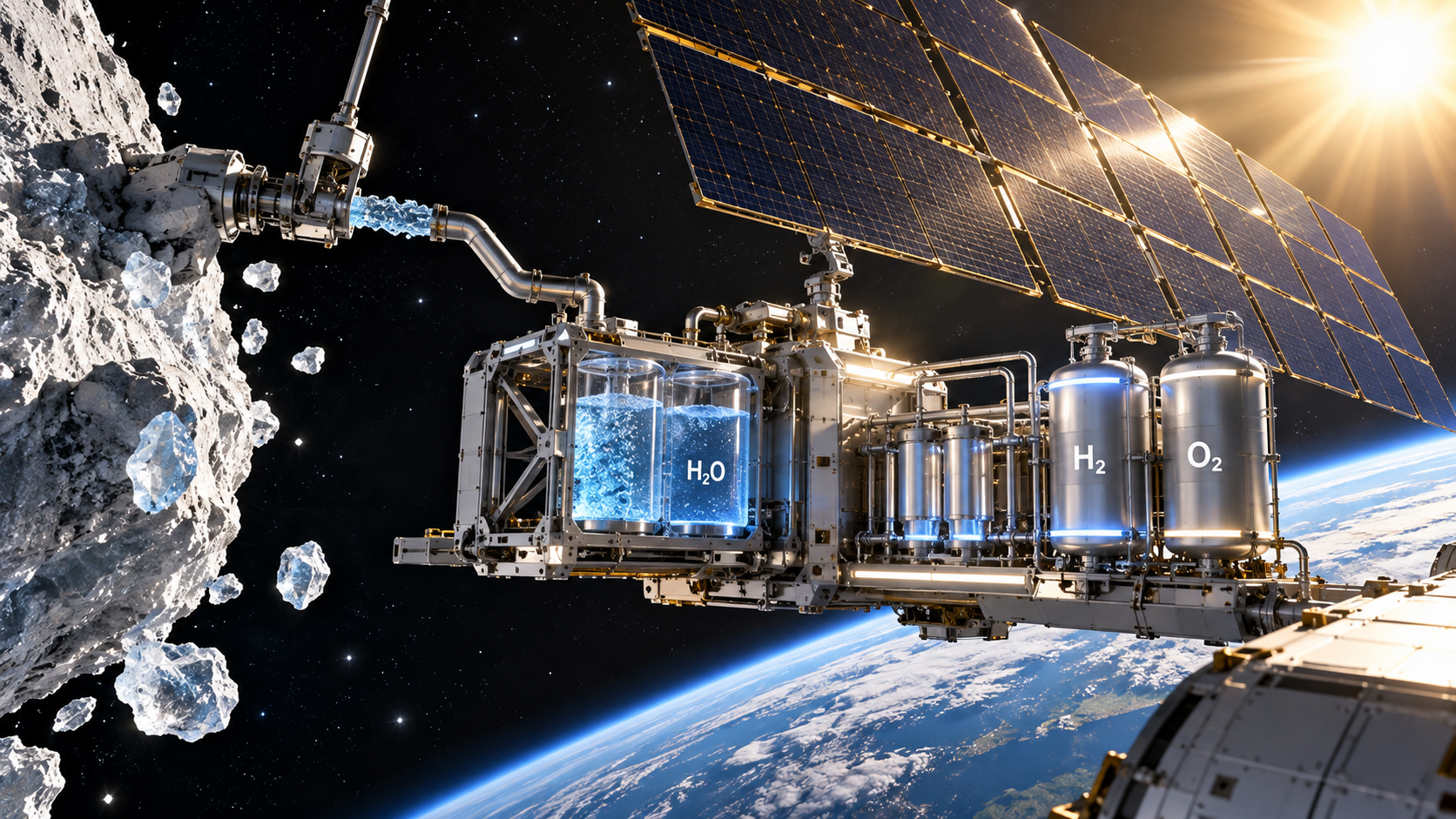
An EU-funded project called Green SWaP aims to convert water found in space into rocket propellant using solar energy generated directly in orbit, potentially offering a more sustainable approach to fueling future space missions.
Angelo Pasini, associate professor in the Department of Aerospace Propulsion at the University of Pisa, discussed the project with Anadolu Agency during the 77th International Astronautical Congress (IAC) in Antalya, Türkiye, CE Report quotes Anadolu Agency.
The congress, organized by the International Astronautical Federation (IAF), is being held at the NEST Congress Center under the coordination of Türkiye’s Ministry of Industry and Technology, with the Turkish Space Agency (TUA) and SAHA Istanbul serving as co-hosts.
Pasini explained that the Green SWaP project explores how solar energy could be used to transform water into rocket propellant, potentially introducing a new approach to fuel production and refueling in space.
“The project could offer a new approach to fuel production and refueling for space missions,” he said.
According to Pasini, researchers are currently evaluating the most effective method for converting water available in space into high-performance propellant.
The selected method will be further developed and tested during the project’s second phase.
“On the propulsion side, we have developed test facilities and rocket thruster prototypes for the new propellant combination, and we will test them extensively in the second phase of the project,” Pasini said.
He noted that producing propellant from water in space, rather than transporting fuel from Earth, could significantly reduce production, storage and handling costs.
The approach could also help lower overall energy consumption and reduce the environmental impact of space operations.
“In addition, the energy required to produce the propellant will be supplied directly by the Sun in orbit,” Pasini explained.
He added that transporting water from the Moon to orbit could be more energy-efficient than transporting resources from Earth, particularly when considering the use of materials available beyond Earth.
The Green SWaP project has received approximately €4 million in funding from the European Innovation Council under the EU’s Horizon Europe program.
Launched in 2024, the project is scheduled for completion in 2028.
Pasini emphasized that converting water into propellant in orbit could eventually allow satellites to refuel their propulsion systems when necessary.
The technology could also support future space servicing operations, lunar logistics and deep-space exploration missions.
Looking ahead, Pasini said Green SWaP could contribute to the development of a self-sustaining energy and transportation infrastructure in space.
“Water could become a kind of standard solution. It can be handled safely and easily, placed into orbit and used to refill satellite propulsion systems,” he said.
“This could create a more sustainable transportation infrastructure compared with the current situation.”
Photo: Chat GPT