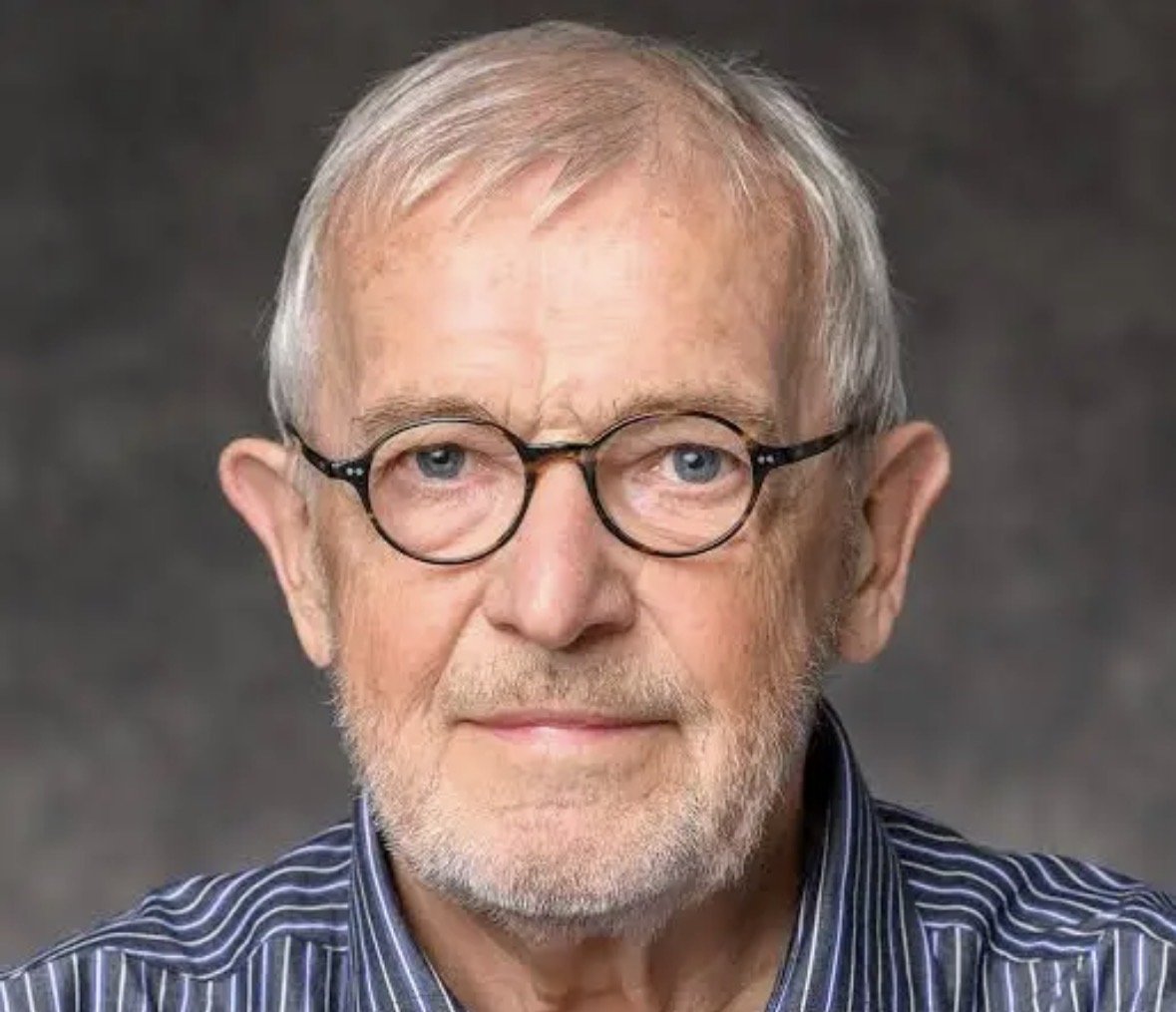
Francis Halzen wins 2026 Nobel Prize in Physics
The Royal Swedish Academy of Sciences in Stockholm announced on Tuesday that the 2026 Nobel Prize in Physics has been awarded to Francis Halzen “for decisive contributions to the IceCube Neutrino Observatory and the discovery of high-energy neutrinos of astrophysical origin,” CE Report quotes MOLDPRES.
Halzen realized that the ice at the South Pole could be used to detect particles known as neutrinos. His vision and scientific leadership played a fundamental role in the creation of the IceCube Neutrino Observatory — a cubic kilometer of ice equipped with light sensors.
Using IceCube, researchers can detect neutrinos produced by extremely high-energy processes in the distant universe.
Neutrinos are everywhere but rarely make their presence felt. They pass through the Earth and through our bodies without us noticing. On very rare occasions, a neutrino interacts with an atomic nucleus, making it possible to detect the particle using specialized equipment.
Scientists have long known that the universe contains natural particle accelerators capable of producing particles with energies up to a million times greater than those achievable in laboratories on Earth. However, many questions about these sources remain unanswered, including what they are, where they are located and what processes occur within them.
Extremely high-energy neutrinos are generated in the same environments as other types of particles. Unlike many other particles, however, neutrinos can reach Earth without changing direction or losing energy. This means they can provide information about distant cosmic environments that cannot be obtained in other ways.
Halzen first presented his vision for detecting neutrinos at the South Pole in 1988. When a neutrino collides with an atomic nucleus, it can produce a flash of light that can be detected by sensors embedded in the crystalline glacial ice.
The South Pole ice offers several advantages because it is shielded from various forms of interference, while the region is also geologically stable and largely free from earthquakes.
Halzen’s idea quickly gained support from other researchers, and preliminary tests using sensors embedded in the ice were conducted just a few years later.
Extremely high-energy cosmic neutrinos are very rare, meaning an enormous volume of ice is required to observe enough interactions. IceCube covers an entire cubic kilometer and was completed in 2011.
Researchers soon detected the first high-energy neutrinos and, several years later, were able to report the discovery of neutrinos originating far beyond the solar system, opening a new chapter in the search for the sources of cosmic neutrinos.
Neutrino interactions continuously recorded by IceCube are expected to provide researchers with new insights into the violent environments in which high-energy neutrinos are produced and could potentially reveal previously unknown cosmic phenomena.
Last year, American scientists John Clarke, Michel H. Devoret and John M. Martinis were awarded the Nobel Prize in Physics “for the discovery of macroscopic quantum mechanical tunnelling and energy quantisation in an electric circuit.”
Photo: National Academy of Science