Partial lunar eclipse visible over Italy
After the total solar eclipse, the August sky will also offer a red Moon, with a partial lunar eclipse visible from Italy at dawn on August 28.
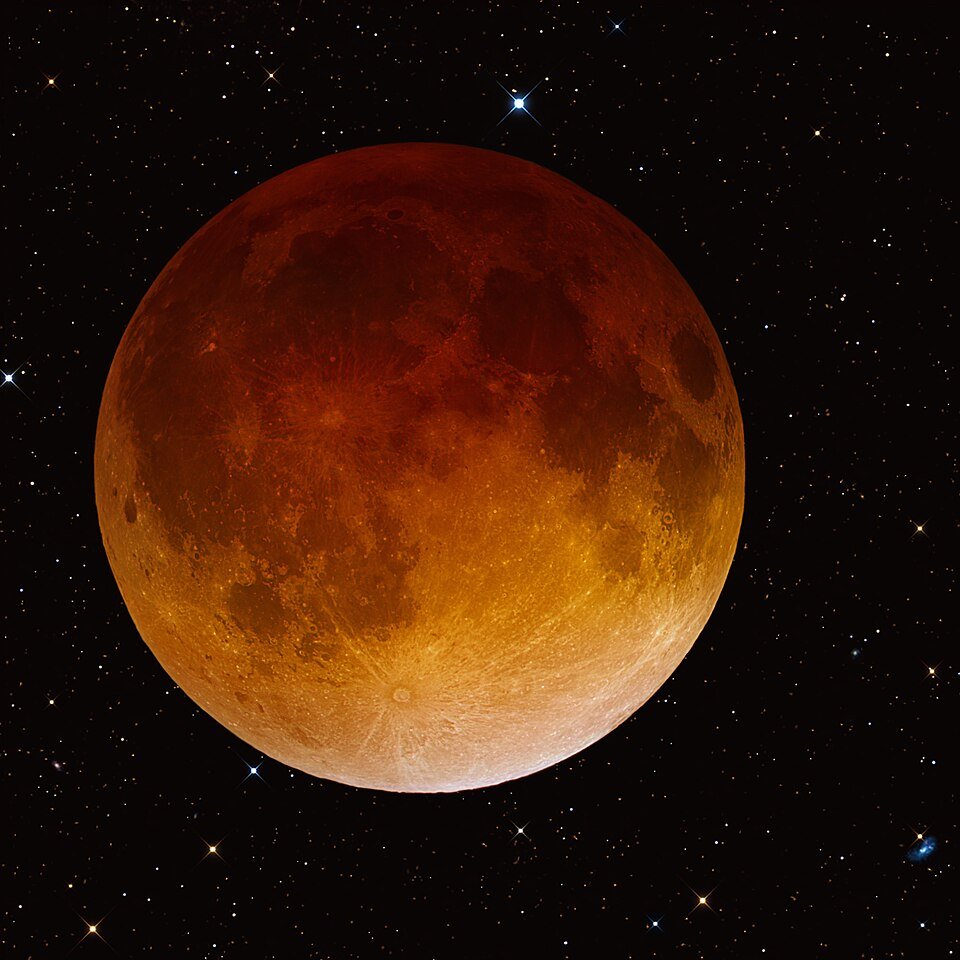
The eclipse is expected to begin at around 4:40 a.m., with the maximum phase reached at around 6:10 a.m., when more than 90 percent of the lunar disk will be immersed in Earth's shadow, giving the Moon its characteristic brick-red color, CE Report quotes ANSA.
After the extraordinary solar eclipse of August 12, “the eclipse season” of this exceptional August 2026 is not yet over, said Alessandra Masi, one of Italy's best-known astrophotographers. The cycle will conclude with another unmissable event: the partial lunar eclipse on August 28.
The two eclipses belong to the same eclipse season.
“During these windows, which occur when the Sun is close to the nodes of the Moon's orbit, two eclipses can take place about two weeks apart,” Masi explained.
Unlike the August 12 event, this new eclipse will be lunar, meaning that the Moon, rather than the Sun, will be obscured.
There is another important difference. “During a total lunar eclipse, our satellite never completely disappears into darkness, but takes on a color ranging from golden copper to a deeper brick red. This fascinating phenomenon, popularly known as the ‘Blood Moon,’ is the result of precise physical laws involving light and Earth's atmosphere,” Masi said.
The spectacle will particularly favor those in southern Italy. From northern locations such as Milan, the Moon will set before the eclipse reaches its maximum, while observers in the south will be able to see the eclipse almost through its final stages.
“At that time, the Moon will be very low on the western horizon, offering some locations the opportunity to photograph it alongside mountains, buildings or other landscape features,” Masi continued.
However, by the time the partially eclipsed Moon approaches the horizon, the sky will already be bright.
“This condition could, on the one hand, make photography more difficult because of the lower contrast between the Moon and the sky, but on the other hand, it could produce very unusual and evocative images,” the astrophotographer concluded.
Photo: Wikipedia