Moldova rejects EU integration “by pieces”
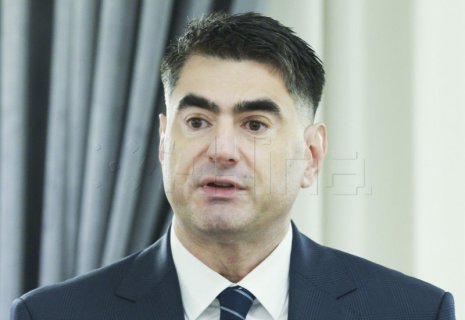
The Republic of Moldova does not want a “piecemeal” European integration, but it also rejects the idea that resolving the Transnistrian conflict should become a precondition for joining the European Union, Deputy Prime Minister for Reintegration Valeriu Chiveri said in an interview with 2EU.brussels.
Asked how the relationship between Moldova’s EU integration process and the Transnistrian issue could be resolved, Chiveri said the authorities in Chișinău do not support a fragmented accession process, CE Report quotes MOLDPRES.
“Ideally, the Republic of Moldova, in its territorial integrity, should become part of the European Union,” he stated.
However, the deputy prime minister stressed that the two processes follow different logics. According to him, European integration primarily depends on reforms and actions carried out by Moldova’s government, while the Transnistrian settlement depends on political will in Tiraspol, Russia’s influence, the illegal Russian military presence in the region, and developments in the war in Ukraine.
“We are realistic and understand that these are two distinct processes with different timelines and speeds,” Chiveri said.
He emphasized that support from the European Union is important because it keeps the settlement process open without automatically linking it to Moldova’s EU accession path. In his view, the two processes can reinforce each other, as closer ties with the EU may make Moldova more attractive to residents on the left bank of the Dniester River.
According to Chiveri, this trend is already visible. Tens of thousands of people from the Transnistrian region travel to the right bank for work, medical treatment, and education. He noted that salaries and pensions in the constitutionally controlled territory of Moldova are two to three times higher than in Transnistria, encouraging more residents to rely on Moldova’s social and economic systems.
“Citizens see this reality. That is why more and more of them are using our social system, healthcare insurance system, and looking for jobs in the constitutionally controlled area of the Republic of Moldova,” he said.
Chiveri explained that the government is relying on gradual integration, especially economic integration. One of the proposed tools is a convergence fund that would be created under new legislation. The fund would be financed through taxes, including VAT and excise duties, and aimed at raising living standards and reducing disparities between the two banks of the Dniester.
“It is primarily about the citizen, improving living standards, and harmonizing living conditions on both sides of the Dniester,” he said.
Asked whether the Transnistrian issue could become a tool to block Moldova’s EU accession, Chiveri acknowledged that this is a risk Chișinău seeks to avoid. He said Russian influence and the military presence in the region are real risks, but reintegration should not be viewed as a precondition for joining the EU.
“We do not see reintegration as a precondition for European integration,” Chiveri stressed.
He added that Moldovan authorities have explained this position to international partners, many of whom understand that directly linking the two processes would effectively give Tiraspol or Moscow “a veto right” over Moldova’s European future.
Chiveri also mentioned the possibility of temporarily suspending the application of EU legislation in Transnistria until a comprehensive settlement is reached. He described this as part of a possible “creative formula” that could be considered when Moldova eventually joins the European Union.
The deputy prime minister rejected the idea that Transnistria could survive long term as an isolated economic “island” between Ukraine and Moldova. According to him, authorities in Tiraspol increasingly understand that there is no realistic alternative to reintegration.
“In the not-too-distant future, the reintegration process will have to accelerate because there is no alternative,” he said.
Chiveri also criticized the concept of a separate “Transnistrian identity,” arguing that it is a political construct. He said the region is home to multiple ethnic groups, while the Russian language dominates public life, education, official narratives, and legislation modeled after Russia.
At the same time, he noted that rural areas on the left bank are home to Romanian-speaking populations, referred to locally as “Moldovan-speaking,” which undermines the idea of a unique Transnistrian cultural identity.
Regarding the European institutions, Chiveri said the European Commission has shown “very good understanding” for Moldova’s position. However, he admitted that difficulties could later emerge in some EU member state capitals, where the Transnistrian issue could be used politically.
Moldova obtained EU candidate status while still facing the unresolved issue of Transnistria, a region outside the constitutional control of Chișinău. The conflict includes political, economic, security, and identity dimensions, as well as the presence of Russian troops, which Moldovan authorities consider illegal.
According to Chiveri, Moldova’s strategy is based on a dual-track approach: advancing EU integration through reforms implemented by the constitutional authorities, while pursuing gradual reintegration through economic, social, and convergence mechanisms.
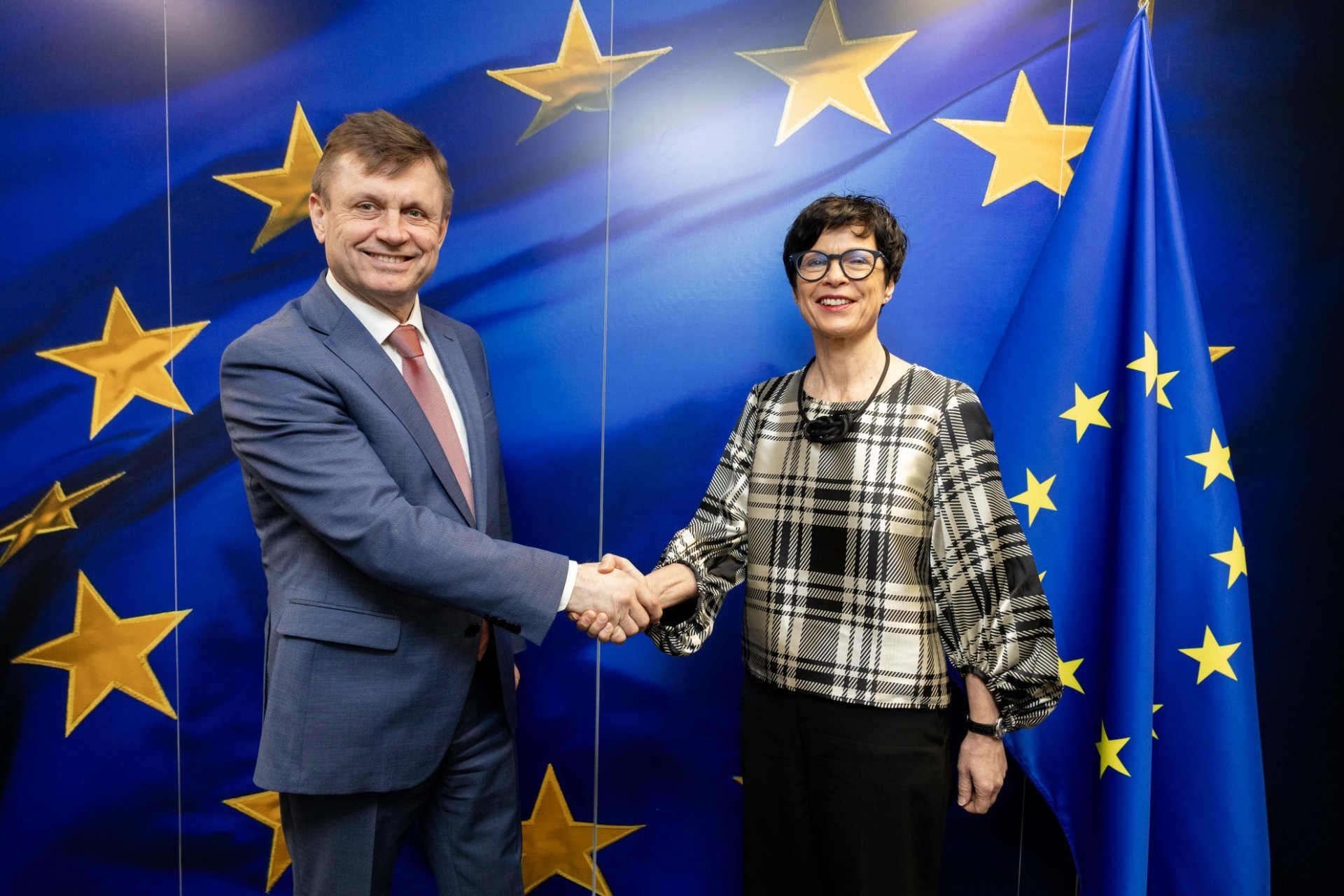
PHOTO: GOVERNMENT, REPUBLIC OF MOLDOVA